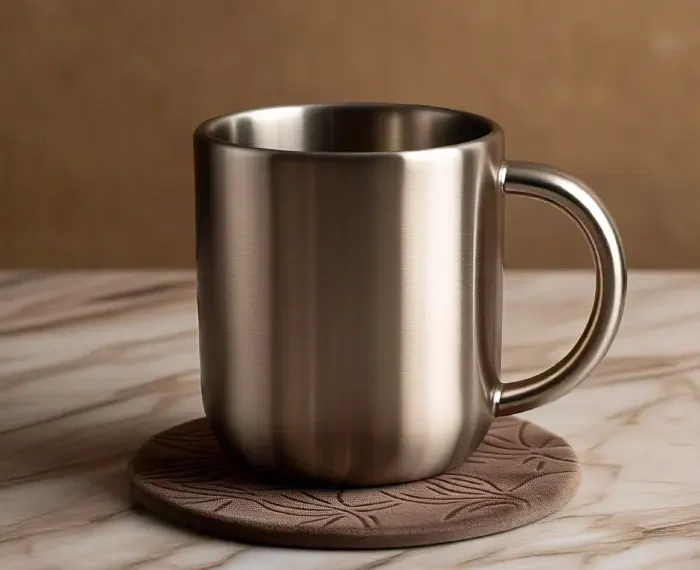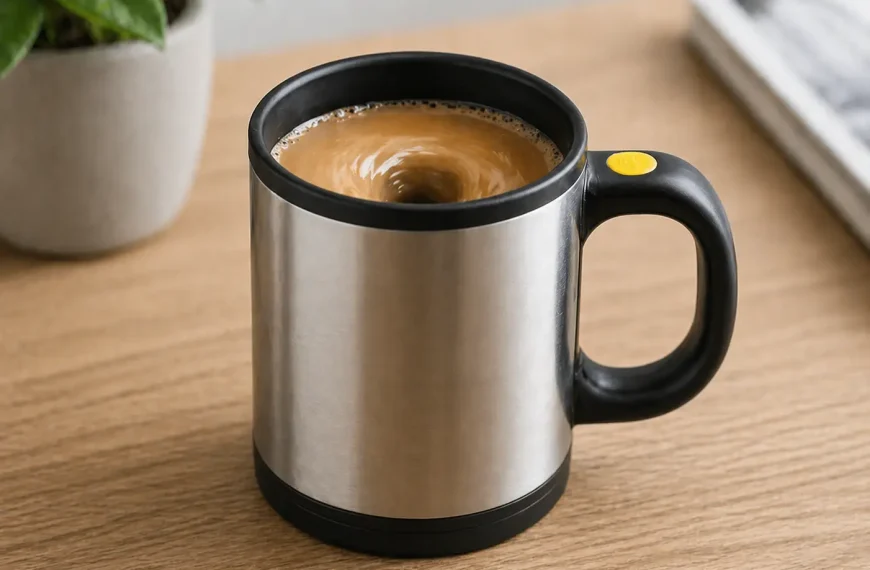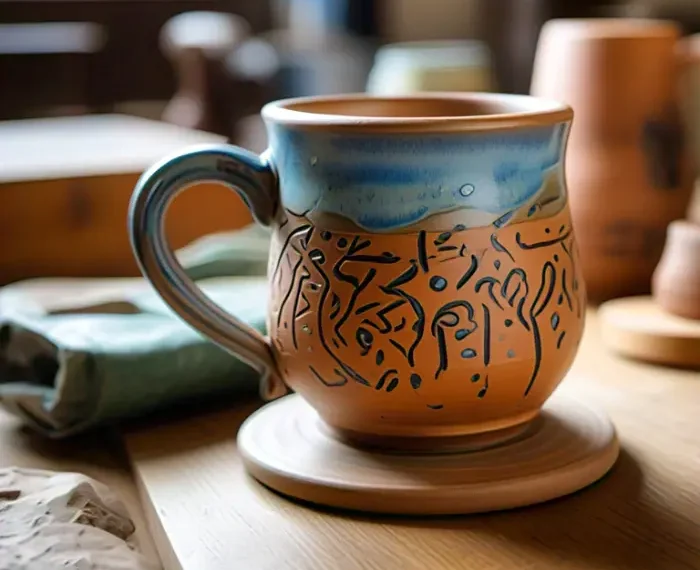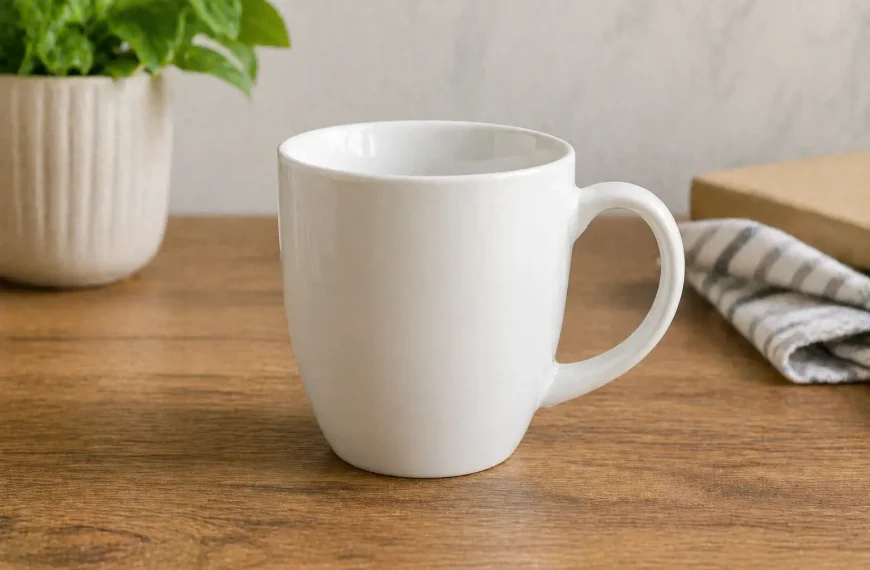

A mug warmer is an electric heating device for maintaining beverage temperature by transferring steady heat through a mug’s base into the liquid. The warmer acts as the heat source, while the mug base determines transfer efficiency through direct contact. Optimal drinking temperature falls within a narrow safety-performance range of 54°C to 60°C (130°F to 140°F), with a preferred value near 57.8°C (136°F), balancing comfort and burn prevention. Commercial systems reflect this range, typically operating between 50°C and 62.5°C (120°F to 145°F). In contrast, beverages are often served at 71.1°C to 85°C (160°F to 185°F), where brief exposure can cause serious scalding, making higher temperatures unsuitable for desk use.
Mug compatibility dominates performance. Heat transfer depends on base contact area and the absence of microscopic air gaps, which act as thermal insulators; even a 0.01 mm gap can increase thermal resistance by about 10%. Flat, stable bases maximize conduction, while curved or ring-foot designs reduce efficiency and stability. Thick-bottom mugs can slow heat transfer if contact is limited or inconsistent.
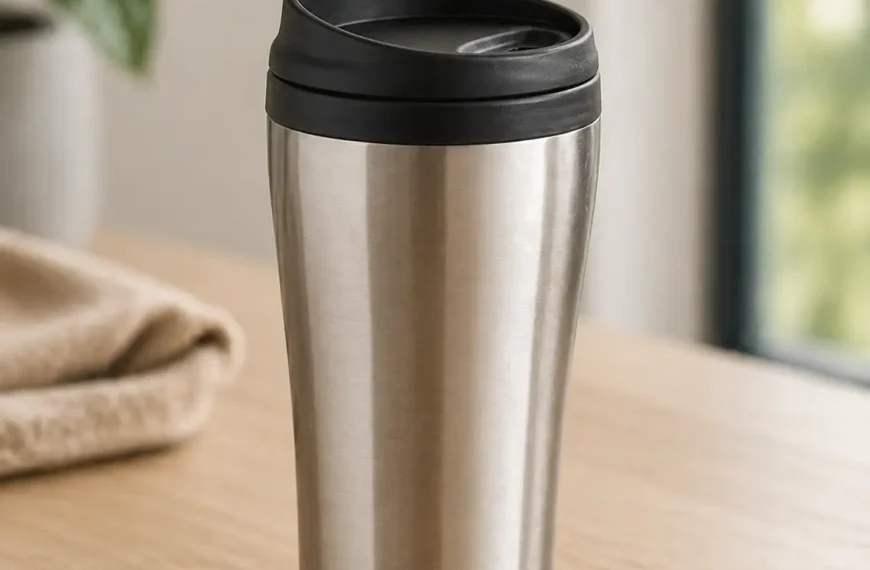
Material conductivity significantly affects results. Stainless steel transfers heat more efficiently than ceramic, while glass typically performs at an intermediate level. The same warmer can therefore vary in effectiveness depending on how well the material distributes heat into the liquid. Insulation further alters performance: double-wall vacuum-insulated tumblers resist external heat flow, limiting the ability of a warming plate to increase beverage temperature. (ScienceDirect)
Optimizing this heat-transfer efficiency is a core objective within technical index of mug accessories, where external tools are used to bypass the natural cooling of a vessel. To maximize the utility of these devices, it is necessary to examine what a mug warmer actually is and the specific problem it aims to solve.
What is a mug warmer, and what problem does it solve?
A mug warmer is a small heating plate that supplies steady heat into the base of a mug to keep a drink within a comfortable drinking range for longer than it would cool naturally on a desk. The core problem it solves is temperature decay after brewing, where the drink drops below the temperature you enjoy before you finish it. The practical distinction is maintenance versus heating: keeping a hot drink near a target temperature needs far less energy than reheating a drink from room temperature back into a drinkable range.
The “target range” is not arbitrary. A peer-reviewed review of hot beverage temperatures reports a recommended service range of 130°F to 160°F (54°C to 71°C) to balance preference and safety, and summarises an optimum band around 54°C to 60°C (130°F to 140°F) with a preferred value of 57.8°C (136°F). (PubMed)
What is the difference between a mug warmer, beverage warmer, and heated coaster?
A mug warmer, beverage warmer, and heated coaster commonly refer to the same category: a device that warms the base of a cup or mug. The technical differences usually come from the power system and the control method, not the name. A “heated coaster” label often implies a compact plate intended for mugs, while “beverage warmer” is sometimes used for larger plates that can fit different vessels, but the job is still base heating.
What is the difference between a mug warmer, a tea warmer, and a candle warmer plate?
A mug warmer is designed for food and drink vessels and aims to stabilise beverage temperature at a controlled set point. A candle warmer plate is designed to melt wax and can run at higher surface temperatures than a drink-focused plate, so treating them as interchangeable increases burn and overheating risk. If a device is marketed for candles, use it as a candle device only unless the manufacturer explicitly states it is rated for drinkware use.
Can a mug warmer reheat cold coffee, or only maintain temperature?
A mug warmer can reheat coffee, but it is far better at maintaining a hot drink than rescuing a cold one. Reheating requires the device to add enough energy to raise the liquid temperature by many degrees, while maintenance only replaces ongoing losses to air, the mug walls, and evaporation. For best results, start with a drink that is already in the drinking range, then use the warmer to hold it there.
Is there a battery operated coffee mug warmer or a cordless version?
A cordless mug warmer exists mainly in two forms:
- A temperature-control mug with an internal battery and heater
- A warming base that is powered by a battery pack or power bank (usually via USB-C)
For true cordless “plate” heating, the battery capacity becomes the limiting factor because heating draws continuous power. USB Power Delivery can supply higher wattage than older USB ports, but portable power still runs down quickly when used as a heater.
How does a mug warmer keep your drink warm in practical terms?
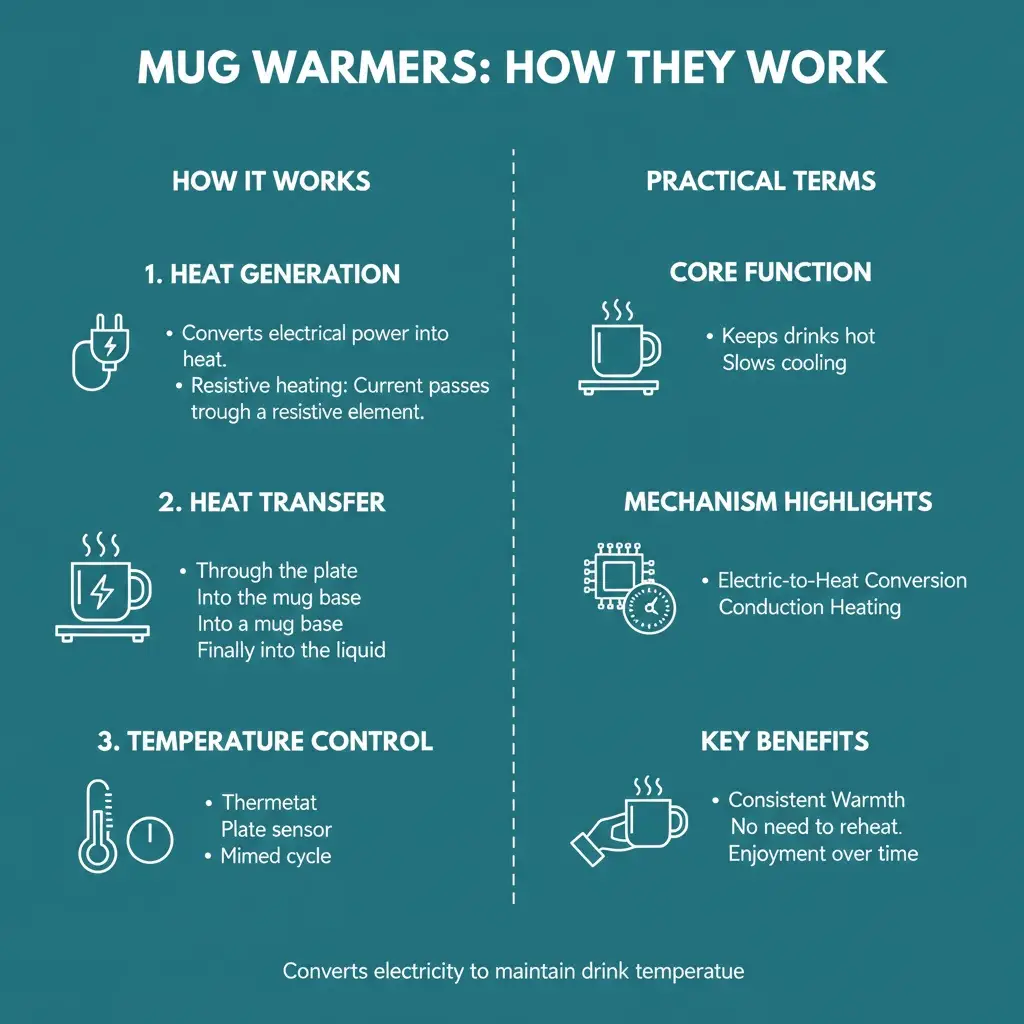
A mug warmer converts electrical power into heat, then transfers that heat through the plate, into the mug base, and finally into the liquid. Most desk warmers use resistive heating: current passes through a resistive element and produces heat, which is spread through a metal or glass top surface. Temperature control is typically handled by a thermostat, a sensor in the plate, a sensor in the mug, or a timed cycle.
How does heat transfer from the plate to the mug through conduction?
Conduction is the main path: heat moves through direct contact between the warmer plate and the mug base. The key variable is contact quality, because air gaps act as thermal insulation and reduce heat flow. A flat mug base that sits fully on the plate transfers more heat than a mug that rests on a narrow ring or wobbles.
How do convection, radiation, and evaporation change the cooling rate?
Even with a warmer, the drink still loses heat to the environment in three main ways:
- Convection: moving air carries heat away from the mug and the liquid surface
- Radiation: heat is emitted from the mug surface to cooler surroundings
- Evaporation: steam carries energy away from the liquid surface
If the room is drafty, the mug is uncovered, or the mug has a large open top, the heater has to work harder to keep the drink stable.
What temperature should coffee be kept at for drinking?
Coffee should be kept hot enough to taste warm and aromatic, but not so hot that it becomes uncomfortable or increases burn risk. The hot-beverage temperature review summarises evidence that a more rational service range is 130°F to 160°F (54°C to 71°C), and reports an optimum band around 54°C to 60°C (130°F to 140°F), with a preferred value of 57.8°C (136°F).
For reference, a popular temperature-control mug product specifies a 50°C to 62.5°C (120°F to 145°F) range, which sits inside that practical zone for many people. (Ember®)
Why do insulation and a lid change heat retention on a warmer?
A lid reduces the fastest heat-loss route: evaporation from the liquid surface. It also slows convection by limiting air movement over the drink. In practice, using a lid shifts the problem from “constantly replacing losses” to “topping up small losses,” which is why the same warmer can feel stronger when the mug is covered.
What types of mug warmers exist, and when is each type the best fit?
A mug warmer type is defined by how it gets power and how it controls heat. The common types are:
- Electric plug-in plate warmers
- USB-powered warmers
- Induction warmers
- Smart warmers and smart mugs with app control
The best fit depends on whether you need portability, stable temperature control, and what mug materials you use.
What is an electric mug warmer, and what wattage should a good one have?
An electric mug warmer is a mains-powered plate that uses resistive heating and a thermostat or preset modes to hold temperature. Wattage matters because it determines the maximum heat the plate can supply to offset real-world losses from air and the mug itself. If your goal is maintenance rather than aggressive reheating, temperature stability and sensor quality often matter as much as raw wattage.
Is USB mug warmer power enough, or do you need wall power?
A USB warmer can work, but its ceiling is set by USB power limits. Traditional USB power is based around 5V supply, and common low-power designs are constrained by the available current and cable losses. A Texas Instruments reference on USB voltage budgets documents the familiar USB voltage target as 5V ±5%, with a 4.75V minimum requirement in typical budgets.
If you need stronger heating or faster recovery after topping up the mug, mains power generally gives more headroom.
How do USB-C and USB Power Delivery (PD) change available heat output?
USB Power Delivery allows devices to negotiate higher voltages and higher power over USB-C. USB-IF describes USB PD as a flexible power-delivery standard, and a TI USB-C/PD design note states that USB PD Standard Power Range supports up to 100W (20V, 5A), and USB PD 3.1 extends higher with EPR. (usb.org)
That shift is why USB-C PD warmers can be more viable than older 5V-only pads, assuming the charger and cable support the negotiated PD profile.
What is a smart mug warmer, and what does app control add?
A smart warmer adds sensing and control beyond a simple on/off cycle. App control typically means:
- A set temperature or presets
- Feedback such as a temperature display or LED status
- Auto-sleep behaviour and wake detection
Connectivity problems usually come from Bluetooth pairing states, app version mismatches, and device permissions rather than the heater itself.
What is an induction mug warmer, and how does it differ from resistive plates?
An induction warmer heats a compatible base using an electromagnetic field rather than heating the plate itself. The plate surface can remain cooler than a resistive hot plate because heat is generated in the vessel or a metal interface disk. The main constraint is compatibility: induction requires the right magnetic material path, so it can be excellent with the right mugs and ineffective with others.
How do you know whether your mug will work well on a warmer?
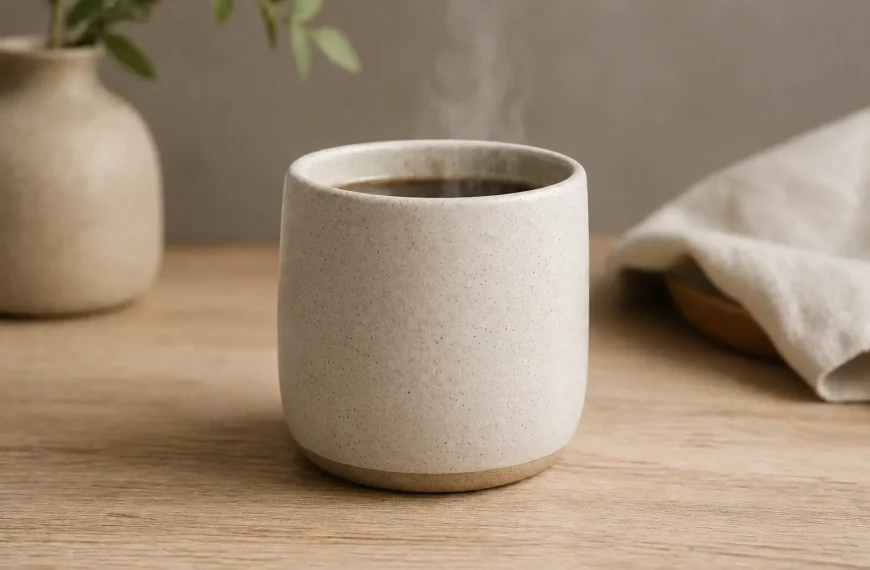
A mug works well on a warmer when it sits stably, makes broad contact with the plate, and conducts heat into the liquid at a useful rate. The deciding variables are mug base geometry, the contact patch area, and whether the mug design blocks external heat flow. If the mug slides, rocks, or only touches on a thin ring, heat transfer and usability both drop.
Why do mug base shape and contact patch control real heat transfer?
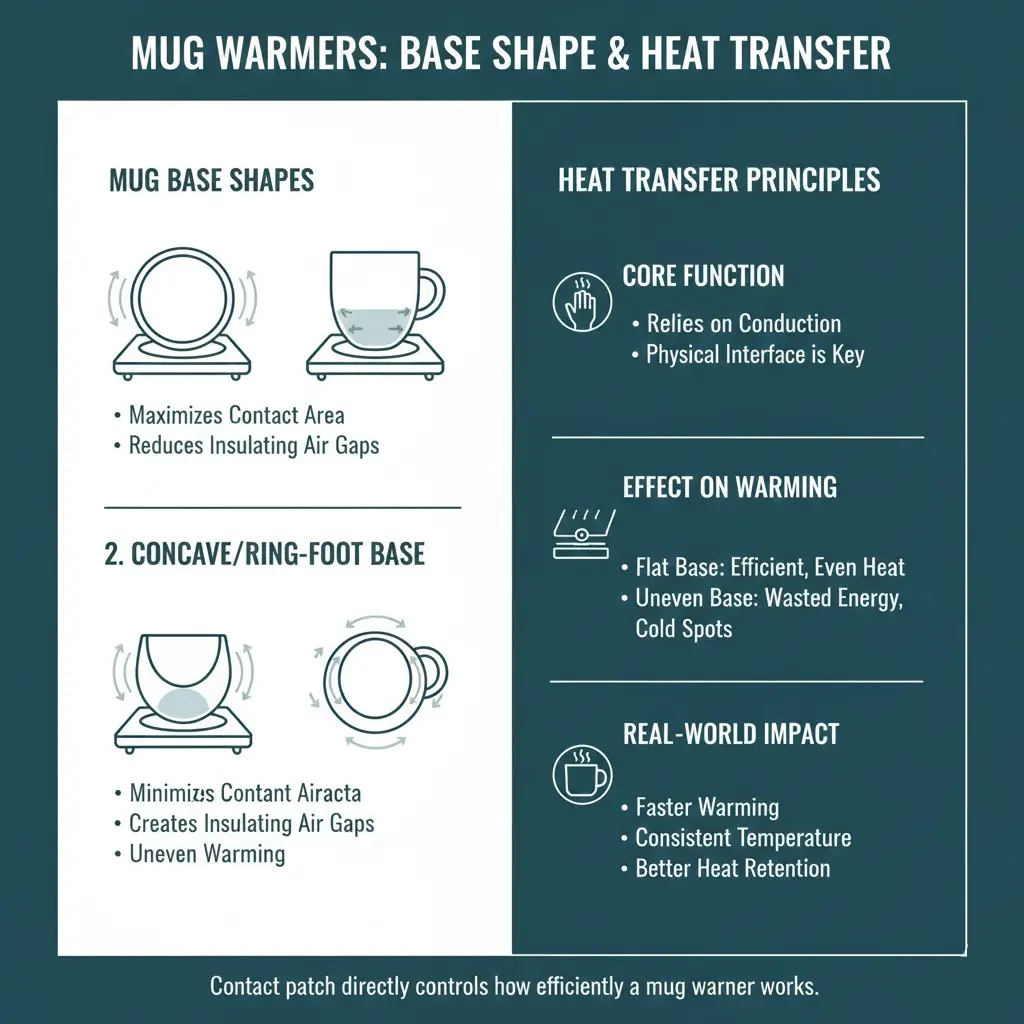
Mug warmers depend on conduction through a physical interface, so the base shape sets the heat path. A flat base maximises contact area and reduces insulating air gaps. A concave base or ring-foot base leaves parts of the plate “heating air,” which wastes energy and can create uneven warming.
How do flat-bottom mugs compare with curved-bottom or thick-bottom mugs?
Flat-bottom mugs typically warm more predictably because they contact the plate evenly and do not wobble. Curved-bottom or ring-foot mugs reduce the contact patch and can shift under stirring, which intermittently breaks contact and feels like “inconsistent heating.” Thick bottoms can store more heat, but only if they are coupled well to the plate; a thick base with poor contact still underperforms.
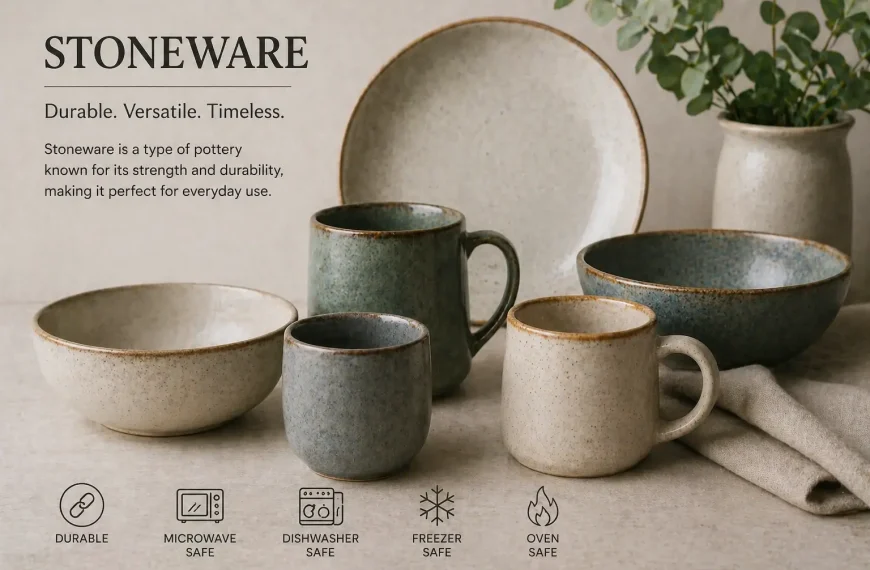
Which mug materials work best: ceramic, glass, or stainless steel?
Material affects how quickly heat spreads from the base into the liquid. Metals conduct heat efficiently and can deliver faster response, while ceramic often feels slower because it generally conducts heat less readily than metals. Glass can work well when the base is flat and thick enough to spread heat, but glass designs with small contact rings reduce performance regardless of conductivity.
Can you use a mug warmer with a plastic cup or a paper cup?
Plastic and paper introduce avoidable risks on a hot plate. Paper can scorch if it dries out or if a hot spot forms, and thin plastics can soften or deform depending on the polymer and temperature. If the manufacturer does not state that the device is safe for disposable cups or plastics, treat it as unsafe for those materials.
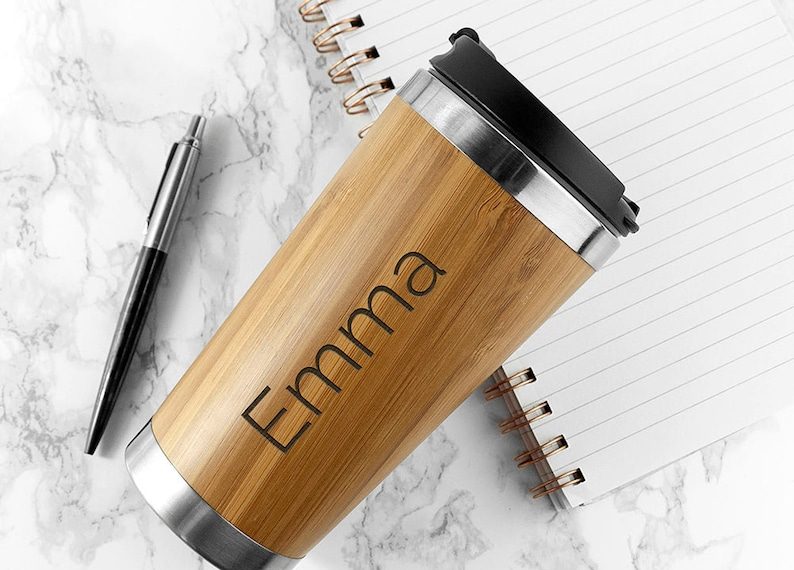
Do mug warmers work with double-wall insulated mugs or a Yeti?
Double-wall vacuum insulation is designed to block heat flow across the mug wall, which also blocks heat trying to travel from an external plate into the liquid. Stanley describes vacuum insulation as reducing heat transfer to maintain temperature by creating a barrier between inner and outer walls, which is exactly why an external heater struggles to push heat back in.
In practice, insulated tumblers often show slower warming on plates even if the base touches well.
What safety risks should you manage when using a mug warmer?
A mug warmer is a heating device on a desk, so the risks are heat exposure, electrical faults, and stability issues. The main controls are choosing a stable surface, preventing spill paths into electronics, managing cords, and ensuring the device has safety cutoffs. Heat damage risk is also driven by user behaviour: leaving an empty mug on a hot plate and ignoring manufacturer instructions.
Are mug warmers safe to use on a desk all day?
Leaving a warmer on all day is safest when the device is designed for extended operation and when its temperature targets stay in a reasonable range. A scald-risk study notes that hot beverages are frequently served at 71.1°C to 85°C (160°F to 185°F) and that brief exposure in that band can cause significant scald burns, which is why desk devices should not be treated as “make it as hot as possible” tools.
Use a stable, heat-tolerant surface, keep the cord out of traffic paths, and avoid placing it where spills can run into a power strip. (PubMed)
Do mug warmers have auto shut-off, and how long is it typically?
Auto shut-off is implemented through two common mechanisms:
- Timer shut-off after a fixed period
- Presence detection using a weight or contact sensor
Timer shut-off reduces unattended heating. Presence detection reduces heating when no mug is present, which also reduces the “dry-burn” scenario risk.
What do overheat protection and thermal cutoff fuses do?
Overheat protection limits temperature if the device exceeds safe bounds, often by cutting power when a sensor trips. A thermal cutoff fuse is a last-resort device that permanently opens the circuit if a critical temperature is exceeded. These features are designed to reduce fire risk if the heater runs away or airflow is blocked.
What safety certifications (UL, ETL, CE) should you look for?
Certification marks indicate testing or compliance frameworks, and they matter most for electrical products used unattended on desks. Intertek states that the ETL Listed Mark is proof of product compliance to North American safety standards, and that it is accepted by code officials in the US and Canada as evidence of compliance to published standards.
For Europe, the European Commission describes the CE mark as a “passport” allowing products to circulate in the EU internal market, indicating compliance with applicable health, safety, and environmental requirements.
How do you clean and maintain a mug warmer safely?
Cleaning a mug warmer is a safety task because liquids and residue can create slip risk, odour, and electrical hazards. The safe baseline is simple: unplug first, let it cool fully, then clean the top surface without soaking the device. Keep liquids away from seams, buttons, and charging ports.
How do you clean a mug warmer plate without damaging the electronics?
Clean the plate with a damp cloth, not running water, and keep moisture out of creases and ports. For dried coffee rings, use a mild abrasive paste and wipe gently, then dry the surface completely before powering on. If residue keeps returning, the root cause is usually spill-over or repeated splashes at the mug base.
What are the cost and efficiency metrics of daily use?
A mug warmer’s energy cost is determined by power and runtime. The calculation is:
- Energy (kWh) = (Watts ÷ 1000) × hours
- Cost = Energy (kWh) × your electricity rate
Example math (to show the method, not to claim a typical device): a 20W heater running for 8 hours uses 0.16 kWh (0.02 kW × 8 h). Multiply 0.16 kWh by your local rate to get the day’s cost.
Will a mug warmer “cook” coffee and make it taste burnt over time?
Prolonged holding changes coffee chemistry and sensory perception, especially when heat exposure is extended. A 2023 study that used trained sensory panels evaluated drip coffee held from 15 minutes up to 3 hours across carafe conditions including glass carafes on a hot plate, and it reported measurable shifts such as increasing sourness over time for light and medium roasts, consistent with rising acidity measures.
If you want the best taste, the safer strategy is to keep the drink within a stable drinking range rather than repeatedly pushing it hotter. (PubMed)
How do you choose the right mug warmer for your needs?
Choose based on compatibility, control, and safety, not aesthetics first. There are three decision points that determine whether a warmer feels “worth it”:
- Your mug base geometry and stability
- The control method (fixed, stepped, or precise set temperature)
- Safety design (auto shutoff, overheating protection, and credible certification marks)
If your primary mug is double-wall insulated, a plate warmer is often the wrong tool because the mug is designed to block heat transfer.
What is the best mug warmer for a desk vs. a gift?
For a desk, prioritise stability, predictable temperature control, and safety cutoffs. For a gift, prioritise simplicity and compatibility: a warmer that only works well with a special mug creates more failure cases. A temperature-control smart mug can be a better gift when the receiver wants precise temperature and portability, but it shifts the device from “plate heating” to “battery + electronics + charging.”
Why do some mug warmers only work with certain branded mugs?
Brand-locked performance usually comes from hardware coupling. The two common patterns are:
- Induction or magnetic interfaces that require a compatible base material or a matching mug design
- Sensor-driven systems that rely on a mug’s geometry, mass, or embedded components for accurate control
If a warmer is tuned for a specific mug footprint, a different base diameter or a ring-foot design can break the control logic and the heat transfer.
Is a warming plate better than a self-heating smart mug?
A warming plate heats through the mug, while a self-heating smart mug heats the liquid directly through internal components. That design difference changes portability and compatibility: a plate is simple and stationary, while a smart mug is portable but adds batteries, charging, and electronics. If you need a stable desk setup and you already use flat-bottom mugs, a plate warmer fits. If you need the same temperature control away from the desk, a smart mug fits better.
Does drinking very hot beverages (above 65°C) increase health risks, and how should that change your mug-warmer temperature target?
Drinking “very hot” beverages above a defined threshold is treated as a health topic because temperature, not the drink type, can be the exposure risk.
What does the “very hot beverage” threshold (>65°C) mean in research, and why is it discussed in health guidance?
The IARC Monographs programme evaluates “very hot beverages” as a thermal exposure category. Its evaluation states that drinking very hot beverages at temperatures above 65°C is classified as probably carcinogenic to humans (Group 2A), based on limited evidence for oesophageal cancer associations at these exposure temperatures.
What temperature band best balances comfort, flavour perception, and burn risk for everyday coffee drinking?
A practical target stays below the “very hot” threshold while remaining warm enough to enjoy. The hot-beverage temperature review supports a 130°F to 160°F (54°C to 71°C) service band to balance preference and safety.
Practical rule: how to set a safer “ceiling” when your warmer has no precise thermostat (and why reheating to piping-hot is rarely the goal)
Set the device so the drink stays in the warm drinking range, not so the mug becomes painful to touch. If the warmer’s presets are vague, choose the lowest setting that prevents the drink from falling below your preferred warmth, then use a lid to reduce losses rather than increasing plate power. Treat “piping hot” as a brewing and serving issue, not the purpose of a desk warmer.
The desk setup that actually works
A mug warmer works best when the device, mug, and temperature target match. Use a flat, stable mug base, keep the drink in a realistic drinking range, and reduce losses with a lid before chasing higher plate heat. Use USB-C PD only when the charger and cable support the negotiated power profile, and treat recognised safety marks as non-negotiable for a device that can sit powered on for hours. Following these technical guidelines ensures that your warming hardware integrates seamlessly with the design standards of professional mugs to maintain an ideal beverage experience.