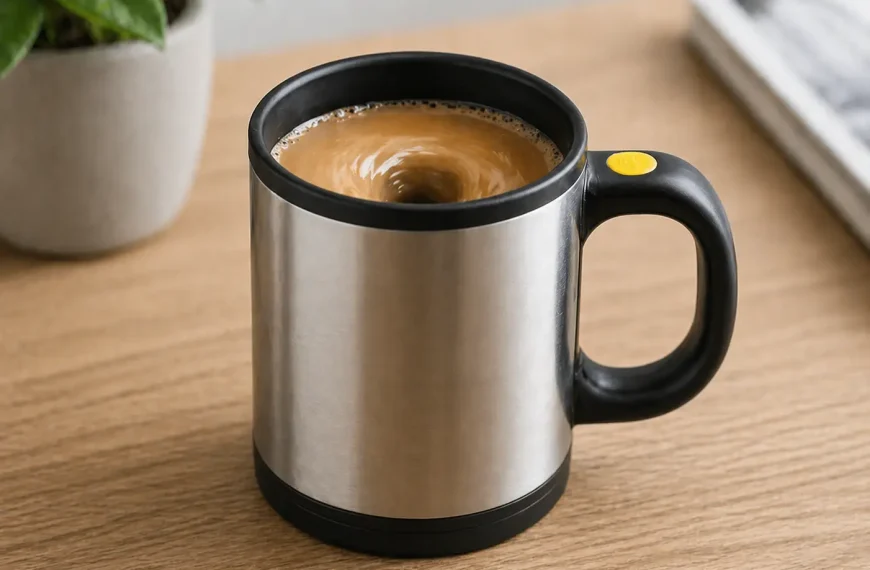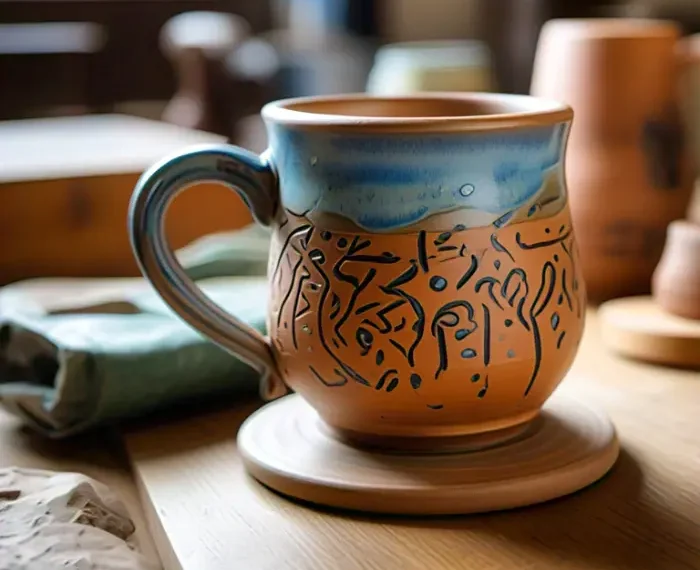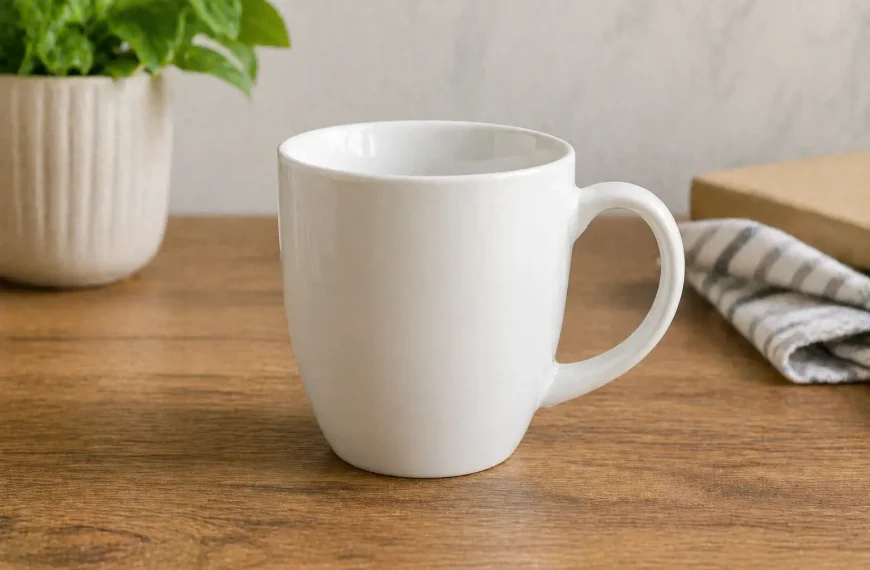

Handleless mug design is a drinkware configuration that eliminates the side handle, requiring direct hand contact with the vessel wall and fundamentally altering heat transfer, grip mechanics, and user interaction. Handleless mug for thermal control and ergonomic grip depends on balancing beverage temperature with safe outer-surface contact. Hot beverage standards define an optimal serving range of 130–160°F (54–71°C), while continuous hand contact thresholds for single-wall vessels remain near 45°C, creating a critical insulation constraint. (PubMed)
Handleless mug with controlled thermal conductivity uses material properties such as ceramic, glass, or stoneware to regulate heat flow from liquid to exterior. Ergonomic handleless mug design incorporates contoured geometry, weight distribution, and textured surfaces to maintain grip stability without a handle. Insulated handleless mug structures, especially double-wall glass construction, introduce a thermal barrier that reduces side heat transfer and improves holdability during direct-contact use.
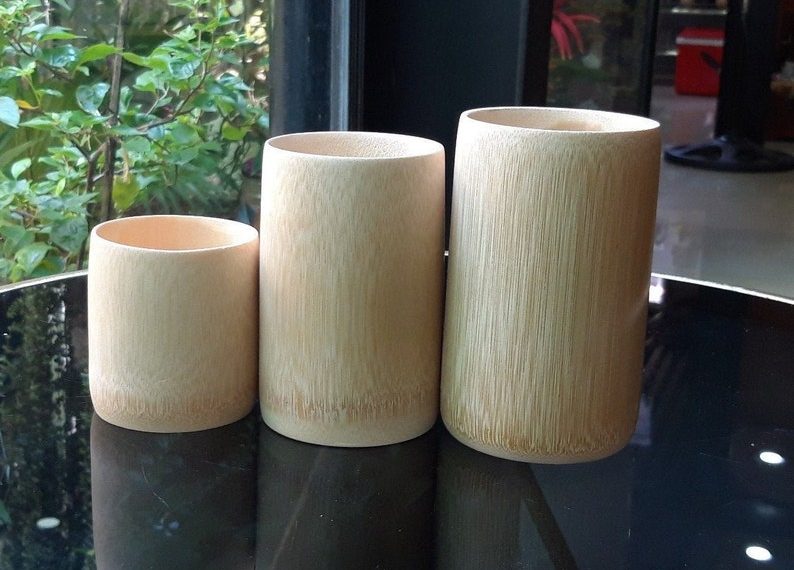
Handleless mug performance varies across forms including yunomi (Japanese tea cup), double-wall glass cups, textured stoneware mugs, and compact café cups. Each variation demonstrates different usability outcomes based on wall thickness, surface temperature, volume capacity, rim geometry, base stability, weight, and tactile texture, as well as contextual use cases such as seated drinking, hospitality service, storage efficiency, and portable consumption.
Analyzing the omission of a handle provides a unique case study within our index of mug features by shifting the focus entirely to material performance and tactile ergonomics. To understand how this format functions without traditional hardware, we must first look at how the handleless mug is defined within the broader drinkware category
What is a handleless mug and how is it defined within the drinkware category?
A handleless mug is a beverage vessel with mug-like capacity, wall structure, and heat-holding purpose, but without a side handle. Its defining feature is direct hand contact with the vessel wall. That separates it from a handled mug, where the handle works as a grip point and heat barrier. In drinkware terms, a handleless mug sits between three forms: the cup, the tumbler, and the traditional mug. It is still part of the wider mug category when it is built for hot beverages, has enough wall thickness for repeated use, and carries a serving volume closer to everyday coffee or tea use than to small tasting cups.
Handleless mugs are also called by several related names depending on culture, shape, and retail language. Three names appear most often:
- Yunomi
A Japanese handleless tea cup, usually taller than a small teacup and used for everyday tea drinking. - Handleless cup
A broad retail term for a cup-shaped vessel without a handle. - Sleeveless or sensory mug
A design-focused term used when the vessel is meant to be held directly for warmth, texture, or tactile comfort.
What is the difference between a handleless mug, a cup, and a tumbler?
A handleless mug differs from a cup and a tumbler by its intended use, wall structure, and relationship to heat. A cup is the broadest term because it can describe almost any small drinking vessel. A tumbler is usually straight-sided, handleless, and often designed for cold drinks, travel use, or insulated service. A handleless mug is narrower than both because it keeps the hot-drink function of a mug while removing the handle.
The main difference is the missing lever. A handled mug lets the fingers lift the vessel away from the hot wall. A handleless mug transfers that job to the full hand, so the body must be shaped for palm contact. That makes diameter, wall thickness, surface texture, base stability, and outer temperature more important than they are in a standard handled mug.
What is a yunomi and how does it relate to the handleless mug?
A yunomi is a Japanese handleless tea cup used for everyday tea drinking. It relates to the handleless mug because both rely on direct contact between the hand and the vessel wall. The difference is category and cultural use. A yunomi belongs to Japanese tea drinkware, while a handleless mug is a wider modern drinkware category that includes ceramic, glass, stoneware, and insulated forms used for coffee, tea, and café service.
Japanese tea cups do not need handles because traditional tea service uses smaller serving volumes and controlled beverage temperatures. The hand is meant to feel the vessel, not avoid it completely. In modern drinkware, the same idea appears in sensory mugs, handmade pottery mugs, and minimalist café cups where the surface texture and warmth are part of the use experience.
Why do some mugs not have handles?
Some mugs do not have handles because the design shifts grip, heat control, and storage into the body of the vessel itself. The handle is useful, but it is not the only way to make a mug usable. A handleless mug can work when the wall stays within a safe contact range, the surface provides enough friction, and the shape fits the hand.
There are four main reasons handleless mugs exist:
- Direct tactile contact
The hand feels the material, surface texture, and warmth of the vessel. - Compact storage
The missing handle reduces side projection and makes the mug easier to place, pack, or stack. - Minimal form
The vessel has a cleaner outline with fewer protruding parts. - Reduced handle breakage
The handle is often the most exposed projecting part of a mug, so removing it removes one common weak point.
How is ergonomics addressed in handleless mug design without a handle?
Handleless mug ergonomics are addressed through body diameter, grip surface, weight, balance, wall temperature, and rim comfort. A handled mug gives the user one obvious grip point. A handleless mug spreads the grip across the fingers and palm, so the whole exterior becomes the contact system.
A 2023 ergonomic cup-handle review is useful here by contrast. The authors explain that cup-handle comfort should not be based on appearance alone, because comfort depends on anthropometric dimensions and biomechanical strength. In a handleless mug, that same ergonomic problem moves from the handle to the vessel wall, which means the body shape must do the work normally done by the handle. (Taylor & Francis Online)
To hold a handleless mug safely, the user needs three conditions:
- A comfortable outer temperature
The wall must not feel painful or unsafe during normal contact. - A stable grip zone
The fingers need enough surface area and texture to resist slipping. - A balanced fill level
The mug should not feel top-heavy when filled with coffee, tea, or hot chocolate.
How do grip surface, texture, and materials improve usability?
Grip surface, texture, and material improve handleless mug usability by increasing friction between the hand and the vessel wall. In a handled mug, the fingers hook through or around a handle. In a handleless mug, the fingers press against the outer wall, so a smooth glossy surface gives less grip than a matte, ribbed, faceted, or lightly unglazed surface.
Common materials used for handleless mugs include four main groups:
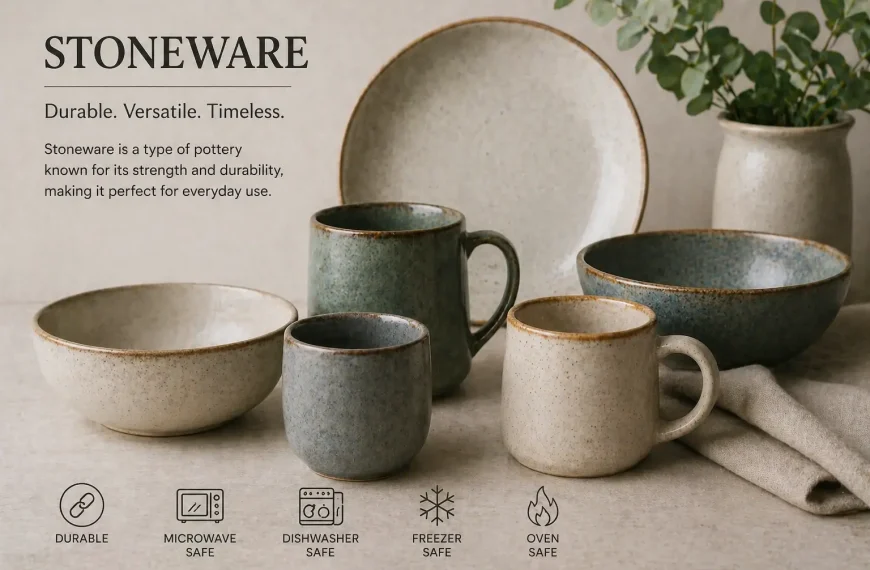
- Stoneware
Dense ceramic with a sturdy feel and good everyday durability. - Porcelain
A fine, high-fired ceramic with a smoother and often thinner body. - Borosilicate glass
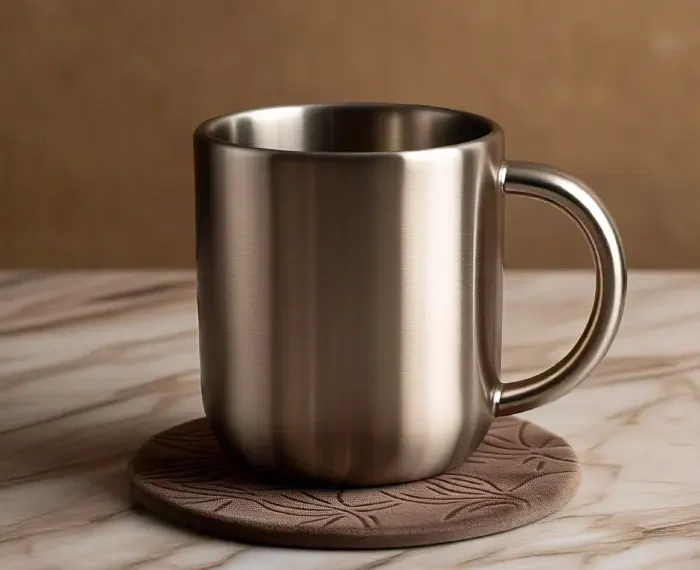
A heat-resistant glass often used in double-wall cups and mugs. - Stainless steel
A metal option usually paired with insulation, lids, or travel-style construction.
Handmade mugs often use textured or unglazed zones because those surfaces improve grip and create a clearer hand-contact area. The texture does not replace heat control. It only improves security once the outer wall is comfortable enough to hold.
How do weight, balance, and size influence handling?
Weight, balance, and size influence handleless mug handling because the user supports the whole vessel with the palm and fingers instead of lifting from a handle. A small handleless mug is usually easier to hold because its centre of mass stays closer to the hand. A tall handleless mug is harder to control because height increases leverage, especially when the mug is full.
The practical handling rule is simple: as height and capacity increase, the mug needs a wider base, a narrower grip zone, or a textured surface. Tall handleless mugs also need more careful filling. A full tall mug with a narrow base is easier to tip than a shorter mug with the same volume.
A handleless mug becomes harder to use when three design problems appear together:
- Large capacity
More liquid increases total weight. - Tall body
More height raises the centre of mass. - Smooth outer wall
Less friction makes slipping more likely.
Are handleless mugs suitable for people with sensitive hands?
Handleless mugs are not the best choice for people with sensitive hands unless the mug has double-wall insulation, a low-conductivity body, or an external sleeve. The core issue is direct contact. A handle protects the hand from heat, but a handleless mug makes the outer wall part of the user interface.
The most common limitations are practical, not decorative:
- Heat sensitivity
The wall can feel too hot when the drink is served very hot. - Grip strength
The user needs enough hand strength to hold the mug body securely. - Surface slipperiness
Glossy surfaces become less secure when wet. - Large capacity
Heavier filled mugs require more wrist control.
For users with sensitive hands, the safer option is a double-wall handleless mug, a smaller ceramic form, or a handleless mug used with a sleeve.
How do thermal properties influence handleless mug performance?
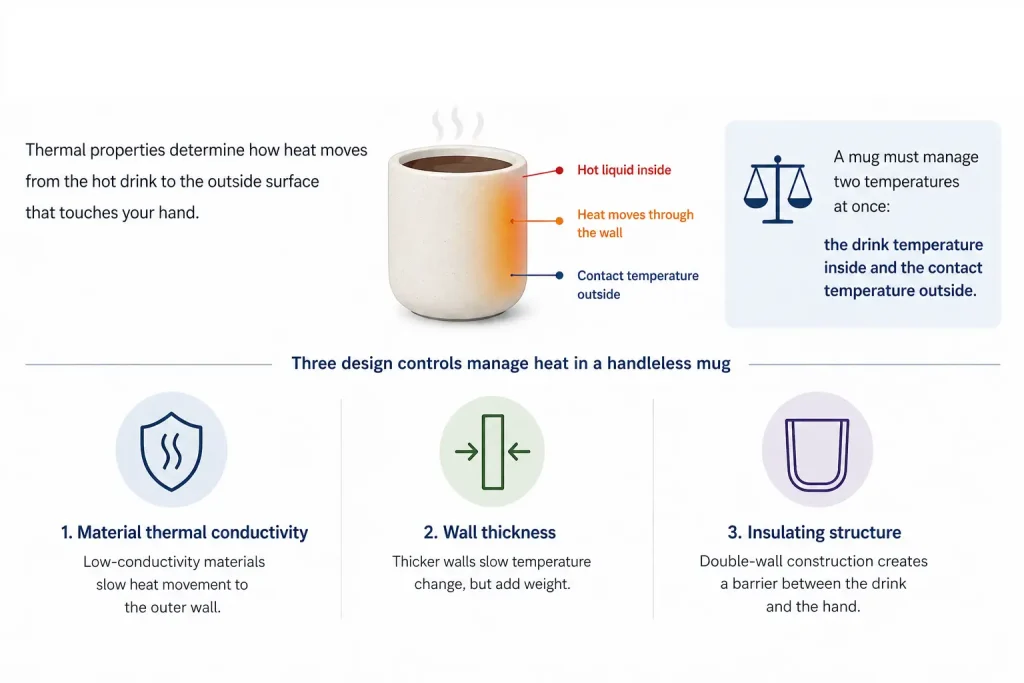
Thermal properties control whether a handleless mug feels usable, safe, and comfortable during hot beverage service. The key issue is not only how long the drink stays hot. It is also how quickly heat moves from the liquid through the wall and into the hand.
Hot-beverage research gives a useful boundary for this problem. Abraham and Diller reviewed hot beverage temperature research and recommended 130 to 160°F, equal to about 54 to 71°C, as a service range that balances consumer preference and safety. That range matters for handleless mugs because the vessel must manage two temperatures at once: the drink temperature inside and the contact temperature outside. (PubMed)
A handleless mug manages heat through three design controls:
- Material thermal conductivity
Low-conductivity materials slow heat movement to the outer wall. - Wall thickness
Thicker walls can slow temperature change, but they also add weight. - Insulating structure
Double-wall construction creates a barrier between the drink and the hand.
How does thermal conductivity affect surface temperature and “holdability”?
Thermal conductivity affects holdability by controlling how fast heat travels from the beverage to the mug’s outer wall. A high-conductivity material transfers heat quickly, so the outside becomes hot sooner. A lower-conductivity ceramic wall or an insulated double-wall design slows that transfer, which gives the hand a more comfortable contact surface.
A 2025 thermal-safety study on single-layer hot-beverage cups used a 100°C hot-fill condition and a 45°C continuous-grasp outer-surface limit at the hand contact band. That finding supports the central handleless mug rule: the drink can be much hotter than the surface the hand can comfortably hold. In a handleless mug, safe design depends on keeping that outside contact zone controlled, not only on making the vessel heat resistant. (ScienceDirect)
Ceramic handleless mugs are heat resistant in the sense that fired ceramic can tolerate hot drinks during normal use. But heat resistance is not the same as holdability. A glass or ceramic mug can survive hot liquid while still becoming uncomfortable to hold if the wall is thin, single-layered, and filled near boiling temperature.
What are double-wall handleless mugs and how do they improve insulation?
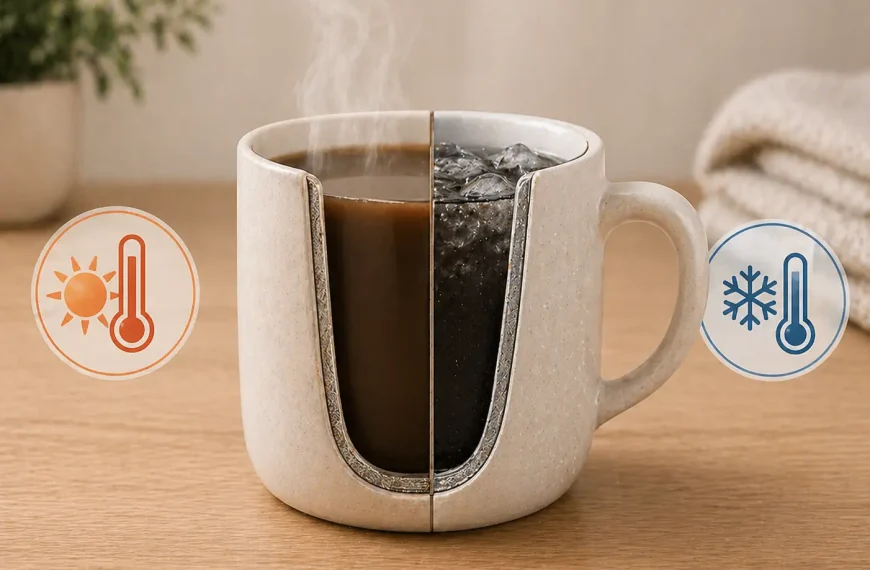
Double-wall handleless mugs are mugs built with two walls separated by an air gap or vacuum-like insulating space. This structure reduces heat transfer from the inner wall to the outer wall. For handleless mugs, the benefit is direct: the drink can remain warm while the outside stays more comfortable for the hand.
Double-wall glass mugs often use borosilicate glass because borosilicate is valued for thermal shock resistance compared with ordinary soda-lime glass. That makes it common in hot-drink glassware. Stainless steel handleless mugs use a different approach. They usually rely on double-wall vacuum insulation, where the gap between walls reduces heat transfer and supports travel-style heat retention.
Double-wall construction improves handleless mugs in three ways:
- Lower outer-wall temperature
The hand contacts the outer wall, not the hot inner wall. - Better heat retention
The drink loses heat more slowly through the sides. - More practical direct grip
The user can hold the vessel body without relying on a handle.
How do wall thickness and design affect heat retention?
Wall thickness and design affect heat retention by changing how much heat the mug absorbs, stores, and releases. A thicker ceramic wall can absorb more heat from the drink at first, then release it more slowly. A thin wall warms quickly and cools quickly. A double-wall structure works differently because it uses separation between walls rather than only material mass.
The absence of a handle does not directly improve heat retention. Heat retention comes from the mug’s material, wall thickness, lid use, opening diameter, and insulation system. A handleless mug can retain heat well when it has a thick ceramic body or double-wall construction. It can also lose heat quickly when it is thin, wide-mouthed, and single-walled.
Thicker walls are useful when the mug is meant for seated drinking and steady warmth. They are less useful when they make the mug heavy or too bulky for one-hand grip. For handleless mugs, wall thickness must balance heat retention with holdability.
What design styles and aesthetics define handleless mugs?
Handleless mugs are defined by design styles that make the vessel body visually and functionally complete without a handle. The most common styles are minimalist, handmade, Japanese-inspired, Scandinavian-inspired, rustic, and double-wall modern glass. These styles are not only visual. They affect how the mug sits in the hand, how it stores, and how it feels during drinking.
The practical question is whether handleless mugs are functional or just aesthetic. They are functional when the design solves heat, grip, and balance. They are only aesthetic when the missing handle creates discomfort, heat problems, or slipping without offering any usability benefit.
A well-designed handleless mug has four visible design signals:
- A clear grip zone
The body shape shows where the hand should sit. - A stable base
The bottom gives enough support for the height and fill volume. - A comfortable rim
The lip allows smooth drinking without feeling too thick or sharp. - A controlled surface
The finish supports either grip, insulation, or tactile comfort.
Why do Japanese and Scandinavian design principles influence handleless mugs?
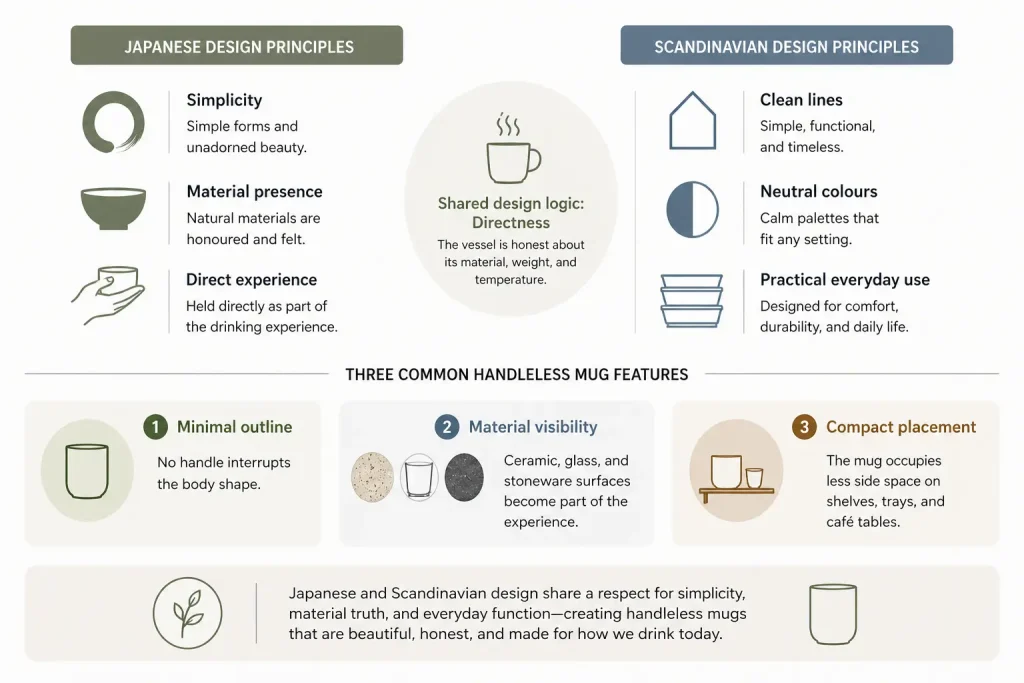
Japanese and Scandinavian design principles influence handleless mugs because both traditions value simple forms, material presence, and functional restraint. Japanese handleless tea vessels show how a cup can be held directly as part of the drinking experience. Scandinavian design adds the modern preference for clean lines, neutral colours, compact storage, and practical everyday use.
The shared design logic is directness. The vessel does not hide its material, weight, or temperature. The user feels the wall, texture, and warmth. That makes handleless mugs suited to stoneware, matte glazes, simple silhouettes, and muted colour palettes.
These design influences explain three common handleless mug features:
- Minimal outline
No handle interrupts the body shape. - Material visibility
Ceramic, glass, and stoneware surfaces become part of the experience. - Compact placement
The mug occupies less side space on shelves, trays, and café tables.
How do handleless mugs support everyday usability and storage?
Handleless mugs support everyday usability and storage by reducing protruding parts and making the vessel easier to place in tight spaces. A side handle adds width, creates a snag point, and forms a vulnerable projection. Removing it gives the mug a cleaner footprint.
Handleless mugs are not automatically more durable than handled mugs. The body material still controls chip resistance, crack resistance, and thermal shock resistance. But removing the handle removes one common break point because there is no attached loop to knock against shelves, sinks, or dish racks.
In everyday use, handleless mugs work best in three settings:
- Shelves and small kitchens
The compact form uses less horizontal space. - Cafés and hospitality trays
The shape is easier to arrange in groups. - Desk and table use
The mug has fewer parts that catch on nearby objects.
How do you clean and maintain handleless mugs properly?
Handleless mugs are cleaned and maintained by matching the cleaning method to the material, finish, and insulation structure. Ceramic and stoneware handleless mugs are often dishwasher safe when the maker labels them that way. Handmade pottery, metallic finishes, decals, cork sleeves, wooden details, and double-wall insulated parts need more careful cleaning.
A practical cleaning routine has five steps:
- Check the maker’s label
Use dishwasher or microwave only when the mug is marked safe for that use. - Wash after use
Coffee, tea, and milk residue should not dry inside the vessel. - Use mild detergent
Avoid abrasive scrubbing on matte glaze, printed decoration, or handmade surfaces. - Dry fully
Let the rim, base, and sleeve area dry before storage. - Inspect the surface
Retire mugs with cracked glaze, damaged insulation, or sharp chips on the rim.
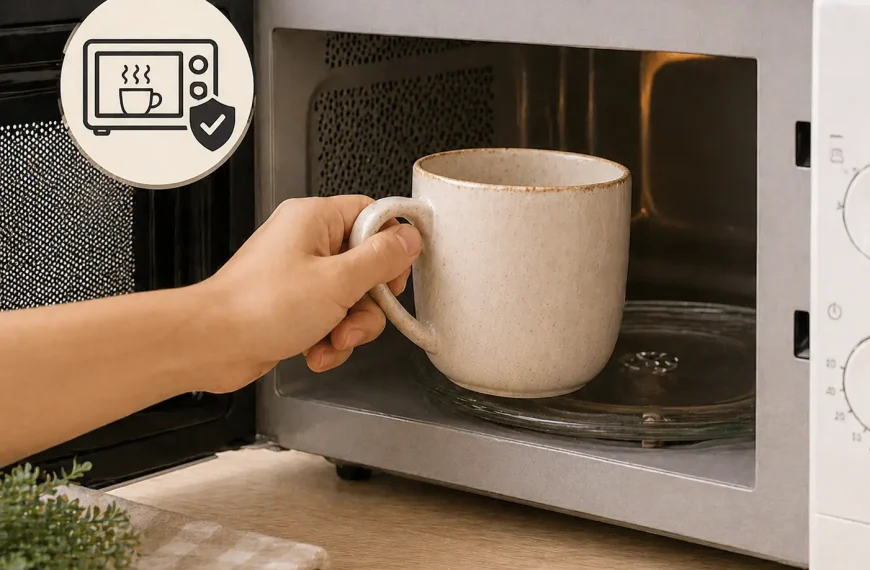
Microwave safety depends on material. Plain ceramic can be microwave safe when labelled safe. Metal, metallic glaze, and stainless steel are not suitable for microwave use.
How does lid compatibility and form extend functionality?
Lid compatibility extends handleless mug functionality by adding spill resistance, heat retention, and portability. A lid changes the mug from a seated drinking vessel into a more flexible container. But a handleless mug with a lid is not automatically a travel mug.
A handleless mug becomes more portable when it has three features:
- A fitted lid
The lid reduces splashes and slows cooling. - A stable body
The base must resist tipping when the mug is placed down. - A comfortable grip zone
The user still needs secure hand contact during movement.
Spill-proof and leak-proof are different claims. Spill-proof means the lid reduces splashes during normal movement. Leak-proof means the vessel can resist liquid escape under stronger conditions, such as tilting or inversion. Most ceramic handleless mugs with lids are better described as spill-resistant, not leak-proof.
How are handleless mugs used across different beverages and contexts?
Handleless mugs are used when the beverage, setting, and hand contact all suit direct-wall holding. They work well for seated coffee, tea, hot chocolate, café service, and hospitality settings where the mug is lifted, sipped, and placed back down. They are less suitable for very hot takeaway drinks unless the vessel has double-wall insulation or a sleeve.
People choose handleless mugs for five practical reasons:
- They feel more tactile
The user contacts the material directly. - They look cleaner on tables
The form is compact and simple. - They suit small spaces
The missing handle reduces width. - They fit café presentation
They work well with modern coffee and tea service. - They support slower drinking
They suit seated use more than fast movement.
Are handleless mugs suitable for coffee, tea, and hospitality settings?
Handleless mugs are suitable for coffee, tea, and hospitality settings when the serving temperature, capacity, and grip design match the drink. In product selection, the most useful handleless mugs are the ones that match the drink’s heat level, the serving volume, and the way the vessel sits in the hand during repeated sipping. Tea service often suits smaller handleless forms because the vessel is lifted often and held briefly. Coffee service works well when the mug has enough thermal control for milk drinks, filter coffee, or café presentation. Large black coffees served very hot need more caution because higher liquid volume and higher temperature increase the load on the hand.
Different drinks need different vessel choices:
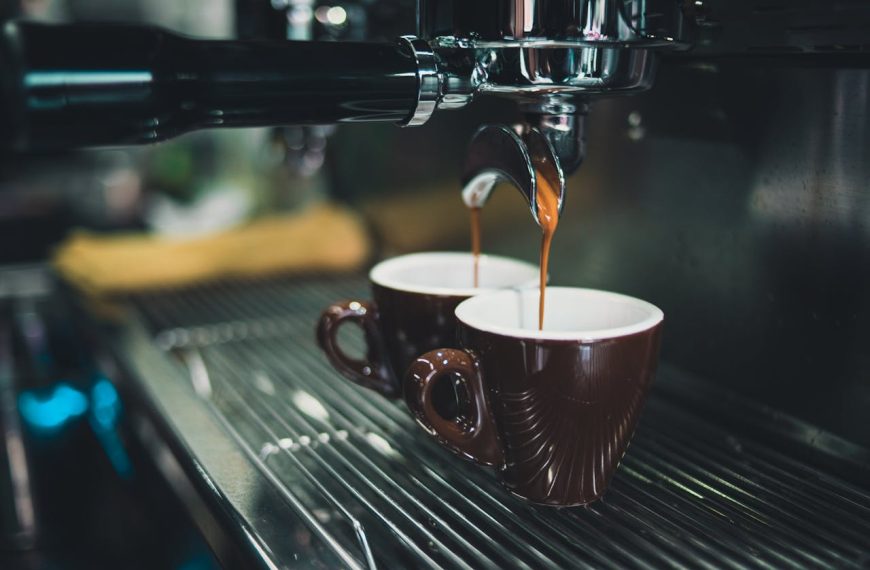
- Espresso
A small handleless cup works because the volume is low. - Tea
A yunomi-style form works because it supports hand contact and repeated sipping. - Latte or flat white
A wider ceramic handleless cup works when the wall stays comfortable. - Large coffee
A double-wall or sleeved handleless mug is safer than a thin single-wall form.
Cafés use handleless mugs because they create a compact table setting, show off ceramic surfaces, and support a modern service style. But café use only works well when staff match the vessel to drink temperature and serving size.
How do sleeves and external grip accessories change the safety and usability of handleless mugs?
Sleeves and external grip accessories change handleless mug usability by adding a removable barrier between the hand and the vessel wall. They do not change the mug’s material, wall thickness, or internal insulation. They change the contact surface that the user touches.
This matters because the core weakness of a handleless mug is exposed wall contact. A sleeve can reduce direct heat contact, improve grip, and make a smooth vessel easier to carry. It is most useful when the mug shape is good but the outer wall gets too warm, too slippery, or too narrow for comfortable holding.
What is an insulated cup sleeve and how does it reduce hand contact with hot surfaces?
An insulated cup sleeve is an external wrap that covers the grip zone of a cup or mug. It reduces hand contact with hot surfaces by placing a lower-conductivity layer between the vessel wall and the skin. The sleeve becomes the surface the user holds.
A sleeve helps in three ways:
- Thermal separation
The hand touches the sleeve instead of the hot wall. - Grip improvement
The sleeve adds friction to smooth ceramic, glass, or metal. - Comfort control
The user can hold the mug longer without shifting grip as often.
A sleeve does not make an unsafe mug automatically safe for all hot drinks. It only improves the contact condition at the covered area.
When should a silicone, cork, paperboard, or textile sleeve be used with a handleless mug?
A sleeve should be used with a handleless mug when the mug is comfortable in shape but uncomfortable in surface temperature or grip security. The best sleeve material depends on the setting.
Four sleeve types serve different uses:
- Silicone sleeve
Best for reusable grip and heat protection on glass or ceramic bodies. - Cork sleeve
Best for low-weight insulation and natural texture. - Paperboard sleeve
Best for takeaway-style service and short-term use. - Textile sleeve
Best for home use, handmade mugs, and softer hand feel.
Sleeves are most useful for single-wall handleless mugs, hot takeaway-style drinks, and users with heat-sensitive hands.
Do reusable sleeves improve portability, grip security, and café service without changing the mug itself?
Reusable sleeves improve portability, grip security, and café service by adding a separate hand-contact layer while leaving the mug body unchanged. This is useful when a café or home user wants the look of a handleless mug but needs better heat control. The sleeve allows the same vessel to serve different users, drink temperatures, and handling needs.
A reusable sleeve improves three practical outcomes:
- Portability
The mug becomes easier to carry short distances. - Grip security
The hand gets a more stable surface. - Service flexibility
The same mug can be used for warmer drinks with less discomfort.
The limitation is fit. A loose sleeve can slide, and a sleeve that covers too much of the body can hide the mug’s intended grip shape.
What makes a handleless mug work well?
A handleless mug works well when it controls heat, supports grip, stays balanced, and suits the drink it is used for. The missing handle is not a problem by itself. It becomes a problem only when the wall gets too hot, the surface slips, the body is too heavy, or the vessel is used like a travel mug without the right insulation or lid.
The strongest handleless mugs solve four design requirements at the same time:
- Holdability
The outside wall stays comfortable enough for direct contact. - Ergonomics
The shape supports the fingers and palm without strain. - Thermal control
The material, wall thickness, or double-wall structure slows heat transfer. - Context fit
The size and form match the drink, setting, and user’s hand.
A handleless mug is not just a mug with a missing part. It is a direct-contact drinking vessel where the wall becomes the handle.