
A pottery mug is a drinking mug made from a formed clay body, usually stoneware, earthenware, or porcelain, then permanently hardened by kiln firing into a functional ceramic vessel. Its practical value comes from vitrification of the clay body and a food-contact glaze that seals the surface so it can hold hot and cold drinks without leaking, absorbing water, or shedding unsafe residues.
Safety and durability are the first performance benchmarks. Lead and cadmium migration is a real, measurable issue in food-contact drinkware, and it is driven by glaze chemistry, decoration placement, and how the mug is used and cleaned. In one peer-reviewed study of ceramic mugs, cadmium and lead migration from both the interior and the lip-area exterior was measured over 24 hours using 4% acetic acid, a standard food-simulating approach. Another food-contact study reported lead migration from rims above a 2.0 mg per product limit in multiple samples, with high results linked to decorated rims, which matters because the rim is a direct mouth-contact zone. Public-health investigations also show why provenance matters: a CDC report linked a family’s elevated blood lead levels (at or above 5 μg/dL, with results up to 53 μg/dL) to traditional glazed ceramic ware, with the glazed interior measuring 15.7 mg/cm² of lead by XRF screening.
A pottery mug also has to survive routine kitchen heat cycles, so microwave and dishwasher use are best treated as stress tests for glaze integrity and long-term cleanliness, not as aesthetic features. That same functional lens continues into ownership: choosing a mug means judging the clay body, rim comfort, handle join strength, glaze fit, and finish, then maintaining it so performance stays stable over years. This distinction between small-batch production and mass manufacturing is a vital sub-category within our index of material-based mug types, where the origin of the clay directly impacts the vessel’s chemical profile. To understand these safety and performance benchmarks, one must first distinguish the artisan pottery mug from the broader category of industrial ceramics. (ScienceDirect) (CDC)
What is a pottery mug and how is it different from a ceramic mug?
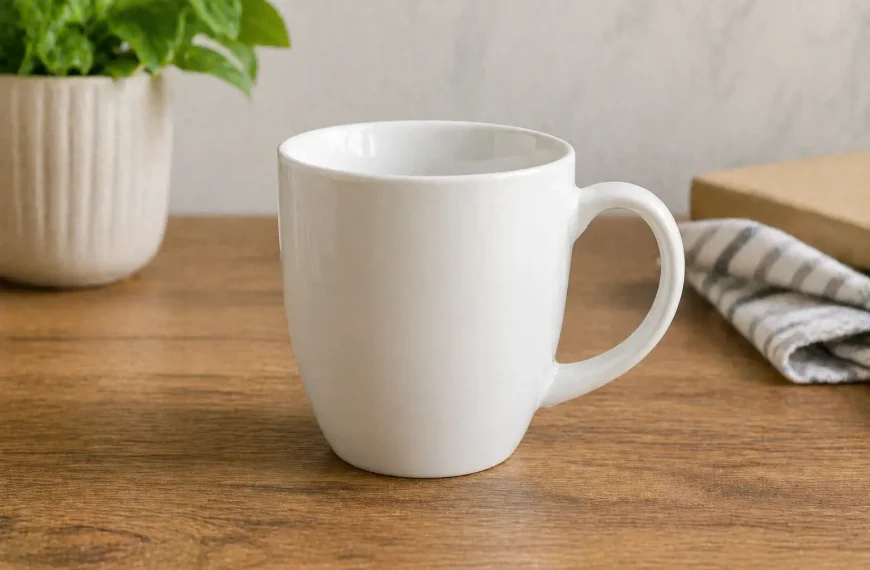
A pottery mug is a clay-based mug that has been shaped, dried, and kiln-fired into a durable vessel, usually finished with a glaze that seals the surface. “Ceramic mug” is the broader category that includes both studio-made pottery and industrially produced ceramic drinkware. The simplest rule is one-way: all pottery is ceramic, but many ceramics are not pottery because they are factory-made by casting or pressing and then fired in high-volume production lines.
What makes a pottery mug “handmade” or “artisan-made”?
A handmade pottery mug is formed and finished primarily by a potter’s hands rather than by a mold-driven production line. You can usually confirm this by checking for consistent but human-scale variation across the form. There are 6 common telltale signs:
- Subtle variation in wall thickness, especially near the base
- Small throwing rings or compression marks inside the mug
- A handle that shows “pulled” shaping rather than a perfectly identical cast profile
- A foot ring that shows trimming marks, not a fully uniform factory base
- Glaze flow variation at edges (rim, handle joins, foot) that looks kiln-formed, not printed
- Minor asymmetry that still feels balanced in the hand
What does “studio pottery” mean for pottery mugs?
Studio pottery means the mug was produced in a small workshop where forming, glazing, and firing are controlled by the maker or a small team, not by a mass-production plant. The practical difference shows up in decision-making: studio potters tune clay body choice, glaze chemistry, and firing schedule to hit a target balance of strength, absorption resistance, and surface durability. It also means small-batch repeatability rather than identical replication, so two mugs from the same glaze bucket can still vary after firing due to kiln position, heatwork, and atmosphere.
What clay is used to make pottery mugs?
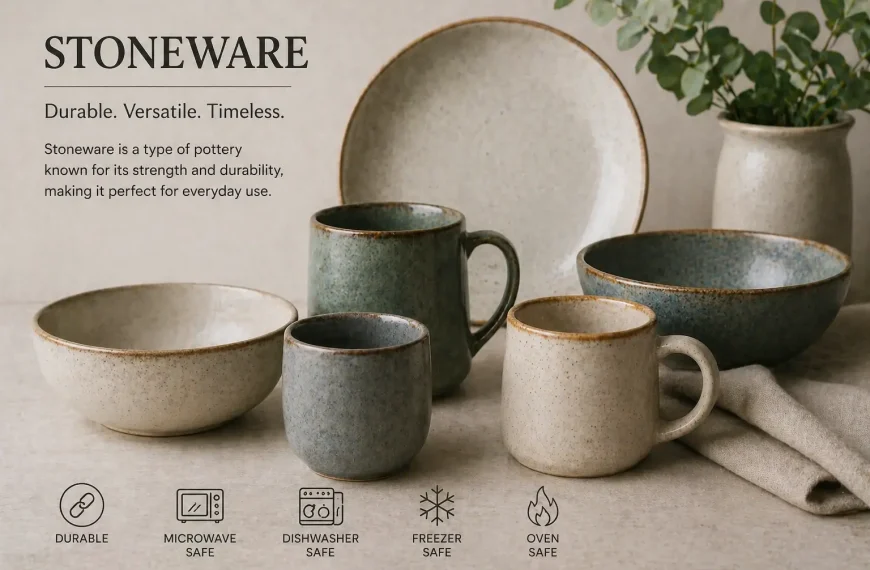
Pottery mugs are made from clay bodies selected for how they behave during forming, drying, and firing, and for how dense they become after firing. The three main families used for functional mugs are earthenware, stoneware, and porcelain, and the key performance difference is how close the fired body gets to a low-absorption, sealed structure through vitrification.
What is the difference between stoneware and earthenware mugs?
Stoneware mugs are fired to a denser state than earthenware mugs, which is why stoneware is the default for everyday functional drinkware in many studios. Earthenware is typically fired lower, which usually leaves a more open body structure that relies heavily on glaze coverage to resist absorption. In practical terms, “can it absorb water?” comes down to whether the clay body was fired to a sufficiently vitrified state and whether all liquid-contact surfaces are properly glazed and intact.
Are stoneware pottery mugs better than porcelain mugs?
Stoneware mugs are usually the better choice for daily durability, while porcelain mugs win when the goal is refinement in feel, thinness, and visual brightness. The “winner” depends on use case: for a heavy-rotation mug that sees frequent heat cycling and rough handling, stoneware’s typical thickness and toughness are an advantage; for a lighter mug with a cleaner rim feel and a more refined surface, porcelain is hard to beat. Both can be fully functional when correctly fired and glazed.
Why do pottery mugs vary in thickness and weight?
Pottery mugs vary in thickness and weight because forming methods and design goals change the wall profile. A mug thrown quickly for a thicker “diner-style” feel will retain more mass, while a porcelain mug thrown thin will feel lighter but may demand tighter firing and glaze-fit control to stay durable. Thickness also changes heat behavior in use: more mass usually slows temperature change, which can help a mug feel steady in the hand during hot pours.
How are pottery mugs made?
Pottery mugs are made through a staged workflow: forming, controlled drying, trimming and assembly, bisque firing, glazing, and a final glaze firing. Each stage exists to prevent cracking, warping, weak joins, and glaze defects, because clay shrinks as it dries and changes permanently as it fires.
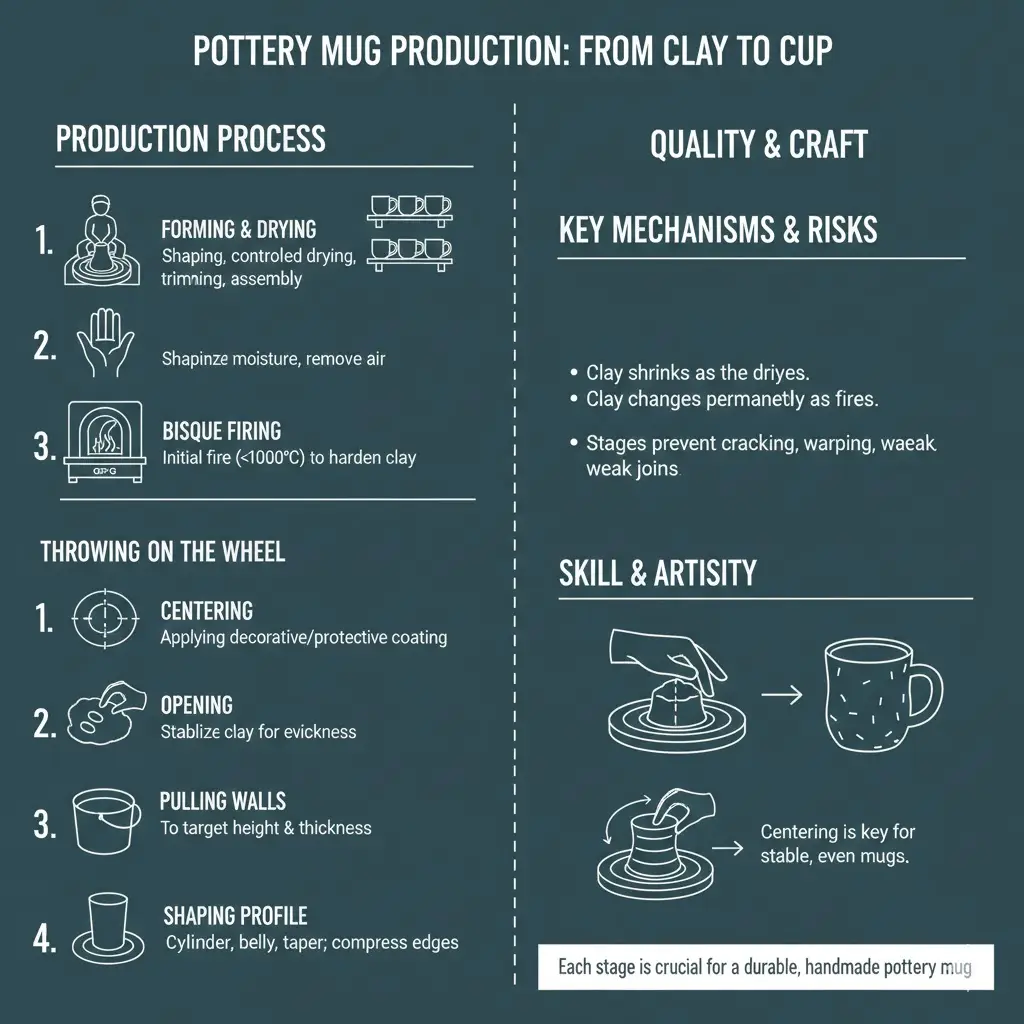
How do you throw a mug on the pottery wheel?
Throwing a mug on the wheel means shaping a centered lump of clay into a cylinder and then refining its profile into the final body. Centering is the highest-skill step because it stabilizes the clay so the walls can be pulled evenly without wobble. There are 5 core phases:
- Wedging the clay to homogenize moisture and remove air pockets
- Centering the clay on the wheel head so rotation is stable
- Opening the centered clay to establish the base thickness
- Pulling the walls upward to the target height and thickness
- Shaping the profile (cylinder, belly, taper) and compressing key edges for strength
How does handbuilding work for mugs (Slab vs. Coil)?
Handbuilding forms a mug without a wheel by building walls from slabs or coils and then joining them into a sealed body. Slab mugs are built from flattened sheets and suit geometric forms, crisp corners, and intentional facets; coil mugs build volume by stacking rolled coils and blending them into a continuous wall for rounder, more organic shapes. Both methods still require careful drying control and strong joining technique so seams do not split during firing.
What is greenware, and what happens during the “leather-hard” drying stage?
Greenware is an unfired clay mug that has been shaped but not yet bisque-fired. Leather-hard is the controlled semi-dry stage where the mug is firm enough to handle and carve but still moist enough to join parts securely. This is the main window for attaching handles, refining rim shape, and preparing the base for trimming.
What is trimming, and why do pottery mugs get a foot ring?
Trimming is the process of shaving away excess clay from a leather-hard mug to refine the profile and establish a stable base. A foot ring is the raised base ring created during trimming to stabilize the mug, reduce wobble, and lift the bottom so the mug sits cleanly on a surface. The unglazed feel many people notice on the bottom is often the exposed clay of the foot ring, because the mug is typically fired standing on that ring so glaze does not fuse the mug to the kiln shelf.
What is bisque firing, and why is it important before glazing?
Bisque firing is the first kiln firing that converts fragile dry clay into a stronger, porous ceramic that can be handled and glazed safely. It matters because glaze is applied as a liquid suspension, and the bisque stage provides the absorbent surface that allows an even coating to dry onto the ware. Without bisque, raw clay can dissolve, warp, or crack during glazing and handling.
What are the main parts of a pottery mug, and how do they affect use?
A pottery mug’s usability is determined by its anatomy: body shape, rim geometry, and handle design, plus how well those parts were formed, joined, and fired. These zones control heat retention, sipping comfort, grip stability, and the everyday “feel” that makes one mug a daily favorite and another a shelf piece.
What is the body, and do pottery mugs keep coffee hot longer?
The body is the main container that holds the beverage and provides most of the mug’s thermal mass. A thicker body usually slows temperature change because there is more material to absorb heat, so the drink often cools more gradually compared with a very thin-walled mug. Body shape also changes aroma and heat loss: a belly shape tends to trap more rising steam inside the mug opening, while a tapered top concentrates aroma nearer the rim when you sip.
What is the rim and lip, and why do they matter for sipping comfort?
The rim and lip are the mouth-contact edges, and they control how liquid “breaks” as it leaves the mug and how the mug feels against the lips. Comfort is influenced by lip rounding, rim thickness, and whether glaze coverage is smooth at the edge. A rim-focused study that tested metal migration from ceramic vessel rims reported lead migration exceeding a 2.0 mg per product benchmark in multiple samples and linked the highest migration outcomes to decorated rims, which is why rim decoration and finishing are not purely cosmetic for drinkware.
How is a handle “pulled” and attached using “score and slip”?
A pulled handle is shaped by stretching a prepared piece of clay into a curved grip profile, then cutting it to length and attaching it while the mug is at a compatible moisture stage. Score and slip is the primary joining method: the potter scratches both contact surfaces (scoring), applies liquid clay (slip), and compresses the join to form a strong bond that survives drying shrinkage and firing stress. A secure join depends on clean scoring, correct moisture match between handle and body, and enough compression to eliminate air gaps at the seam.
What is glaze on a pottery mug and how is it applied?
Glaze on a pottery mug is a glass-forming coating that melts in the kiln and fuses to the ceramic surface to seal and protect it. In functional drinkware, glaze is not optional decoration; it is the barrier that makes the surface easier to clean, less absorbent, and more resistant to staining and flavor carryover.

What is the best glaze for a pottery mug?
The best glaze for a pottery mug is one that is formulated and fired to be food-contact safe and durable under repeated washing and heat cycling. In practical terms, “best” means the glaze matures properly at the clay body’s firing range, fits the body without chronic crazing, and resists surface degradation in daily use. Labels and documentation matter most when buying: look for clear statements that the ware is intended for food use and that the glaze is lead-free and functional at the maker’s firing temperature.
What are reactive glazes, and why do they vary from mug to mug?
Reactive glazes are glazes whose final appearance changes because minerals flow, separate, or crystallize during firing, creating variegated colors and patterns. They vary from mug to mug because kiln heatwork is not perfectly uniform across shelves, and small differences in thickness, placement, and firing atmosphere can change melt behavior. This is why two mugs dipped in the same bucket can still come out with different streaks, breaks, and pooling patterns.
What is the difference between matte, gloss, and celadon glazes?
Gloss glazes fire to a smooth, reflective surface that is usually easier to wipe clean because it tends to be less texture-retentive. Matte glazes fire to a softer-looking surface with a more “stone” feel and can show metal marking or scuffing more readily if the surface has higher micro-texture. Celadon is a translucent glaze family known for depth and a jade-like visual, where thickness and pooling strongly influence the final color.
How do potters create texture through carving, stamping, or sgraffito?
Carving cuts directly into the clay surface to create incised lines and relief. Stamping presses patterns into the surface while clay is still workable, producing repeated motifs and tactile grip zones. Sgraffito creates contrast by scratching through a slip or underlayer to reveal the clay body beneath, producing sharp linework after firing.
What is slip and engobe, and how are they used for coating and joining?
Slip is liquid clay used both as a functional joining medium and as a coating base. Engobe is a slip-like coating formulated for decorative surface color and texture, often applied to leather-hard clay before glazing. The key difference is purpose: slip is often used to bond and patch, while engobe is used to coat for aesthetics and surface design.
What is the difference between oxidation and reduction firing?
Oxidation firing is a kiln atmosphere with sufficient oxygen, which tends to produce cleaner, more predictable colors in many glaze systems. Reduction firing reduces oxygen availability, which changes how metals in glazes and clays develop color and can create spotting, variegation, and deeper tonal shifts. The atmosphere is one reason the same glaze recipe can look dramatically different between an electric kiln (typically oxidation) and a fuel kiln run in reduction.
Are pottery mugs safe to drink from?
Pottery mugs are safe to drink from when the clay body and glaze are correctly matured for food use and the finished surfaces do not leach unsafe metals into beverages. The highest-risk failures are not about “handmade vs factory”; they are about glaze chemistry, decoration placement, and whether the mug was made and tested as food-contact ware.
Do pottery mugs contain lead?
Pottery mugs can contain lead when leaded glaze or lead-bearing decoration is used on food-contact surfaces, and the risk is highest in certain traditional, vintage, or poorly controlled production contexts. A CDC investigation (NYC, 2017–2022) documented a family cluster with blood lead results at or above 5 μg/dL, reaching as high as 53 μg/dL, and linked the exposure to traditional glazed ceramic ware where XRF screening measured 15.7 mg/cm² lead on the glazed interior; levels declined after the ware was removed from use.
What is vitrification, and how does it prevent water absorption?
Vitrification is the firing-driven densification of a clay body toward a glass-like structure that reduces open porosity. When a mug is sufficiently vitrified, it resists water penetration, becomes more hygienic in daily use, and is less likely to develop persistent odor or flavor carryover through absorbed liquids. Ceramic absorption is commonly evaluated with standardized approaches such as boiling-and-soak methods used in ASTM-style water absorption testing, which is why potters treat absorption as a measurable performance trait rather than a vague claim.
What is thermal shock, and can pottery mugs go in the freezer?
Thermal shock is cracking caused by rapid temperature change that creates uneven expansion or contraction through the mug wall. Freezer storage is mechanically safer when the mug is fully vitrified and the temperature change is gradual, because the highest risk comes from jumping directly between extremes such as a freezer and boiling water. In food-safety practice, a domestic freezer is typically set around -18°C, so the safest routine is to let a chilled mug warm closer to room temperature before adding very hot liquid.
What is crazing, and how is it related to glaze fit?
Crazing is a network of fine glaze cracks caused by mismatch between the glaze and clay body as they cool, meaning the glaze is under tension and fractures on the surface. Glaze fit matters because it determines whether the surface stays intact through repeated heating, cooling, and washing cycles. A crazed surface is also harder to keep pristine because microcracks can hold stains and residue, so persistent crazing is treated by many makers as a durability defect rather than a “decorative” feature.
Are pottery mugs dishwasher safe and microwave safe?
Pottery mugs are dishwasher safe and microwave safe when the clay body is properly fired and the glaze and decoration are formulated for repeated heat and detergent exposure. The practical answer is “yes, with standards”: the mug must tolerate microwave heating without unsafe materials, and it must resist dishwasher wash temperatures and detergent abrasion without degrading the glaze surface.
Can you microwave pottery mugs without damaging the clay body?
You can microwave pottery mugs safely when the mug has no metallic decoration and the body is well-made and fully fired. Household microwave ovens operate around 2.45 GHz, and the heating load is driven mainly by what is inside the mug, but defects such as trapped air pockets and incompatible decorations can create localized stress. (Simon Fraser University)
Can pottery mugs go in the dishwasher, or will the glaze degrade?
Pottery mugs can go in the dishwasher when the glaze surface is durable enough to tolerate repeated chemical and mechanical wear from detergents and water jets. Dishwasher performance standards assume hot incoming water: one major appliance manufacturer specifies 120°F to 150°F water entering the dishwasher for proper cleaning and to prevent damage.
Are pottery mugs oven safe?
Most pottery mugs are not oven safe unless the maker explicitly designed them as oven-to-table ware or flameware and states that use case clearly. Oven use creates long, dry heat exposure and larger thermal gradients than typical beverage use, which raises the risk of cracking if the form and clay body were not engineered for it. If there is no explicit oven rating from the maker, treat the mug as a drinkware-only vessel.
How do you choose and care for a pottery mug?
Choosing and caring for a pottery mug means treating it as functional equipment with measurable performance limits, not as a purely decorative object. The selection process focuses on capacity, balance, rim comfort, handle geometry, glaze durability, and clear food-use intent, and the care process focuses on protecting the glaze surface and keeping the mug clean without embedding stains. When comparing pottery mugs for daily use, prioritise clear food-use intent, stable glaze, rim comfort, handle balance, and care instructions that match your washing habits.
What size should a pottery coffee mug be vs. a tea mug?
A practical pottery mug size starts with what regulators and industry references treat as a “normal” cup or mug volume and then matches that to your daily drink. FDA guidance describing cups and mugs notes they “normally, but not exclusively” have a capacity of about 240 mL (8 fl oz), and specialty coffee industry references commonly discuss drink and cup sizes at 160 mL, 200 mL, 240 mL, and 320 mL in café workflows. (U.S. Food and Drug Administration)
There are 3 selection rules that work in practice:
- Match the mug volume to your standard brew volume, not to the mug’s brim volume
- For milk-heavy coffee drinks, a 320 mL mug format is a common café reference point
- For tea, prioritize a rim that cools comfortably and a shape that leaves room for steeping or dilution if you drink it that way
How do ergonomics and handle shape affect comfort?
Ergonomics is how the mug feels in the hand during real use: lifting, sipping, and setting down repeatedly. A stable mug feels lighter than its actual weight because the handle geometry keeps the center of mass aligned with your grip and the rim-to-handle relationship prevents wrist strain. There are 4 handle-fit checks:
- Finger clearance: your fingers fit without pinching against the body
- Grip style: the handle supports your usual one-finger, two-finger, or full-hand grip
- Balance: the mug does not tip forward when lifted half-full
- Contact comfort: the handle edges and joining area do not create pressure points
How do you clean and maintain a handmade pottery mug to prevent staining?
Cleaning a handmade pottery mug means removing residues without roughening the glaze surface or leaving odor-causing films behind. The baseline routine is mild dish soap, thorough rinsing, and full drying so the mug does not stay damp in cabinets. There are 4 stain-control steps:
- Rinse immediately after coffee or tea so tannins and oils do not set
- Wash with mild soap and a non-abrasive sponge to protect gloss and matte finishes
- For stubborn stains, use a baking-soda paste scrub and rinse completely
- Dry fully before storing, especially around the foot ring and handle join where moisture can linger
Contextual Bridge: How do pottery mugs compare to other drinking vessels?
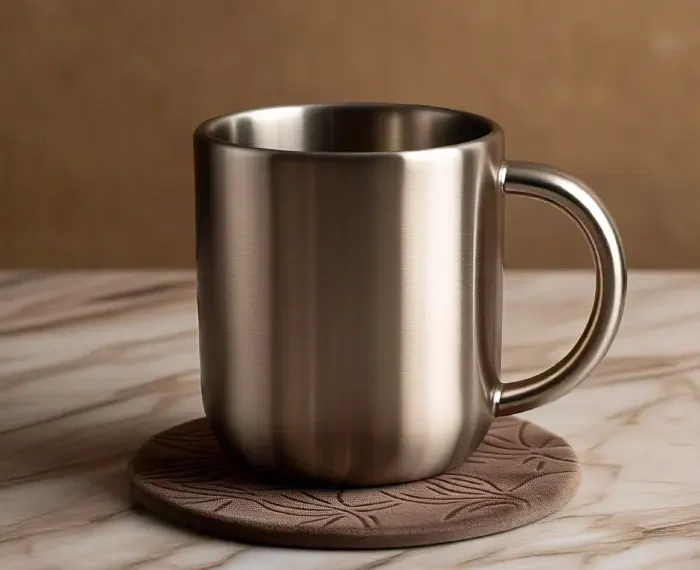
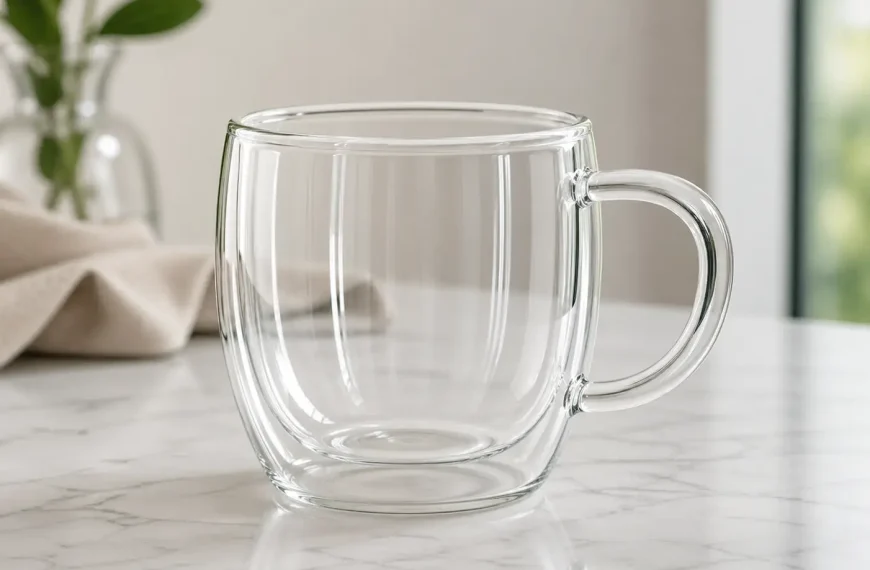
Pottery mugs stand out because the clay body and glaze create a distinct balance of heat feel, weight, and surface texture that many people prefer for daily hot drinks. Glass mugs emphasize visibility and do not rely on glaze chemistry, while insulated travel mugs prioritize temperature retention and spill control with lids and seals. Pottery sits in the middle: it is a tactile, kiln-fired vessel optimized for hand feel and direct sipping, and its real quality is proven by food-safety intent, glaze durability, and how well it holds up to the heat and cleaning cycles of daily use.
How do you price and sell handmade pottery mugs without undercharging (and without scaring buyers)?
Pricing and selling handmade pottery mugs is a business task built on cost control, consistent quality, and shipping risk management, not on vague “art value.” A stable pricing method uses repeatable inputs like time, materials, firing cycles, defect rate, and packaging cost so the maker can deliver consistent functional ware without cutting corners on glaze safety or durability.
What factors actually determine the price of a pottery mug (materials, time, firing cycles, glaze risk, rejects)?
Price is determined by the true cost of making a functional mug and the risk the maker absorbs when a piece cracks, warps, or comes out with glaze defects. There are 6 cost drivers that do the heavy lifting:
- Clay and glaze materials, including tests and reformulations
- Labor time: throwing or handbuilding, trimming, handle work, glazing, finishing
- Kiln firings: bisque plus glaze firing, including energy and kiln wear
- Loss rate: cracked greenware, failed joins, crawling or pinholing, warping
- Quality control: food-use intent, surface finish, and consistency checks
- Sales overhead: studio rent, tools, fees, and payment processing
Retail vs. wholesale: when does each model make sense for studio potters and small-batch makers?
Retail makes sense when the maker can sell directly with enough margin to cover labor, rejects, and studio overhead per mug. Wholesale makes sense when production is consistent enough to hit deadlines and repeat forms and glazes reliably across batches without compromising quality. The deciding factor is repeatability: if the maker can reproduce a mug line with stable glaze outcomes and minimal defects, wholesale becomes feasible; if each batch is highly variable, direct retail is usually safer.
Packaging and shipping fragility: how do you reduce breakage risk and handle replacements/refunds?
Shipping fragility is managed by preventing movement inside the box and protecting rim and handle zones from impact. There are 5 practical controls:
- Double-boxing for higher-risk shipments
- Cushioning that locks the mug in place so it cannot rattle
- Extra rim and handle protection because these are common break points
- Clear “fragile” handling labeling plus realistic transit expectations
- A replacement/refund policy that is written before the first sale, not after a breakage happens
The final checklist that separates a daily mug from a risky one
A pottery mug earns daily-use status when it proves three things: safe surfaces, stable structure, and predictable care requirements. Treat the rim, interior glaze, and handle join as the highest-priority zones, because they take the most abuse and have the most direct contact with the drinker. Use a simple rule: buy from makers who state food-use intent clearly, avoid unknown decoration on the rim, and match your care habits to the glaze finish you choose. For most people, that is the real definition of a “good pottery mug”: a fired clay vessel that stays clean, stays intact, and stays safe through years of real use. By verifying these safety and structural benchmarks, you ensure that your unique artisanal pieces function with the same consistency and longevity expected of all standard mugs.