
Oven safety for drinking mugs is determined by a material’s thermal expansion coefficient and its ability to withstand prolonged exposure to dry heat without structural failure or chemical leaching. High-fired ceramics, especially stoneware and porcelain, set the baseline for oven-capable drinking vessels because their fired structure is built for heat stability and thermal-shock resistance. (ScienceDirect)
“Oven-safe” is not a single temperature claim because the risk changes with heat intensity and how fast the mug’s wall temperature shifts. Broiling commonly runs around 500 to 550°F, which is a different stress profile from baking at moderate settings, because the heat is more intense and more directional. Thermal shock is the core failure pathway in dry-heat use, and controlled hot–cold tests on soda-lime glass have used hot-side temperatures from 100°C to 550°C to study fracture under rapid temperature gradients. That same gradient-driven mechanism is why “microwave safe” does not translate into “oven safe” for mugs, because electromagnetic heating and dry-oven convection create different wall-temperature patterns and different stress points.
Material hierarchy still decides the outcome, but “safe” also includes chemical stability at heat. In a Food Chemistry study, hot-oven leaching with 4% acetic acid for 2 hours produced 1 to 8 times more lead leaching than the same condition at room temperature, showing that heat and contact time can raise exposure from poor or leaded glazes. Modern convection appliances tighten the margins further: Philips lists a maximum air-fryer temperature of 200°C, and high-velocity airflow can drive faster surface heating than a slow oven ramp, so the same mug that survives a gentle bake cycle can fail under abrupt thermal gradients or edge-heating.
Thermal resilience represents the peak stress threshold in our catalog of mug features, requiring a precise understanding of material science and appliance mechanics. To navigate these high-temperature environments without vessel failure, it is critical to clarify what an “oven-safe” designation actually entails for consumer drinkware
What does “oven-safe for drinking mugs” actually mean?
Oven-safe for a drinking mug means the mug keeps its structure intact and keeps its food-contact surfaces chemically stable during dry-heat exposure at a stated temperature and for a stated time. “Safe” has two parts: the mug does not crack, craze further, or fail under thermal stress, and the mug’s glaze or coatings do not increase chemical transfer under the heat conditions used. Time matters because the longer the mug sits in dry heat, the more total heat energy moves into the wall and the more stress accumulates at rims, bases, and any existing microcracks. That is why a mug can survive a short warm-up and still fail during a long bake cycle at the same set temperature. If the manufacturer provides a temperature range, treat it as a full system limit that assumes normal use and slow ramps, not direct contact with heating elements or rapid hot-cold transitions.
When is a mug “warming-safe” versus “bake-safe” versus “broiler-unsafe”?
Warming-safe means the mug can handle low oven heat used for holding, not cooking, without fast wall-temperature gradients. A common “keep warm” range used in home ovens is about 170°F to 200°F (77°C to 93°C), which is the zone where most food-warming settings live. Bake-safe means the mug can handle sustained dry heat used for actual cooking and browning, which is usually far higher than warming settings. Broiler-unsafe means the mug should not be exposed to the intense, directional heat of broiling, where typical broil temperatures are about 500°F to 550°F (260°C to 288°C) and the heat flux is concentrated from a top element.
There are 3 practical reasons broiling is the riskiest mode for mugs:
- Directional heating: the rim and upper wall heat fast while the base stays cooler, driving a steep temperature gradient inside the wall.
- Localized hotspots: decorative trims, thin rims, and handle joints become stress concentrators when one zone heats faster than the rest.
- Short, intense exposure: broiling produces rapid surface expansion before the core warms evenly, which is a classic setup for thermal shock.
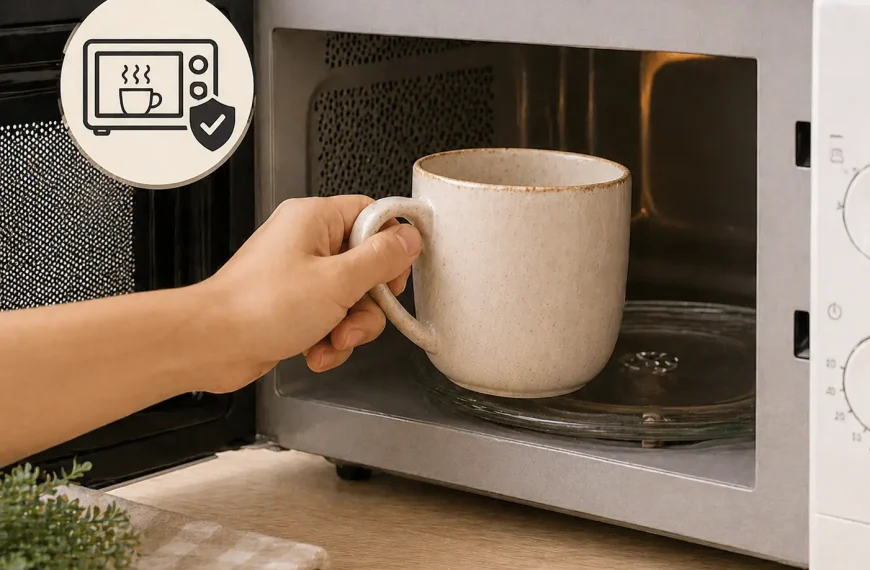
Does “microwave safe” mean “oven safe” for mugs?
No, microwave-safe does not mean oven-safe for mugs. Microwaves heat primarily by electromagnetic energy interacting with water and other polar molecules, while conventional ovens heat by hot air and radiant heat from elements that warms the exterior surface first. That difference changes where the highest stress sits in the mug wall: oven heat can drive a hotter outside surface with a cooler inner core for long periods, which is exactly the pattern that amplifies cracking when a mug has glaze crazing or microfractures. Treat microwave labels as a narrow compatibility label for microwave use, not a heat-class rating for dry-heat appliances.
Which mug materials are generally safest to put in an oven?
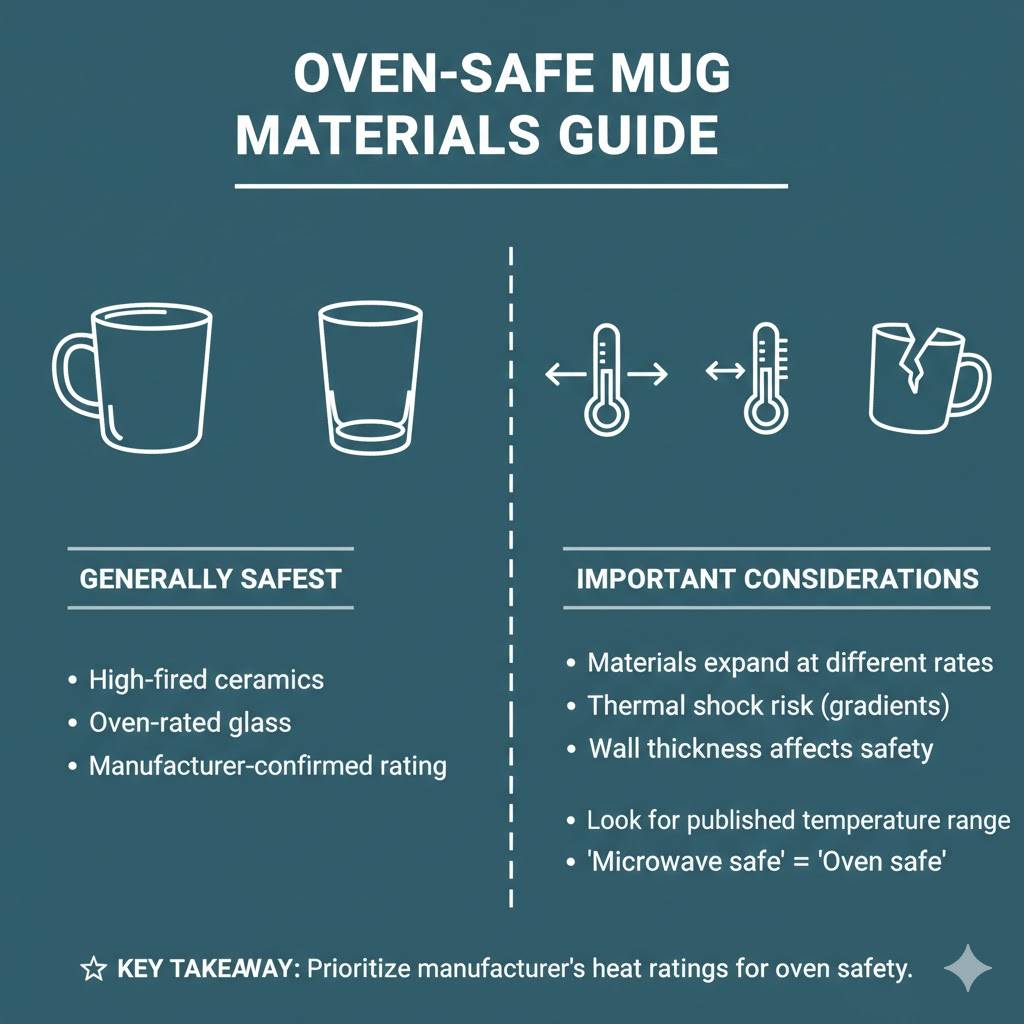
High-fired ceramics and oven-rated glass are the most common material categories that can be oven-capable when the manufacturer confirms the rating. The safety hierarchy exists because different materials expand at different rates, and dry heat punishes mismatched expansion, thin rims, and mixed-material joints. Material density and wall thickness also change how quickly the mug develops a temperature gradient, which changes thermal shock risk. In practice, the safest choices are the ones with a published temperature range and clear use-and-care limits, not just a generic “microwave safe” icon.
Are ceramic, stoneware, and porcelain mugs oven safe?
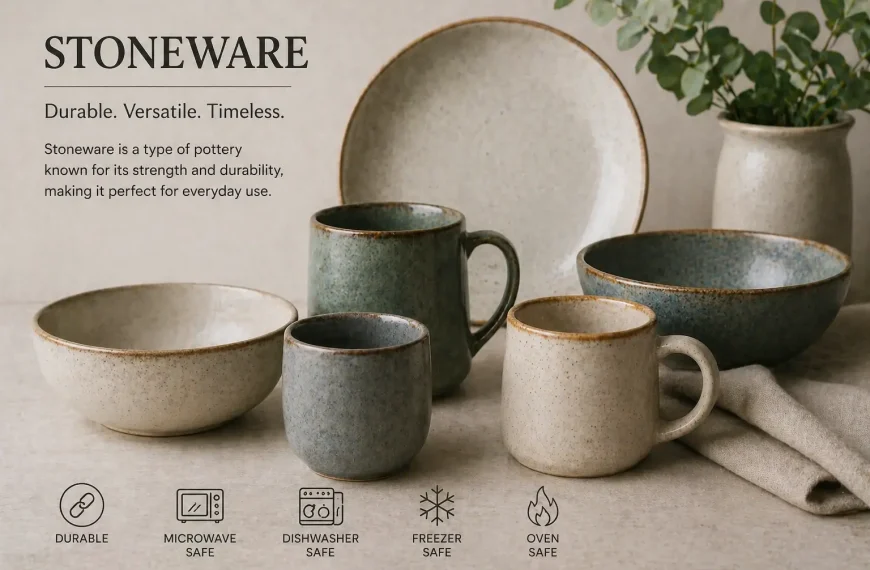
High-fired ceramics are the baseline for oven-capable mugs when the maker rates them for oven use, and stoneware is a common example because it is designed for repeated heating. A controlled 2024 materials study on porcelain formulations tested thermal-shock resistance and reported survival under rapid temperature-change conditions as a function of composition and microstructure, supporting the core point that properly formulated, high-fired porcelain can be engineered for thermal-shock resistance. For a real-world mug benchmark, Le Creuset lists a stoneware mug temperature range from -23°C to 260°C, which is a direct, manufacturer-stated oven limit.
There are 4 ceramic categories that matter for oven decisions:
- Stoneware: commonly rated for ovens when sold as oven-safe stoneware, with explicit temperature ranges on reputable brands.
- Porcelain: can be oven-capable when high-fired and rated, but the rating still depends on formulation, wall thickness, and defects.
- Earthenware: lower-fired and often more porous, which raises failure risk under dry heat if moisture is trapped in the body.
- Bone china: often thin and more sensitive to rapid gradients unless explicitly rated by the maker.
Are glass mugs oven-safe, and does tempering change the risk?
Glass mugs are only oven-safe when the manufacturer explicitly rates the glass for oven use, because glass failure is dominated by thermal shock rather than a simple “melting” threshold. A controlled thermal-shock study on soda-lime glass evaluated behaviour across hot-side temperatures from 100°C up to 550°C, showing how rapid temperature gradients drive fracture and strength loss in glass under shock conditions. That finding supports a simple rule for mug users: the biggest risk is fast temperature change across the wall, not the oven dial number alone.
There are 3 checks that matter for glass:
- Manufacturer oven rating: Pyrex, for example, is commonly cited as oven-safe up to 425°F for its cookware, but broiler and direct-element exposure are flagged as high-risk scenarios.
- Thermal-shock precautions: Pyrex’s own care guidance emphasizes avoiding sudden temperature changes and not adding liquid to hot glass because it can compromise strength.
- Glass type and expansion: borosilicate has a much lower thermal expansion than soda-lime glass, roughly about one-third, which is why it is generally more thermally shock resistant in lab contexts.
Are enamel and metal mugs safe to use in the oven?
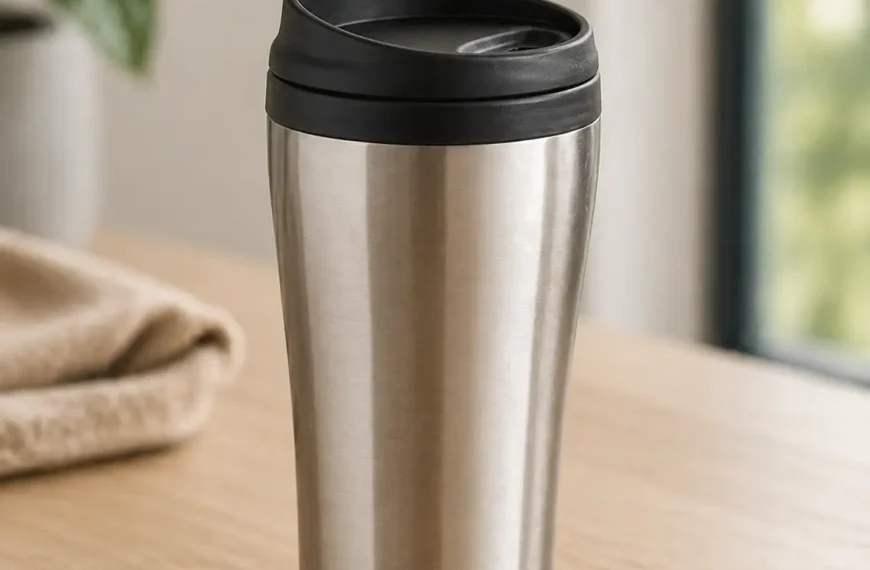
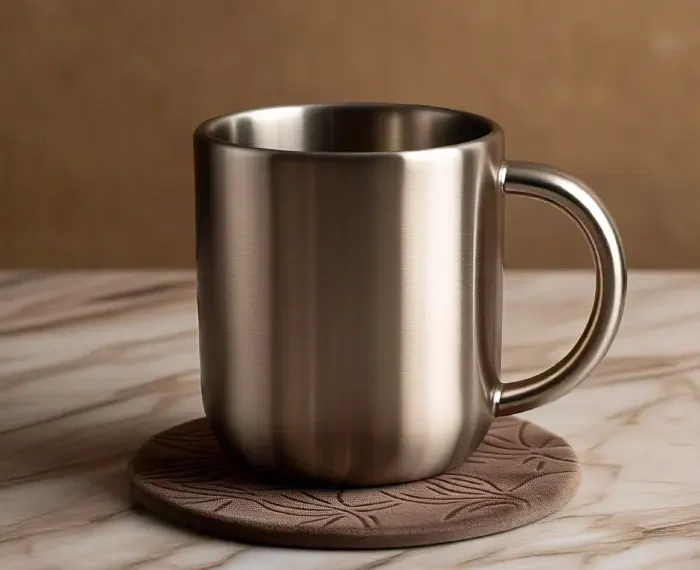
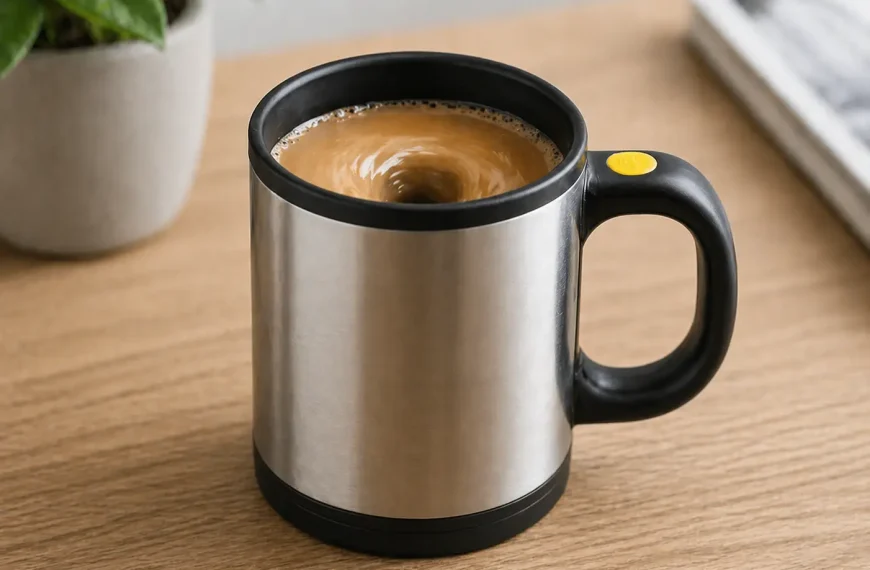
Metal mugs can survive oven temperatures as a material, but many “mug” products include parts that are not oven parts, such as vacuum-insulated construction, seals, and plastic components. If the mug is vacuum-insulated stainless steel drinkware, treat it as not oven-safe unless the manufacturer explicitly states oven use, because many care guides explicitly warn against using a conventional oven as a heat source. For stainless vacuum vessels specifically, a Zojirushi manual warns not to place the bottle near heat sources such as gas stoves and ovens because it may cause deformation.
Enamel-coated metal is a mixed-expansion system: the enamel is a glass-like coating fused onto a metal substrate, and thermal cycling stresses the interface if the mug is thin, chipped, or unevenly heated. In practice, enamel mugs are best treated as “material-heat tolerant” but “product-rating dependent,” because the handle attachments, rim treatments, and any base pads determine whether the mug is actually oven-ready.
Which mug materials and add-ons should never go in the oven?
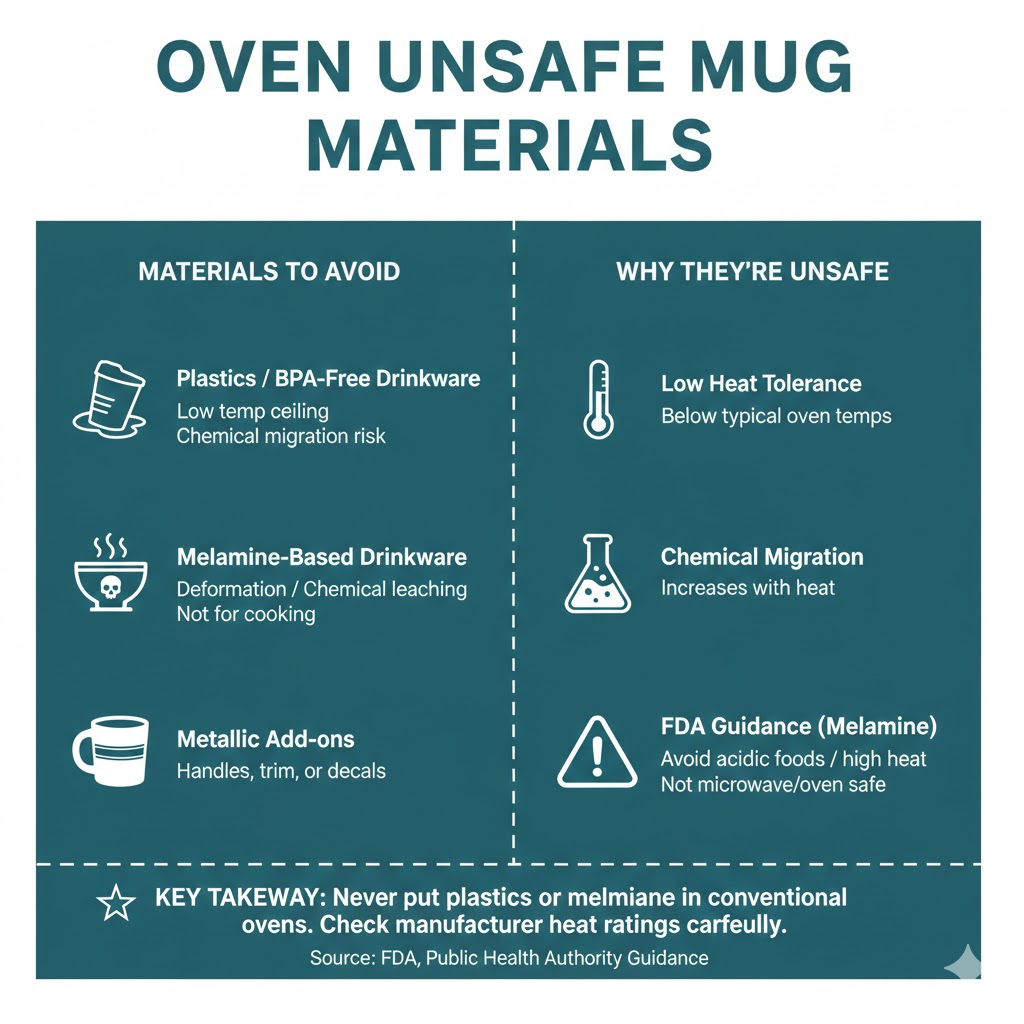
Plastics and plastic-dominant drinkware should not go in ovens because their safe-use temperature ceilings sit far below typical oven settings, and chemical migration can increase as heat rises. The “BPA-free” label only addresses bisphenol A and does not convert a plastic mug into a high-heat vessel. For melamine-based drinkware, the risk is not only deformation but also increased chemical migration under heat. The FDA notes that when highly acidic foods are heated to extreme temperatures such as 160°F (71°C) or higher, melamine migration can increase, and it advises against heating food on melamine dinnerware in microwaves. A public health authority summary of manufacturer guidance for melamine-ware also reports typical specified ranges around -30°C to +120°C, sometimes up to +140°C, and explicitly says it should not be used for cooking or heated in a conventional oven. (US Food & Drugs)
Can silicone gaskets, sleeves, or non-slip cork bases survive oven temperatures?
Silicone components often tolerate higher temperatures than most mug accessories, but mixed-material assemblies fail at the weakest link. Food-grade silicone products are commonly rated to about 450°F for service in some gasket applications, which is below many broil settings and close to upper bake ranges. Cork bases and many adhesives are not designed for oven heat, so a mug with a cork base, glued-on pad, or bonded sleeve should be treated as not oven-safe unless the maker states otherwise. The simplest safe practice is to remove all removable accessories before any oven exposure and avoid any mug whose base, sleeve, or gasket is not clearly heat-rated.
Are mugs with gold rims, metallic decals, or “Sharpie” designs oven safe?
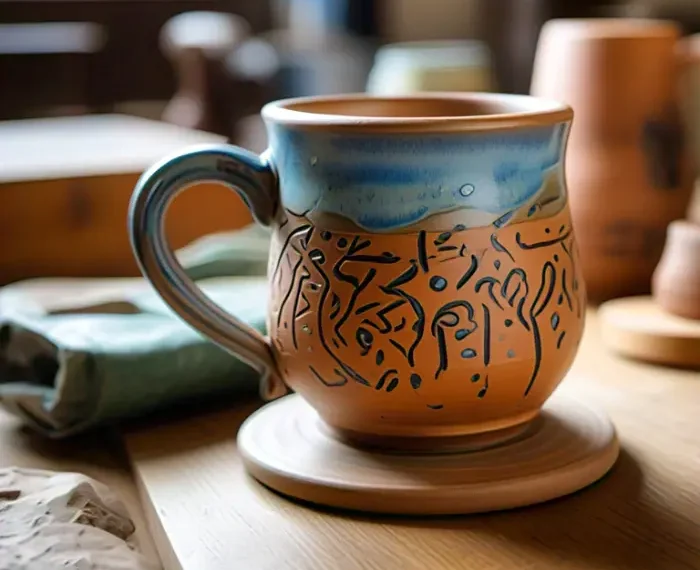
Decorative mugs should be treated as “unknown heat-rated” unless the manufacturer provides an oven temperature range that explicitly includes the decorated version of the mug. Metallic trims are commonly flagged for microwave incompatibility, but manufacturers rarely publish clear oven ratings for metallic decals, and dry-heat exposure adds extra stress at thin rims where decoration is concentrated. When the mug’s decoration is user-applied, the material composition and curing limits are usually not specified for food-contact heating, so there is no clean, reliable way to claim oven safety as a fact. In practice, if the mug cannot be tied to a manufacturer oven rating, treat it as not oven-safe and use an oven-rated ramekin instead.
How do glazes and coatings affect safety and chemical exposure?
Glazes and coatings define the mug’s food-contact chemistry, and heat can change migration behaviour by accelerating diffusion and reaction rates at the surface. A “food-safe glaze” is a glaze system that meets leaching limits under standardized test conditions for food contact, not a guarantee for every possible heat scenario. Some standards and test regimes use acidic simulants to measure lead and cadmium release, including procedures that leach with 4% acetic acid for 24 hours at around 20°C to 24°C as part of standard testing approaches. For users, the key implication is simple: when heat and acidic liquids combine, the mug’s surface quality and compliance testing matter more, not less.
What is the risk of lead leaching or heavy-metal contamination when heating mugs?
Heat can increase lead release from problematic glazes, especially when combined with acidic contact. A Food Chemistry study reported that hot-oven leaching with 4% acetic acid for 2 hours produced about 1 to 8 times more lead leaching than the same leaching condition at room temperature, showing a clear heat-and-time amplification effect. That numeric result supports a strict rule: if a mug is old, imported with unknown controls, visibly worn, or has an unknown glaze, do not use it for oven-heated drinks or baked acidic foods. Regulatory framing also matters because the FDA treats lead as a contaminant with no known safe level of exposure and continues to regulate and monitor lead in food and foodwares.
How do cracked glazes, “crazing,” and wall porosity change safety?
Crazing is a network of fine cracks in the glaze, and it is a practical red flag because it turns a smooth barrier into a crack network that can trap moisture and concentrate stress. When a crazed or porous mug goes into a dry oven, water in the body can flash into steam, and steam expansion loads the wall from the inside. The result is a higher risk of cracking, spalling, or sudden breakage, especially if the mug goes from fridge temperature into a hot oven. The safest decision rule is visual: if the glaze shows spider-web cracking, chips, or rough worn patches, do not use the mug in dry heat and do not “test it anyway.”
What are the main thermal risks when putting a mug in the oven?
The dominant risk in ovens is thermal shock, meaning a temperature gradient builds across the mug wall fast enough that internal stresses exceed the material’s strength. Dry ovens heat the outside wall and rim first, and that creates a mismatch between the hotter exterior and cooler interior core. Repeated hot beverage exposure can also add cumulative wear by expanding and contracting the glaze and body thousands of times over a mug’s life. This matters because old microcracks become the starting points for larger failures under an oven-grade temperature gradient.
What is thermal shock, and can it cause a mug to shatter?
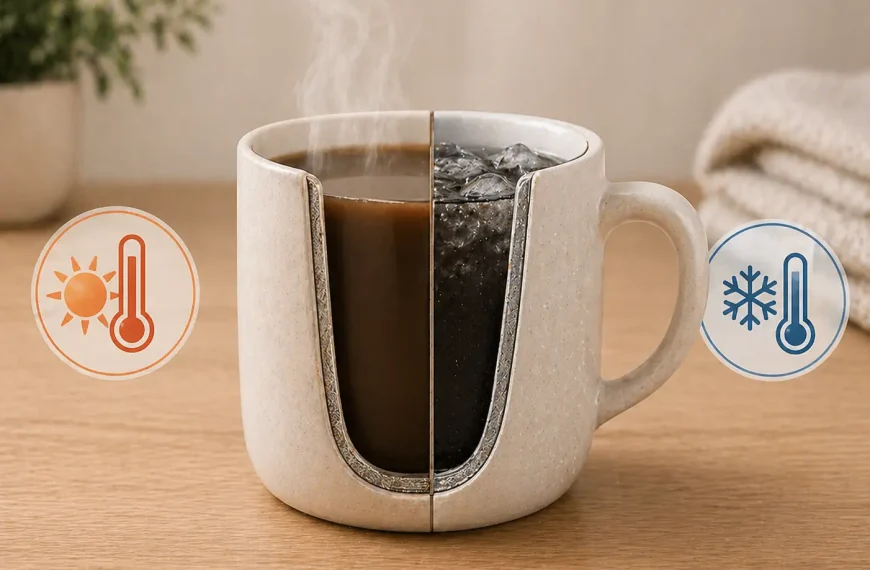
Thermal shock is stress generated by rapid temperature change that causes one part of the mug to expand faster than another part of the same mug. A cold mug placed into a preheated oven is a high-gradient setup because the outside surface can heat quickly while the interior remains far cooler, which concentrates tensile stress near the surface. Manufacturer guidance for glass cookware explicitly warns to avoid sudden temperature changes, and Pyrex also warns against adding liquid to hot glass because it can compromise strength and cause breakage. The practical safety rule is straightforward: avoid cold-to-hot jumps and avoid placing hot mugs on cold surfaces immediately after removal.
Can you put a mug in an air fryer?
Air-fryer use is safe only when the mug is rated for oven heat and physically fits with clearance from the heating element and basket edges. Philips lists a maximum air-fryer temperature of 200°C on its product specifications, which puts air fryers in a serious dry-heat class even though the chamber is smaller. Convection airflow can heat exposed rims and handles quickly, so mugs with thin rims, existing cracks, or mixed-material add-ons fail faster in air fryers than in gentle oven ramps. Brand-specific “yes/no” answers require published ratings, and many drinkware brands do not publish air-fryer limits for mugs. When the rating is missing, the only correct action is to treat the mug as not air-fryer safe and confirm with the manufacturer.
What labels, symbols, and standards matter for oven safety?
The most reliable “label” is a manufacturer-stated temperature range and a use-and-care statement that explicitly includes oven use. Some standards focus on chemical release testing rather than temperature ratings, such as ISO methods for lead and cadmium release from glass hollowware. For ceramics, test methods such as ASTM C738 outline procedures for measuring lead and cadmium leachable from glazed ceramic surfaces, which is relevant to chemical safety even when a temperature number is not printed on the mug. The practical user takeaway is that symbols alone are not enough if they are not tied to a manufacturer document that states time, temperature, and excluded use cases like broilers. (ISO 7086-1:2019)
What do FDA compliance and California Prop 65 tell you about heated use?
FDA framing matters because it signals that lead is treated as a contaminant with no known safe exposure level, and foodware safety depends on controlling and minimizing exposure sources. Prop 65 warnings, when present, indicate that a product may expose users to listed chemicals above defined thresholds and that businesses must warn when exposures are significant. For heated use, the key point is exposure pathways: heating can increase transfer and volatilization for certain chemicals and can increase contact-driven migration for others, so a Prop 65 warning is a reason to stop and verify intended use conditions rather than assuming “normal mug use” covers oven heat.
How can you test and verify oven safety without damaging the mug?
The safest verification method is to check the manufacturer’s care-and-use page or contact the manufacturer when packaging is missing. If a mug has a published temperature range, follow it exactly, including exclusions like “no broiler” or “avoid sudden temperature change.” If there is no published rating, do not run “trial by oven” on an unknown mug because a single failure can shatter glass or crack ceramics violently. Verification should also include inspecting for cracks, crazing, chips, and mixed-material parts that change the weakest link.
What visual checks and “staged heating” steps reduce thermal shock?
Visual checks reduce risk by catching the most common failure starters before heat is applied. There are 5 checks that matter most:
- Crazing: spider-web glaze cracks across the interior surface.
- Chips at rim or base: damage concentrates stress and accelerates crack growth.
- Hairline cracks: especially around the handle joint and base curve.
- Mixed-material add-ons: cork pads, glued sleeves, bonded bases, or plastic inserts.
- Worn glaze patches: rough, matte zones on interior walls.
Staged heating reduces gradients by slowing the rate the mug wall heats. For glass cookware, Pyrex’s use-and-care guidance emphasizes avoiding sudden temperature changes and gives practical safeguards like adding enough liquid to cover the bottom when cooking foods that release liquid, which is part of controlling temperature shock and localized stress. For mugs specifically, the safest staged approach is to start with a room-temperature mug, use a moderate oven setting, and avoid placing the mug on a preheated metal tray that creates a hot base and cool upper wall.
What are the safest ways to remove and cool an oven-heated mug?
Safe removal is about preventing a second thermal shock event after the bake is done. Use dry oven mitts and place the mug on a dry rack, wooden board, or folded dry towel, not on cold stone or a wet surface. For glass cookware, Pyrex guidance warns against sudden temperature changes and highlights that handling and surface choices matter for preventing breakage and injury. Cooling should be gradual, and washing or refrigerating should wait until the mug has fully cooled to avoid a hot-to-cold jump.
How does choosing the right material ensure long-term heat safety?
Long-term heat safety comes from choosing a mug that is built and rated for dry heat, then using it in ways that avoid extreme gradients and surface damage. If a mug is not oven safe, the safer single-portion alternatives are ramekins and dedicated oven-rated stoneware or glass bakeware that comes with explicit temperature limits and handling rules. The core logic is role-based: a mug’s primary job is drinking, and baking vessels are engineered with thicker walls, flatter bases, and clearer heat-use ratings. When in doubt, treat the rating as the deciding factor rather than the material name alone.
Can drinking mugs be used on a stovetop or direct flame, and what makes “flame-safe” different from “oven-safe”?
Direct flame and stovetop heat are fundamentally different from oven heat because the heat input is concentrated in small zones, producing extreme hotspots and very steep temperature gradients. Flame-safe vessels are designed for that concentrated heating pattern, while most mugs are designed for beverage containment and hand comfort, not burner contact. Treat “oven safe” and “flame safe” as separate categories unless the manufacturer explicitly states both.
What is “flameware,” and why do most mugs fail under direct burner heat even if they’re oven-safe?
Flameware refers to ceramic or glass-ceramic systems engineered for direct heat, where the material system is designed to survive intense localized heating without cracking. Most mugs fail on burners because the base heats far faster than the sidewalls, and the handle region stays cooler, creating a wall stress profile that is harsher than a typical oven bake. That is why many drinkware makers explicitly forbid stovetop or open-flame heating for their products. YETI, for example, explicitly says not to use Rambler drinkware on a stovetop or over an open flame or heat source of any kind.
How do gas flame hotspots, coil burners, and induction change failure risk for ceramic and glass mugs?
Gas flames produce uneven hotspots and direct flame impingement, which is one of the fastest paths to thermal shock cracking for ceramics and glass. Electric coils also create localized base heating and can overheat thin mug bases quickly. Induction adds another constraint: most mugs are not induction-compatible because they are not ferromagnetic, and induction-capable metal drinkware often contains vacuum insulation and seals that are not designed for burner heat. The practical risk pattern is consistent: concentrated base heating plus cooler walls equals rapid stress buildup.
What are safer alternatives for stovetop heating and how do you verify claims?
There are 3 safer alternatives when the goal is heating, not drinking:
- Small saucepans: direct-heat designed and easy to control.
- Butter warmers or small milk pots: built for gentle burner heating.
- Manufacturer-rated flame-safe vessels: only when the maker explicitly states stovetop or flame compatibility.
Verification should be document-based: use the maker’s care-and-use page or manual, because product categories that look similar can have different construction and different heat exclusions. YETI’s explicit “no stovetop or open flame” statement is an example of the kind of clear restriction that should govern the decision.
The safe way to decide in 30 seconds
Oven safety is a product rating problem first and a material problem second. Use the manufacturer’s temperature range when it exists, and treat missing ratings as a hard stop. Keep the mug out of broilers and away from direct elements, avoid sudden temperature changes, and never oven-heat mugs with plastic, cork, glued-on bases, or unknown coatings. When the use case is baking, use an oven-rated ramekin or dedicated bakeware and keep the mug in its intended role: a stable, food-contact drinking vessel.