
Mug types are functional subsets of mugs, classified by the job the vessel is built to do in a specific setting, such as carrying a drink in transit, surviving outdoor use, supporting a service standard, or meeting accessibility needs. The travel mug is the clearest example of this functional evolution, turning a stationary drinking vessel into a portable, sealed, transit-ready container. While transit-oriented vessels like travel mugs dominate the category, functional diversity extends to ruggedised camp mugs for outdoor use and specialised service vessels like the Moscow Mule mug used in cocktail presentation. At the far end of the same taxonomy sit high-tech self-stirring mechanisms, traditional beer service vessels like steins and tankards, and hospital mugs designed around grip, stability, and spill control.
Across the full set of 20 mug types, the same logic keeps repeating: mobility, specialist service, recreation, and healthcare constraints shape the form and features of the mug. That’s why everyday formats for hot drinks and food, including latte, tea, soup, and shaving mugs, belong in the same classification even though their exact specs and use details differ. Four types carry the highest technical depth and warrant deeper coverage elsewhere:
To understand which vessel matches a specific need, one must first identify the functional signals that separate a dedicated mug type from a standard cup or glass, and how these distinctions define the role of mugs as a whole
Function-based-mug types are functional subsets of mugs, defined by the use-case the vessel is designed to support, such as mobility, outdoor durability, bar service, or accessibility. A mug is typically distinguished from a cup by functional signals like a dedicated handle for grip under heat, thicker walls for heat retention and impact resistance, and a “handheld” form that is often used without a saucer in everyday settings. The practical boundary matters because a vessel that is re-used across settings also carries cleaning and hygiene requirements that shape design choices like lids, seals, and wide openings. A Food Protection Trends study measured microbial contamination on the interior surfaces of 90 in-use refillable containers and found that 70% were above 100 CFU/mL on heterotrophic plate count, 60% were above 500 CFU/mL, and 23.33% exceeded 1 CFU/100 mL for total coliforms, which supports treating “closure complexity” and “cleanability” as real functional signals in type classification. (Food Protection Trends)
Functional classification stays inside a tight scope: it does not rank materials as the primary taxonomy, and it does not require a history of pottery or drinkware culture to define the type. It groups mugs by what they must reliably do, then uses the type name as the label for that functional job.
Mobility mug types are built to keep a drink contained and comfortable to carry while moving, with design centred on spill resistance, portability, and temperature control. These mugs prioritise secure lids, stable bases, and shapes that fit common carrying contexts like commuter bags and cup holders. The functional “vessel-on-the-go” grouping also includes hybrid forms where the mug behaves more like a lidded bottle or a handled tumbler than a classic open mug. The key divider inside this zone is whether the mug’s main job is sealing for transit, insulation for retention, or ergonomic handling with a streamlined shape. This section sets the umbrella logic, and the next sub-sections define the most common mobility forms.
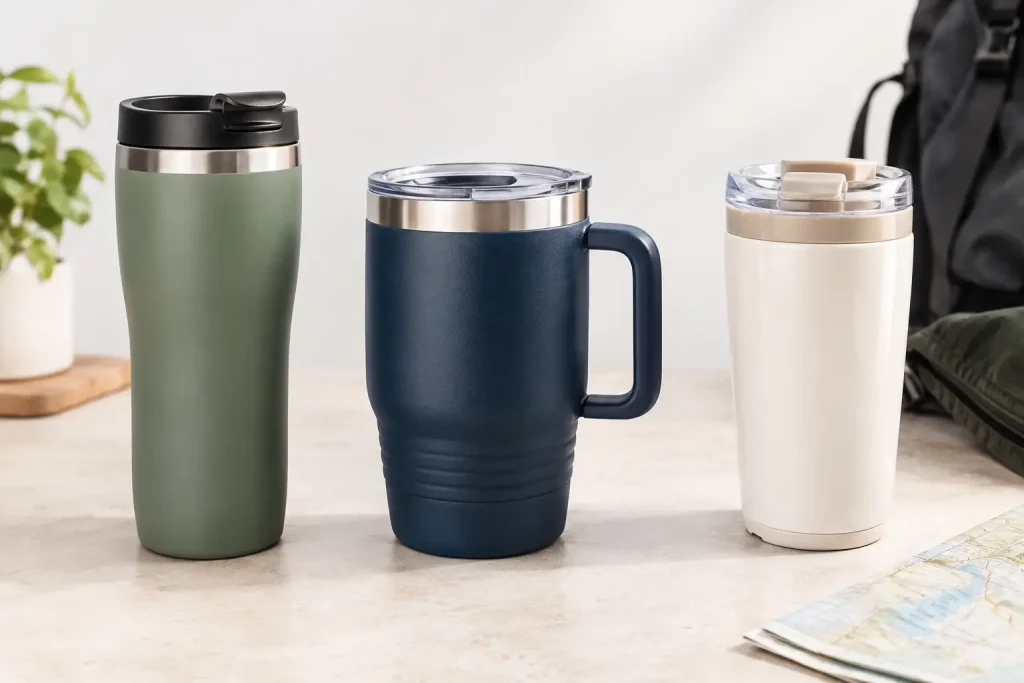
A travel mug is a portable mug designed for commuting, built to transport beverages with a spill-resistant lid and a shape that supports one-handed use. Its functional identity comes from sealing and carrying, not from material choice, decorative design, or café styling. There are 4 functional signals that separate a travel mug from a regular home mug:
Technical deep-dives at Travel Mug, including leak-proof design, heat-hold duration, and cup-holder fit.
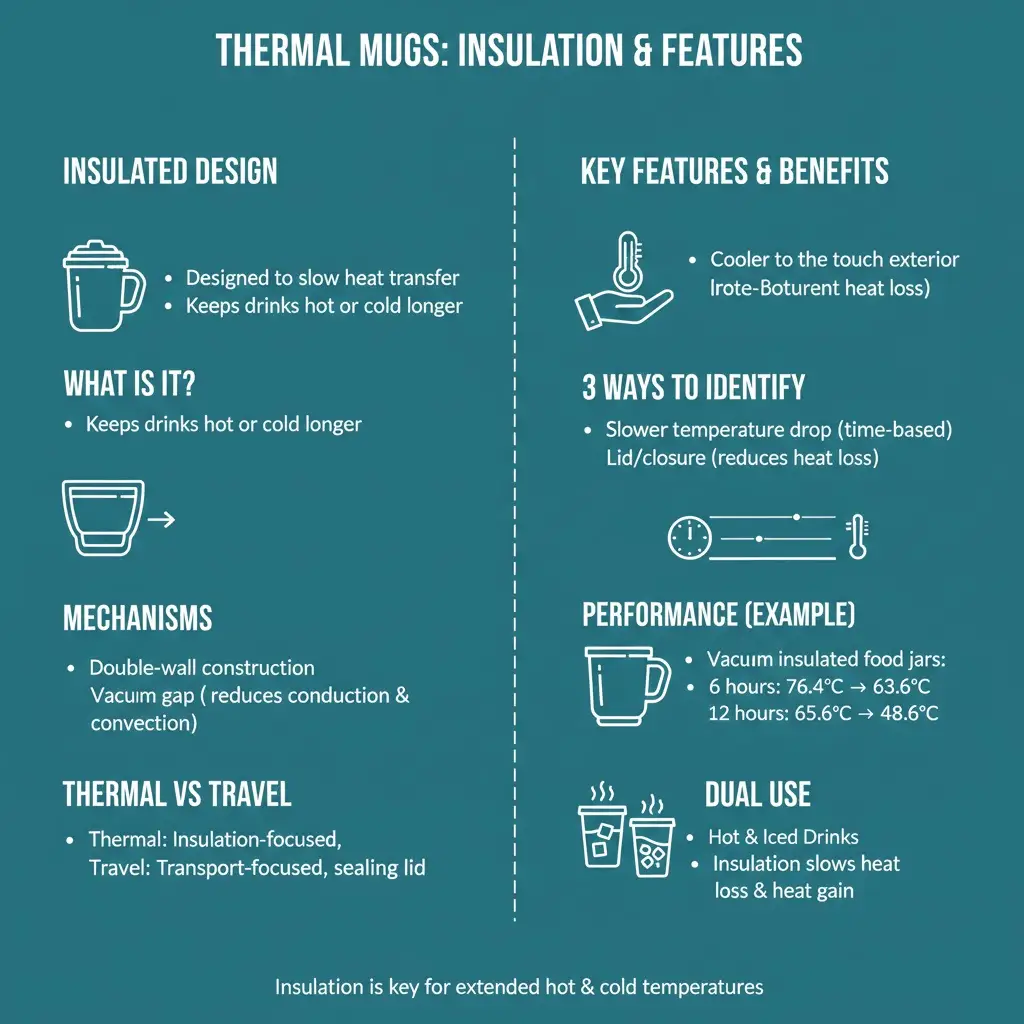
A thermal mug is an insulated mug designed to slow heat transfer so drinks stay hot or cold for longer in everyday use. Its defining mechanism is insulation, usually through double-wall construction, and in many products a vacuum gap that reduces conduction and convection through the wall structure. A thermal mug can exist without a full commuter lid system, while a travel mug is defined by transport and sealing even when insulation is minimal. There are 3 practical ways to tell an insulated design from a standard wall:
Independent testing of vacuum insulated containers shows how retention is evaluated in real time windows: a consumer test of vacuum insulated food jars reported water temperatures of 76.4°C to 63.6°C after 6 hours, then 72.3°C to 58.6°C after 8 hours, and 65.6°C to 48.6°C after 12 hours, which supports using time-based retention as a functional divider for “thermal mug” classification. (Consumer Council Hong Kong)
In use, thermal mugs serve both hot and iced drinks because the same insulation that slows heat loss also slows heat gain from a warm environment.
A tumbler mug is a hybrid form that combines the tall, tapered body shape associated with tumblers with mug-like handling, sometimes including a handle but often designed to be held directly. Its defining feature is the tapered silhouette, which changes grip, storage, and fit in holders compared with a straight-sided mug. A standard mug usually leans on a clear handle-first grip and a wider body that sits comfortably on a table, while a tumbler mug prioritises a slimmer base and a carry-friendly profile. There are 4 common differences that separate tumbler-style mugs from classic mugs:
Tumbler mugs can be used for hot drinks when the wall and lid system are heat-safe, but the grip experience depends more on insulation and surface temperature than on a handle.
Outdoor and rugged mug types are designed for uncontrolled settings where surfaces are hard, temperatures change fast, and cleaning can be limited. These mugs are defined by durability signals such as impact resistance, stable handling with cold or wet hands, and compatibility with outdoor routines like packing, rinsing, and shared gear. Compared with café or home mugs, rugged types are built to survive drops, knocks, and repeated transport without chipping or cracking as easily. Their functional identity comes from environment tolerance rather than beverage styling.
A camping mug is a mug intended for outdoor and camping use, designed to withstand rough handling and serve hot drinks in open-air settings. Its functional signature is durability and outdoor usability, not a specific beverage recipe standard. There are 4 core reasons camp mugs stay popular outdoors:
Size selection is context-driven, and hiking use usually pushes toward a capacity that matches water-carry load and pack space rather than oversized café portions. For deeper coverage, check: Camp Mug, including safety over heat sources and outdoor material behaviour.
A builders mug is a large, durable mug associated with workplace and construction culture, designed to deliver a bigger serving with strong heat retention. It is commonly larger than a standard mug because it supports longer work periods between refills and stays warmer in cold environments. Typical builders-mug capacity is often cited in the 400 mL to 500 mL range, which functions as a clear divider from smaller home mugs that serve shorter drinks. The thicker walls and sturdy build also reduce heat loss and improve durability in busy settings where mugs get knocked around. In practice, builders mugs often align with strong tea or coffee routines because the larger volume and thermal mass suit longer sipping windows. (Wikipedia)
Bar-service mug types are defined by how the vessel shapes temperature, aroma, mouthfeel, and presentation in social drinking contexts. In this zone, the mug is part of service choreography, including standard volumes, handling by staff, and a consistent guest experience. The functional signals usually relate to chilling, grip under condensation, and tradition-driven service forms that customers recognise. This section covers both specialist cocktail vessels and high-volume beer service mugs.
A Moscow Mule mug is a specialist service mug associated with serving chilled cocktails, with tradition and thermal feel playing a central role in the drinking experience. It is used beyond the named cocktail as a recognisable barware vessel for other cold mixed drinks where a distinctive presentation matters. A peer-reviewed study in the Journal of Environmental Health quantified copper leaching from a copper drinking vessel into a Moscow Mule solution and measured a leaching rate of 0.048 ± 7 × 10⁻⁴ ppm copper per minute at room temperature, with accumulated copper exceeding U.S. EPA drinking-water standards within 27 minutes, which supports treating “beverage chemistry” and “reactive metal contact” as functional classification signals for this mug type.
This is why lining and food-contact compliance are not side details in this mug category; they directly affect safe use when acidic ingredients like lime are present. For deeper coverage, please review: Moscow Mule Mug, including copper vs lined vessels, taste claims, and safe-contact rules.
A beer mug is a large mug designed for serving beer, defined by volume, grip, and a structure that suits cold, carbonated drinks in social settings. A beer stein is a traditional beer mug that is often lidded, historically linked to hygiene and storage practices as well as cultural identity in beer festivals. A tankard is a large handled drinking vessel associated with historical tavern drinkware, often treated as a broader category that includes metal forms and older silhouettes. There are 4 key functional differences across the three:
In practice, the type name often signals the experience being served, not only the drink itself.
Café-service mug types are defined by standardised volumes and shapes that match recipe-driven drinks like lattes and tea. In cafés, consistency matters because the mug must fit the drink build, foam level, and serving feel customers expect. These mugs also support heat comfort in the hand, stable table service, and a familiar look across repeated orders. The key divider in this zone is whether the mug is optimised for a specific drink recipe, a general café format, or a specialised shape for aroma and surface area.
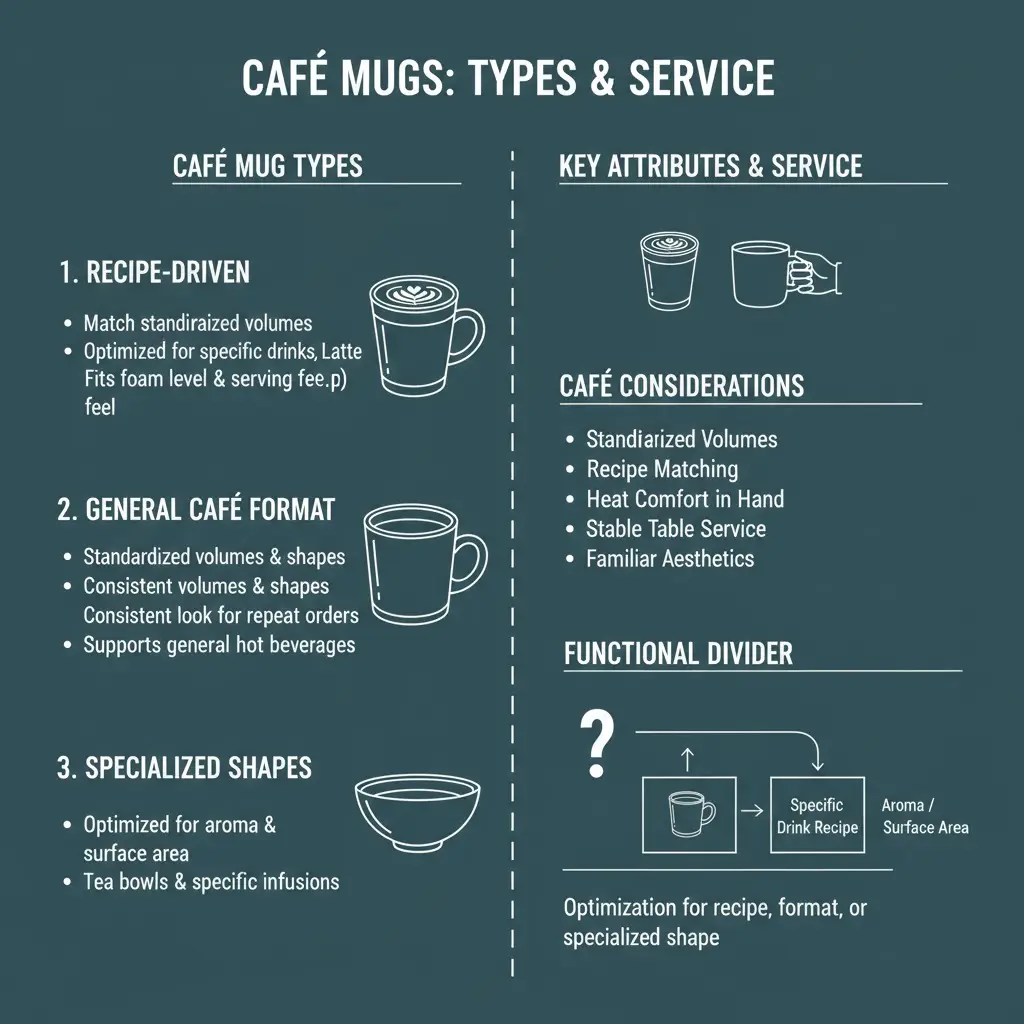
A latte mug is a mug designed to accommodate latte-style drinks, often with a bowl-like shape that supports milk-based volume and foam presentation. A bistro mug is a wide-bodied café-style mug that is commonly used for everyday café service because it balances comfortable grip, stable table presence, and flexible drink range. There are 3 practical differences that separate the two formats in service:
Mug size choice for lattes depends on the café’s recipe standard, and the mug type is often chosen to keep the drink’s proportions consistent.
A tea mug is a mug intended for tea drinking, defined by comfort, volume, and heat-friendly handling during steeping and sipping. A tea infuser mug is a brewing mug with an integrated infusion system that filters loose leaf tea while it steeps in the same vessel used for drinking. There are 4 functional parts that explain how an infuser mug works:
The difference from a teacup is primarily functional and volumetric in everyday use, not decorative tradition. In practice, infuser mugs exist to make loose-leaf brewing simpler without extra teapots.
A coupe mug is a mug with a flared, shallow “coupe-style” bowl shape that changes aroma exposure and cooling behaviour compared with deeper mugs. Its functional identity is surface area and presentation, which can suit specialty coffee and drinks where aroma and cooling rate are part of the intended experience. There are 3 reasons coupe shapes show up in specialty service:
This mug type is less about portability and more about sensory service.
Mealtime mug types are defined by higher volume needs and food-friendly geometry, turning the mug into a container for both eating and drinking contexts. These mugs prioritise wide mouths for spoons, stable handling with hot contents, and heat compatibility in reheating routines. The functional goal is comfort food delivery, not drink presentation.
A soup mug is a mug designed for serving soup, defined by a handle that allows safe lifting when contents are hot. It differs from a bowl because the handle provides a stable grip and reduces the need to touch hot ceramic or glass surfaces directly. There are 4 features that commonly separate soup mugs from bowls in daily use:
Microwave suitability depends on the exact build and any metallic parts or decorations, so the safest rule is to follow manufacturer markings for heating. Lids, when included, function to retain heat and reduce splashes during movement.
Novelty and specialty-use mug types are defined by non-standard mechanisms, collectible value, or utility outside normal drinking. In this zone, the “mug” label persists because the object keeps the handheld-vessel form, even when the primary job is mixing, display, grooming support, or hygiene storage. The grouping is still functional, but the function is no longer only beverage delivery.
A self-stirring mug is a novelty mug with a built-in mixing mechanism designed to automate stirring inside the cup. Its functional signature is internal motion, usually driven by a small motorised base that rotates a component to create a mixing vortex. There are 4 practical points that define how it works as a mug type:
Safety depends on build quality, sealing, and cleaning practice, so find the high-depth technical questions at Self-Stirring Mug, including battery systems and mixing capability for thicker drinks.
A Toby mug is a character-shaped collectible mug where the form depicts a figure, often with the head forming the mug body. Its defining function is figural representation, meaning the mug doubles as decorative drinkware and a display piece. There are 3 reasons Toby mugs remain recognised as a type:
Origin and variation depend on specific production lines and cultural traditions, but the type identity stays anchored in “figural collectible mug.”
A shaving mug is a grooming accessory used for lathering shaving soap, designed to hold and support foam-building during wet shaving. A tooth mug is a bathroom mug used for rinsing and dental hygiene storage, functioning more like a bathroom tumbler in daily routines. There are 4 key differences between the two personal-care types:
The classification is purely functional: both are mugs because they are handheld containers, but their jobs are not beverage service.
A hospital mug is a patient-aid mug designed for healthcare settings, built to support drinking with limited mobility and reduce spill risk. Its defining features centre on accessibility, including stable grip options and spill control rather than café aesthetics. There are 5 common functional features that show up in this category:
The hospital mug sits in the healthcare zone of mug types because it is engineered around user capability and safety constraints.
Choosing the right mug type means matching the mug’s functional signals to the exact context, including movement, temperature goals, and how the mug will be cleaned. There are 6 practical checks that select the type correctly before any brand choice:
Everyday use usually favours general café or home formats like tea mugs and bistro mugs, while specialised settings pull toward travel, camp, hospital, or specialist barware types. Mug design differs by beverage because the drink’s temperature, serving ritual, and container handling all change what “good performance” means. (PMC)
Reusable mug types connect directly to sustainability because the functional design determines how long the mug lasts, how often it is actually reused, and whether it is easy to clean without excessive energy or water. Environmental impact shifts heavily with use frequency and lifespan, so durability and repairability become functional levers, not just product features. There are 3 high-impact sustainability signals that matter across mug types:
Life-cycle impact depends on a simple logic: the environmental cost of making a reusable mug must be spread across enough uses to beat the repeated impact of disposables. The break-even point is not a single universal number because it changes with material, manufacturing footprint, and cleaning method. The functional takeaway is practical: a mug that is not used frequently or is replaced quickly fails to deliver its intended sustainability advantage. This is why rugged camp mugs, durable bistro mugs, and long-life thermal mugs often outperform fragile or hard-to-clean designs in real use. A reuse plan only works when the mug type fits the user’s routine. (UNEP Life Cycle Initiative)
Sustainability outcomes track most strongly with features that control lifespan and repair, not aesthetics. There are 5 functional features that move the needle most:
A mug type that fails early or becomes unpleasant to clean gets discarded, which collapses reuse benefits.
A low-waste mug choice starts with the type that matches the real use-case, then selects the simplest durable build within that type. There are 6 practical selection rules that reduce waste in day-to-day ownership:
Mug types form a practical classification because each type exists to solve a specific job, from sealed mobility to rugged outdoor use, from bar service to healthcare accessibility. The fastest way to choose correctly is to identify the functional constraints first, then select the type that was built around those constraints to find the most effective everyday beverage containers.