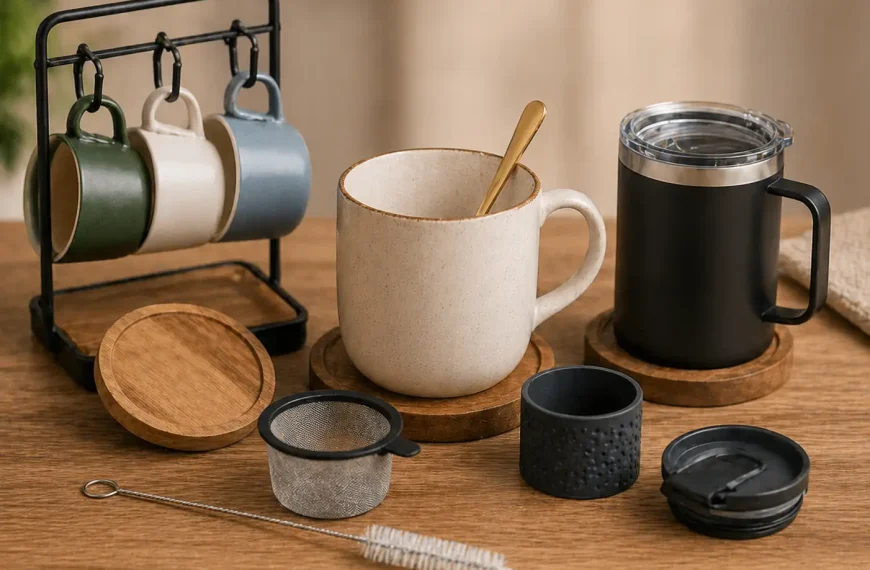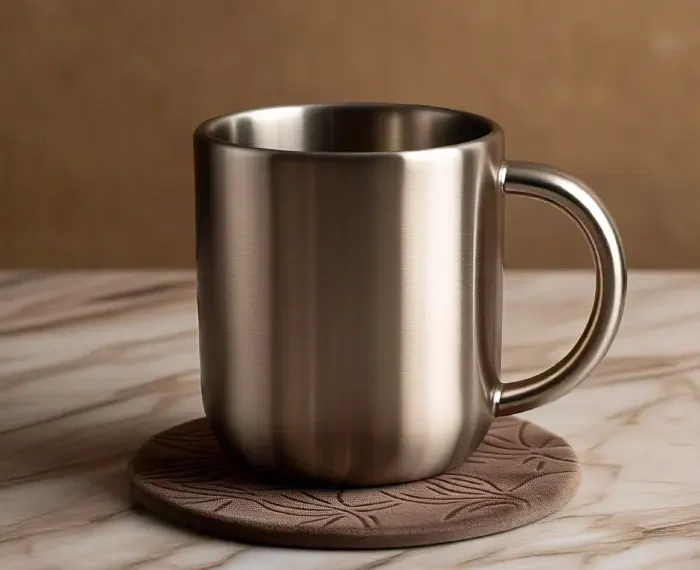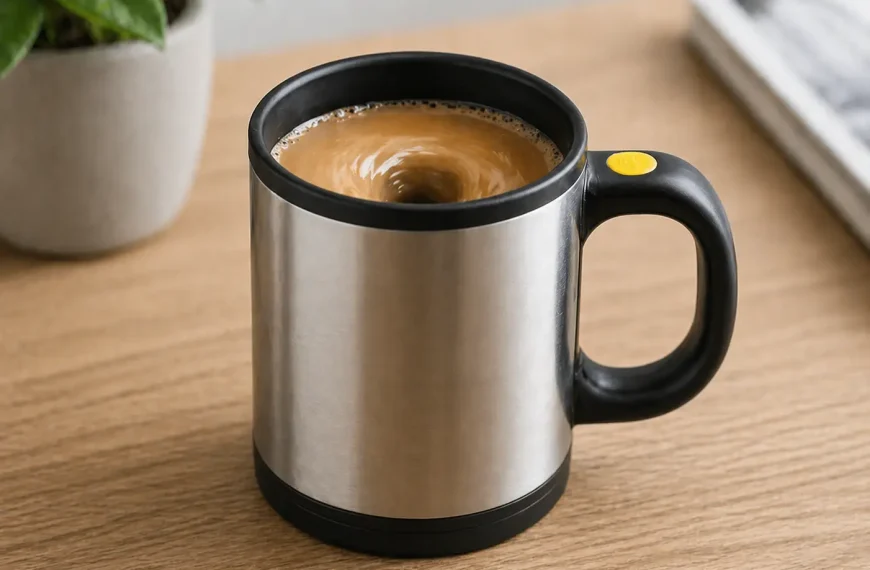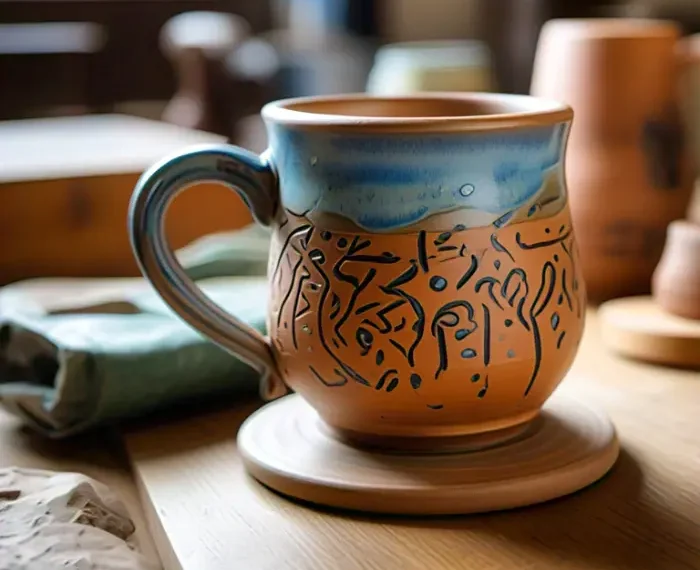

A mug tree stores drinking mugs vertically on a freestanding stand that suspends each mug by its handle, turning mug storage into a countertop system built around pegs or hooks and a stabilising base. Practical value comes down to capacity and organisation: many common countertop designs are built around 6 hanging positions for fast grab-and-go access, while keeping rims and bodies separated instead of stacked together.
Capacity only works when the stand stays planted under load, so stability and load-bearing safety sit right behind “how many mugs.” For example, one widely sold minimalist mug tree lists a 13.39 in overall height and a 6.3 × 6.3 in footprint, with a stated 6.6 lb supported load, which frames the real constraint: centre of gravity and base size decide whether heavy ceramic mugs hang securely or pull the stand toward a tip-over.
Material and finish also control day-to-day durability and care, from iron stands that specify wipe-clean maintenance to plastic or coated designs marketed for space-saving storage that can double as a drying setup. A complete mug-tree setup also depends on fit under cabinets, peg spacing for larger mugs, where it sits in a coffee or tea station workflow, and how far DIY builds and alternatives like wall-mounted racks or under-cabinet holders push vertical storage without consuming counter space. (Pfaltzgraff)
This transition from horizontal clutter to vertical efficiency is a primary utility explored in our guide to mug accessories, where organizational hardware maximizes the functionality of the modern kitchen station. To implement this storage solution effectively, it is essential to define exactly what a mug tree is and how it should be utilized within your space.
What is a mug tree and what is it used for?
A mug tree is a freestanding vertical stand that stores mugs by hanging each mug’s handle on a peg or hook so the cups sit off the counter and separate from each other. This “handle-suspension” layout keeps mugs accessible at arm’s reach and reduces rim-to-rim contact that happens when mugs are stacked inside cupboards, where ceramics can knock together during loading and unloading. In practice, it works like a small countertop “vertical storage” system: the center post carries the load, and the base provides the footprint that resists tipping.
What is the difference between a mug tree and a mug rack?
A mug tree is a countertop, freestanding unit, while a mug rack is typically wall-mounted or installed under a cabinet, using wall space instead of counter space. The trade-off is footprint versus “wall-estate”: a tree occupies a defined area on the counter (often roughly a small square), while a rack shifts the storage load to screws, brackets, or cabinet framing. This difference matters for workflow because trees can be moved with the coffee setup, while racks become a fixed part of the kitchen layout.
How do you choose the right mug tree for your kitchen?
Choosing the right mug tree comes down to matching the stand’s capacity and footprint to your counter space and the size of your mugs. A common reference point is a compact retail tree at 15 inches (H) × 7 inches (W) × 7 inches (D), which shows how little counter depth a standard countertop tree can use when it stays vertical.
Start by measuring the space you can “reserve” permanently, then select a tree with enough peg spacing that your widest mug bodies do not collide when hung.
What is the standard height of a mug tree for under-cabinet clearance?
A mug tree fits under upper cabinets when the stand height plus the mug height stays below the typical countertop-to-cabinet clearance. A widely used standard clearance between countertop and the bottom of upper cabinets is 18 inches (46 cm), which provides a practical ceiling for any countertop storage you want under cabinetry.
So if a tree is 15 inches tall, it generally only works under cabinets for shorter mugs, or when the tree is placed away from the cabinet overhang.
What materials are mug trees made from, and how do they affect quality?
Mug trees are most commonly made from wood, metal, or mixed builds that combine a wooden platform with metal arms, and each material changes weight, friction, and finish durability. For example, a mixed-material stand marketed as a freestanding mug tree can be listed as 60% MDF board + 40% iron, with a tall, multi-slot layout (and manufacturers often state the overall height, such as 43.5 cm).
Cleaning and durability depend on the stand’s surface finish, not the mugs: many wooden trees are specified for “spot or wipe clean” care, which is a practical signal that the stand itself is not intended for dishwasher cycles.
Are wooden mug trees better than metal ones for stability?
Wooden mug trees are better when you want higher surface friction between base and countertop and less mug “slip” at the peg contact, while metal trees can be better when the design concentrates weight low to reduce tipping. Real-world product specs show how metal designs often advertise a wide base diameter to improve stability, such as a stand listing a 7.9-inch bottom diameter with a 19.7-inch height.
Rust risk depends on the metal and coating: powder-coated steel and plated finishes are chosen specifically to resist corrosion, while bare steel in humid, splash-prone locations is the higher-risk case.
Are mug trees stable enough to prevent tipping with heavy mugs?
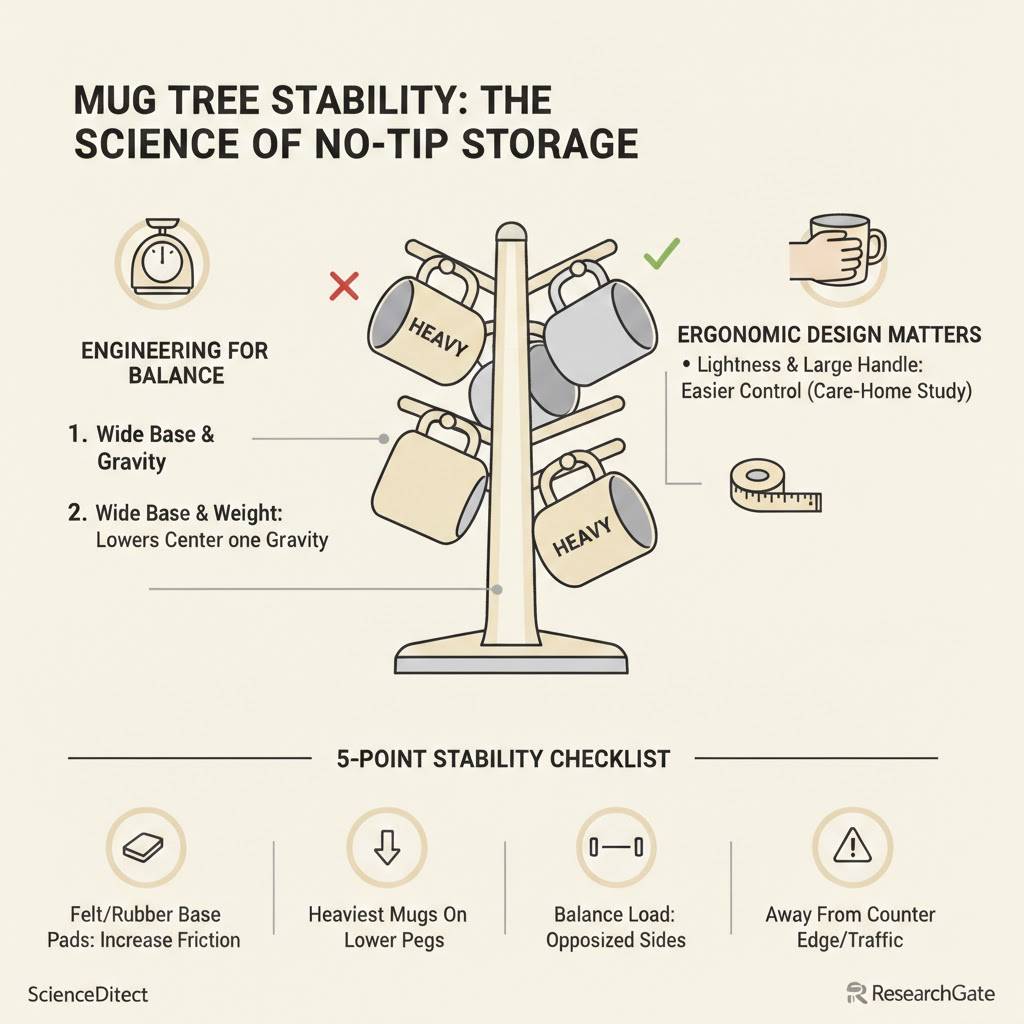
Mug trees prevent tipping when their base width, base weight, and peg layout keep the combined center of gravity inside the base footprint even when several heavy mugs hang on one side. A practical buying shortcut is to look for a stated wide base dimension and to place heavier mugs on lower pegs and opposite sides so the load stays balanced.
Ergonomic cup research also supports why mug stability matters in daily handling: a care-home cup study compared five cups and found two preferred designs shared “lightness and large handle,” and it points out that control at the wrist and overall stability can matter more than raw finger-force demand during use.
Handle wear is also a real constraint: a handle-dimension literature review reports a four-finger-fit handle reference length of 73.70 mm, with a 21% tolerance suggested to account for ceramic shrinkage (proposing 89.17 mm pre-firing), which highlights that handle geometry and clearance are engineered features, not decorations. (ScienceDirect) (ResearchGate)
To reduce tip-over and protect both mugs and counters, use a simple 5-point setup checklist:
- Use felt or rubber pads under the base to increase friction and prevent scratches.
- Keep the heaviest mugs on the lowest pegs.
- Balance mugs across opposite sides, not all on one “branch.”
- Leave an empty peg between oversized mugs if bodies collide.
- Keep the tree away from the counter edge and high-traffic corners.
How many mugs can a mug tree hold and how do you organize them?
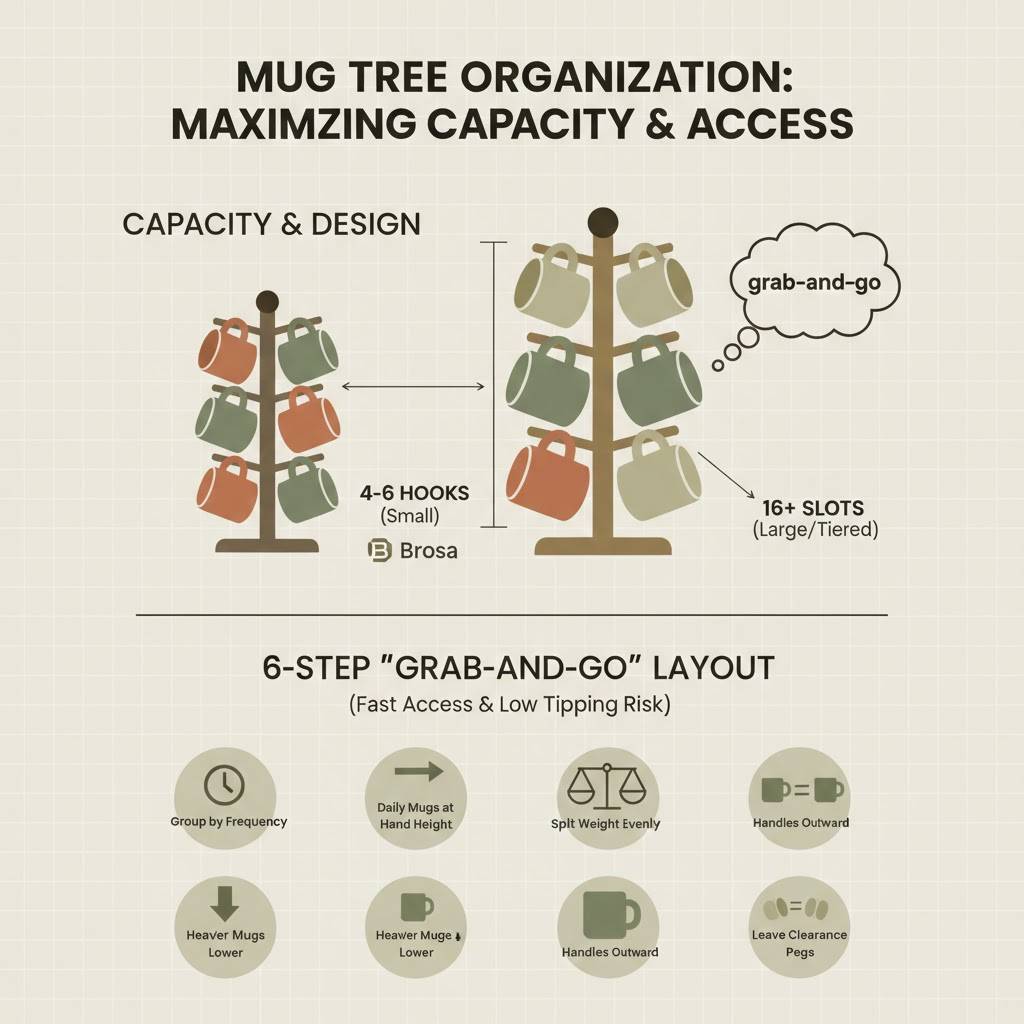
A mug tree’s capacity is the count of usable pegs or hooks, and in the market this commonly ranges from small 4–6 hook trees to larger multi-slot countertop stands. One example of a larger freestanding design is sold with 16 slots, showing how capacity can scale when the design adds tiers and increases overall height and length.
For “grab-and-go” organization, the goal is equal load distribution and predictable access: put daily mugs on the outermost, easiest pegs, and reserve inner pegs for occasional pieces.
Use this 6-step layout to keep access fast and tipping risk low:
- Group by frequency (daily, weekly, seasonal).
- Put daily mugs at hand height, not at the very top.
- Put heavier mugs lower.
- Split weight evenly left-right.
- Keep handle openings facing outward for faster removal.
- Leave clearance pegs where mugs collide.
Can a mug tree hold large coffee mugs or travel mugs?
A mug tree holds large mugs only if peg spacing prevents body overlap and if the peg length keeps the mug stable by the handle without the mug touching the center post. Travel mugs often fail on standard trees because they are taller and can collide with the upper pegs or the top cap of the stand; that’s why tiered or staggered-hook designs are used when the collection includes tall vessels. When in doubt, measure the widest mug diameter and compare it to the free space between adjacent pegs before buying.
Where should you place a mug tree for best function and workflow?
A mug tree works best when it sits where mugs are actually used, with enough clearance for you to lift a mug straight up and off the peg without hitting cabinets or appliances. Place it near the coffee station or tea corner so mugs become a single-step pickup, and keep it out of the sink splash zone so the stand finish stays cleaner for longer.
It can also function as a drying aid after washing if the mugs are hung with good airflow around them, but the stand itself should be kept as dry as possible, especially for wood and mixed-material designs.
What styles of mug trees are available as functional décor?
Mug trees come in styles that map directly to material and geometry: minimalist straight-post trees, rustic wood stands, industrial pipe builds, and rotating versions in some designs. Retail listings show common “modern countertop tree” proportions such as 15 inches tall, while other designs go taller and wider when they add tiers or extra slots for display-style collections.
A mug tree becomes a table centerpiece when it is intentionally staged as a display piece, such as for holiday mug sets or a hot cocoa bar, but it still needs enough base stability to handle frequent grabbing without wobble.
How to make a mug tree: A guide to DIY builds and assembly
A DIY mug tree is built by fixing a vertical post into a stable base, then adding angled pegs that allow mug handles to sit securely without sliding off. The key mechanical rule is peg angle and spacing: pegs need a slight upward angle so gravity keeps the handle seated, and spacing must prevent mug bodies from contacting each other.
For DIY kits, assembly typically follows a predictable sequence: base first, then post, then pegs/hooks, then final tightening and pad installation under the base.
How do you make a wooden mug tree stand from scratch?
A wooden mug tree stand is made by preparing a base, attaching a center post, drilling peg holes, inserting pegs, and sealing the wood with a finish appropriate for a kitchen environment. You need five core tools to do it cleanly:
- Drill
- Drill bits sized to the peg dowels
- Measuring tape or ruler
- Sandpaper (multiple grits)
- Clamps (for stable assembly during glue-up)
Then follow this 7-step build sequence:
- Cut and sand the base so it sits flat with no rocking.
- Mark the post centerline and fix the post perpendicular to the base.
- Mark peg positions with equal spacing around the post.
- Drill peg holes at a consistent slight upward angle.
- Glue and insert dowel pegs, keeping lengths consistent.
- Sand all edges and peg tips to remove sharp corners.
- Apply a protective finish, then fully cure it before hanging mugs.
What are the best alternatives to a mug tree for vertical storage?
The best alternatives to a mug tree are storage systems that still use vertical space but shift the load away from the countertop footprint. Three high-demand alternatives cover most kitchens:
- Mug caddy (portable, carry-to-table use)
- Under-cabinet holder (saves counter space by hanging beneath cabinetry)
- Wall-mounted rack (permanent, uses wall space instead of counter depth)
A mug caddy is better than a stationary tree when portability matters, such as carrying a set of mugs to a coffee cart or serving area. An under-cabinet holder is better when counter space is limited and you want mugs directly above the coffee prep area, and wall-mounted racks are better when you want a permanent fixture rather than a movable stand.
Keeping mugs hygienic on a mug tree in a real kitchen environment
Mug hygiene on a mug tree depends on how much airborne moisture, hand contact, and nearby surface bacteria the mugs are exposed to while they hang. A large residential-kitchen microbiome study sampled over 80 surfaces per kitchen across four homes, processed 332 collected samples (with 248 analyzed after filtering), and used 10,000 reads per sample for community analysis, illustrating how widely bacteria are distributed across normal kitchen touchpoints.
This matters for mug trees because mugs are repeatedly handled by the rim area and handle area, and the stand is usually placed on the same counters and near the same sink zones that are heavily used. (PMC)
What placement choices reduce exposure to sink splash and touch-heavy zones?
Reducing exposure starts with distance: keep the mug tree away from the sink edge and faucet splash radius, and avoid placing it where hands constantly pass (like the main prep strip between sink and stove). Position it near the coffee station but not directly under cabinet areas where steam vents from kettles or espresso machines, because constant humidity increases residue buildup. Wipe the base area routinely because it sits on a high-contact surface that is routinely re-contaminated during normal kitchen use.
How do you set a simple cleaning routine for both the stand and the mugs?
A simple routine is to clean mugs normally, and treat the stand as a countertop accessory that needs wipe-down care based on its material and finish. Product care guidance for common wooden trees is “spot or wipe clean,” which aligns with wiping pegs and base regularly rather than soaking or dishwashing the stand.
For day-to-day use, focus on the contact points: peg tips, the base rim, and any rotating joint if the tree spins.
When should you switch from open display storage back to closed cupboard storage?
Switch back to cupboards when the kitchen layout forces the mug tree into a wet zone, or when the mugs are used infrequently and sit exposed for long periods. Closed cupboard storage reduces open-air exposure and reduces incidental hand contact, while a tree prioritizes speed and display. The right choice is the one that fits your actual workflow: fast daily access favors a tree, and infrequent use favors protected storage.
A final check before you buy or build
A mug tree works when three things line up: it fits your clearance limits, it carries your heaviest mugs without wobble, and it keeps mug bodies separated so handles and rims do not collide. Use known reference dimensions as reality checks, such as a compact 15-inch-tall countertop tree footprint and an 18-inch countertop-to-upper-cabinet clearance baseline, then match peg spacing to your widest mugs.