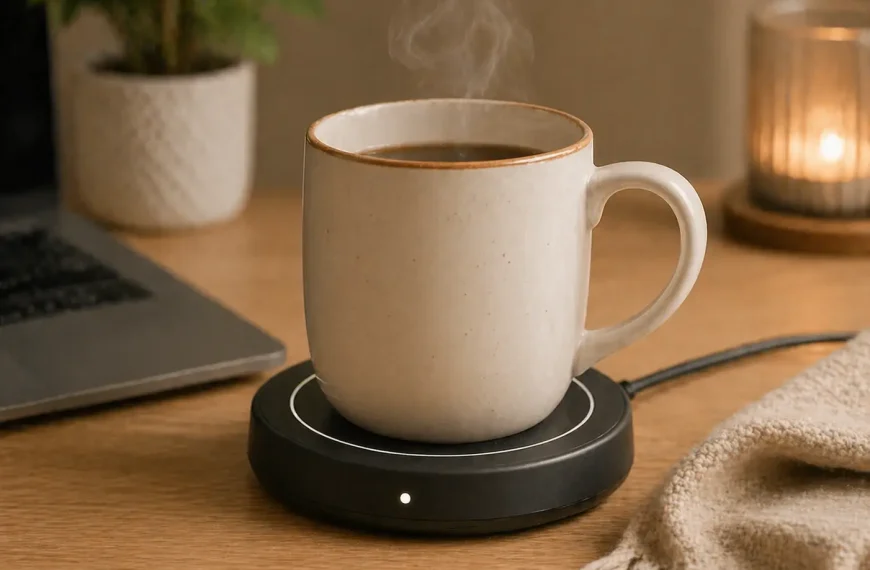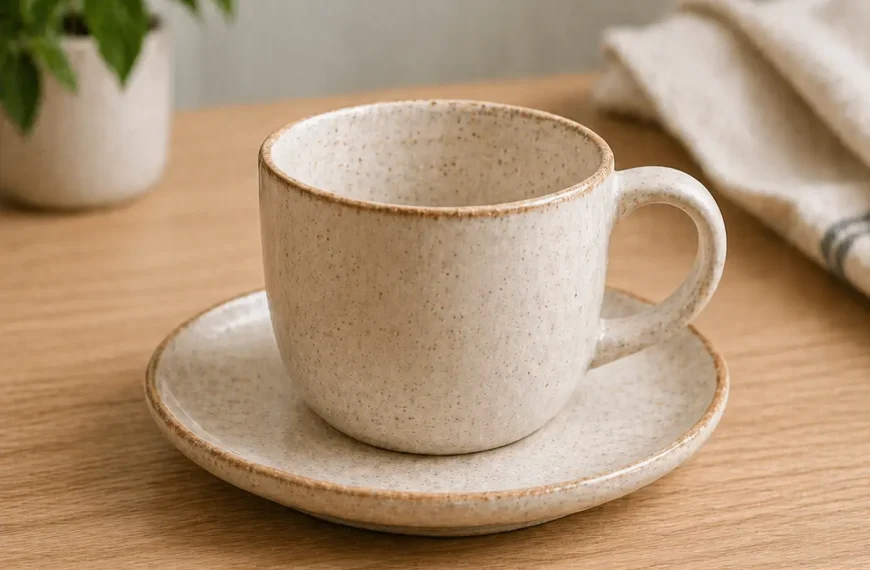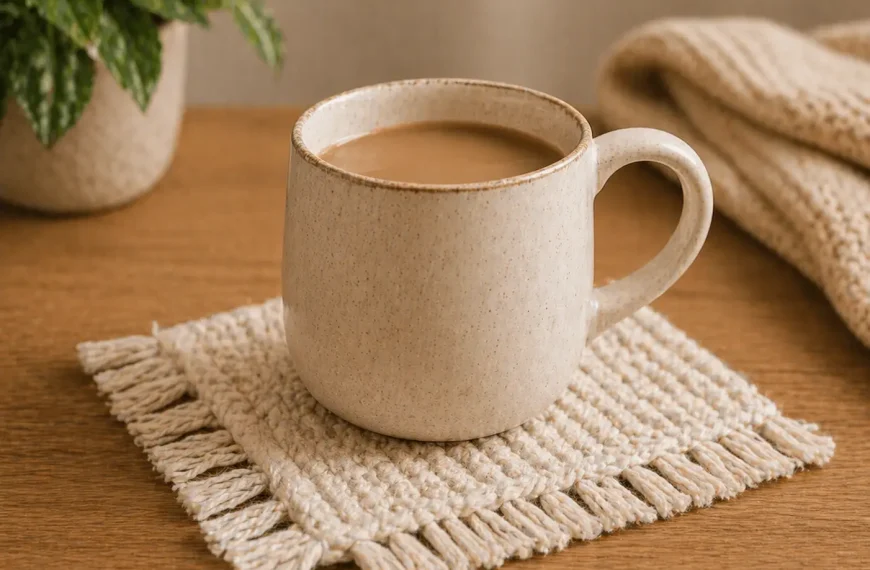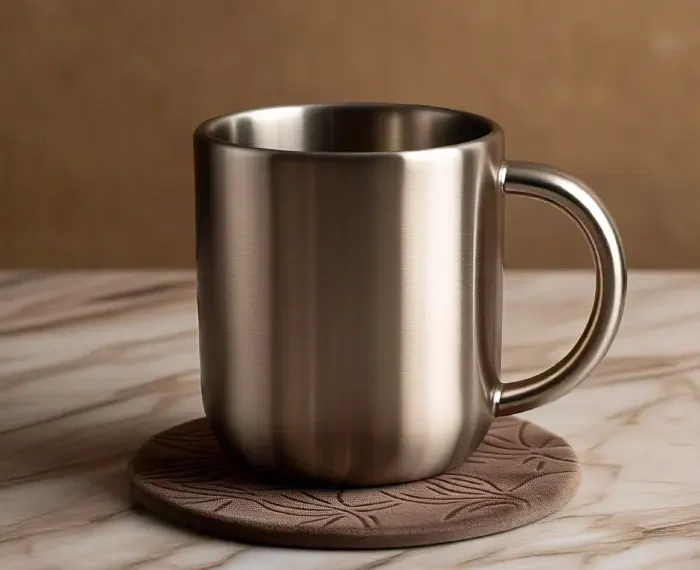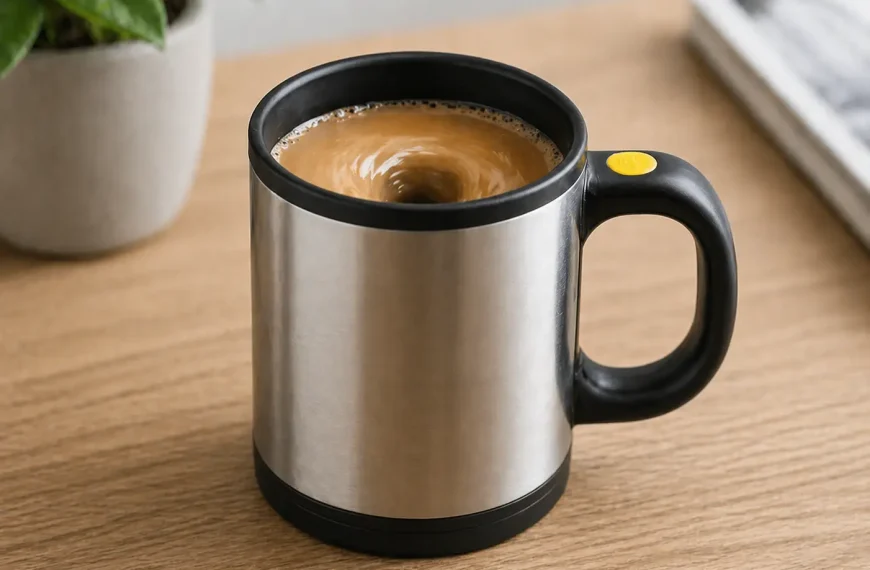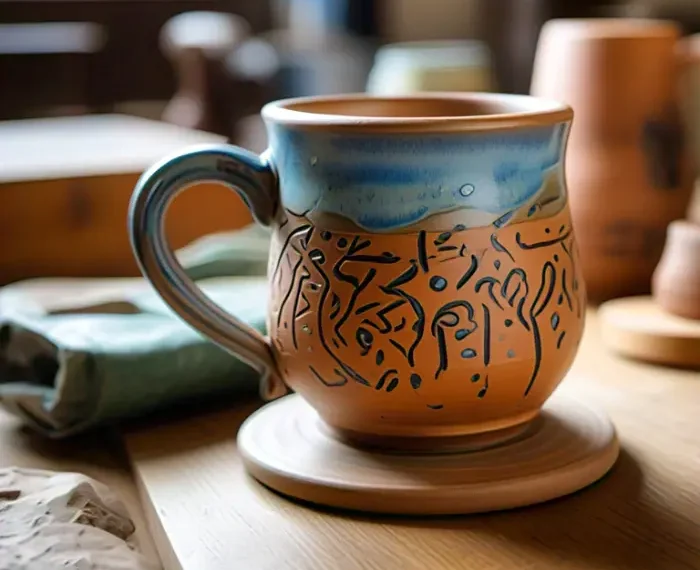

A mug coaster is a thermal and moisture barrier that separates a mug base from a table or countertop to prevent heat transfer, condensation damage, and surface wear. Performance depends on material composition, including absorbent options like cork, felt, and fabric that wick condensation, and heat-resistant polymers such as silicone that block thermal conduction from hot ceramic bases.
Hot beverages generate consistent thermal load: coffee brews at 90–96°C and boiling water reaches 100°C at standard atmospheric pressure, making the coaster a constant buffer between the mug and surface finish. Heat-resistant silicone rubber supports sustained use up to 200°C in industrial specifications, which explains its use for high-temperature protection. Coaster designs also control liquid accumulation by absorbing moisture (cork, fabric) or containing it with raised-edge silicone forms, while reducing impact noise between ceramic and hard surfaces like wood or glass.
Dimensional standards determine effectiveness. A typical size of 10 × 10 cm (≈4 × 4 inches) fits most mug bases while remaining compact. Thickness increases thermal buffering but excessive height reduces stability. Functional performance also depends on anti-slip grip, scratch-safe undersides for glass or polished stone, and cleaning tolerance, since dishwashers and high-heat drying affect wood and cork differently than silicone and metal.
Selecting a mug coaster requires matching material and dimensions to key protection needs, including condensation absorption into porous finishes and prevention of heat-induced surface scarring. (Wikipedia) This focus on surface preservation and environmental management represents a fundamental layer within our catalog of mug accessories, where small-scale hardware prevents large-scale furniture damage. To determine which material is best for your specific environment, one must first define the core purpose of a mug coaster and the specific problems it is designed to solve.
What is the purpose of a mug coaster, and what problems does it solve?
A mug coaster protects a surface by stopping a mug from transferring heat, moisture, and abrasion directly into the finish. It solves three common problems: thermal marking on finishes, moisture rings from condensation, and wear from repeated placement and sliding. One practical reason this matters is that wood finishes measurably change under sustained heat exposure: a peer-reviewed BioResources study thermally aged varnished wood samples at 25, 50, 75, and 100°C for up to 100 days and reported reductions in adhesion strength and gloss under higher temperature and longer ageing, showing that finishes lose performance under heat stress instead of staying “unchanged.”
How does a mug coaster protect a table from heat and moisture?
A mug coaster protects a table by acting as a barrier layer that reduces heat flow and blocks liquid contact at the mug base. Heat protection comes from interrupting direct contact and spreading heat into the coaster body instead of the finish. Moisture protection comes from preventing condensed water from sitting against porous finishes long enough to wick into them. Coasters also reduce the sharp placement noise by inserting a compressible or textured layer between hard surfaces, so ceramic-on-wood or ceramic-on-glass has less direct impact energy.
What is the difference between a mug coaster and a placemat?
A mug coaster is a single-vessel protector, while a placemat is a full place setting protector. The difference is footprint and intent: a coaster matches the base area of a mug or glass, and a placemat covers plates, cutlery, and multiple spill zones. A coaster is designed around the drinkware contact point; a placemat is designed around a meal service footprint.
What is the difference between a mug coaster and a mug rug?
A mug coaster is typically a rigid or semi-rigid barrier, while a mug rug is a textile-based hybrid that usually covers a mug plus a small snack zone. The difference is both size and material behavior: mug rugs rely on fabric absorption and quilting-style padding, not hard heat-blocking mass. A mug coaster is built to handle a concentrated hot base; a mug rug is built to absorb drips and protect a wider area.
Do mug coasters improve table aesthetics as well as protection?
A mug coaster improves aesthetics by adding a deliberate visual layer at the point where drinkware meets the table. This is the “table jewellery” role: colour, texture, and pattern can echo a room’s materials without changing the core function. In practice, decorative value works best when it does not compromise the protective job, so a coaster still needs stable contact, a surface that manages moisture, and an underside that will not scratch.
How do mug coasters work against heat and moisture?
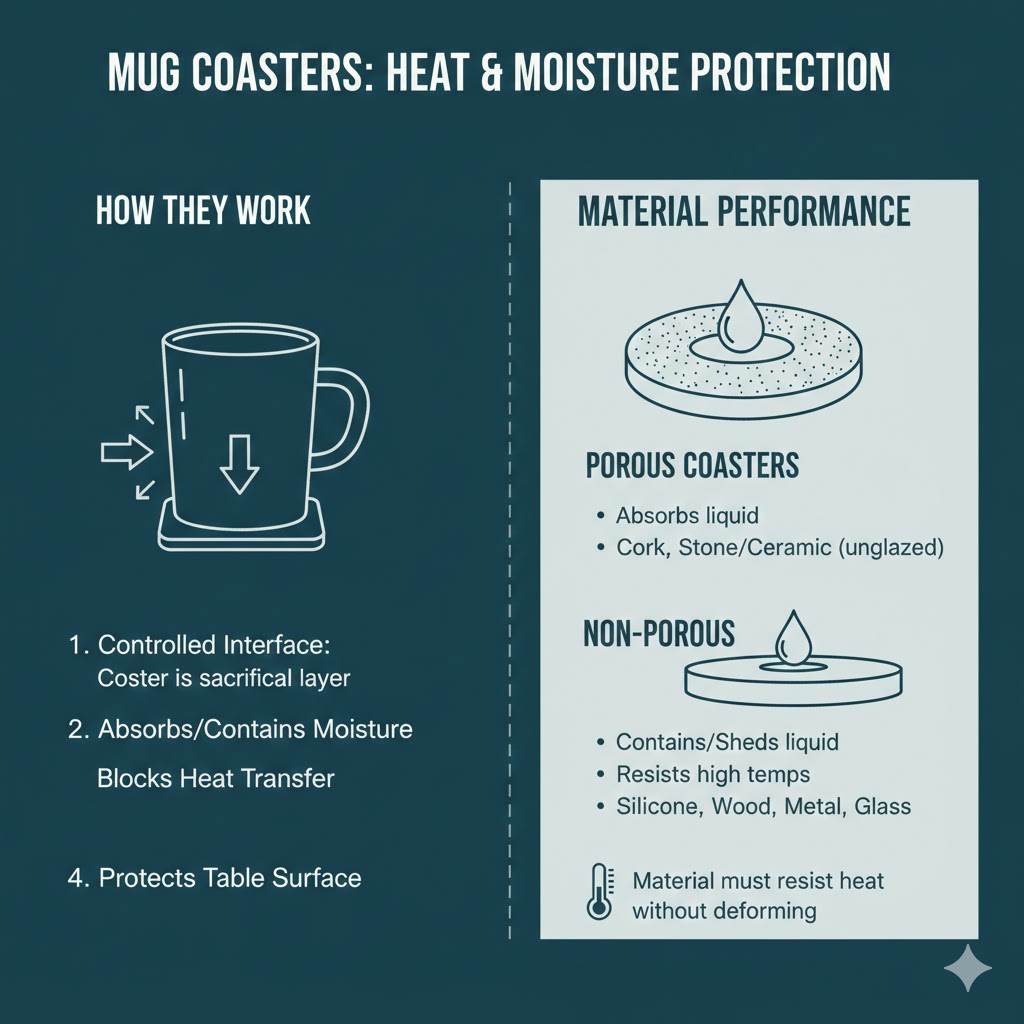
Mug coasters work by creating a controlled interface that either absorbs moisture, contains it, or blocks it from reaching the surface while also buffering heat. The key mechanism is simple: the coaster becomes the sacrificial contact layer, not the table. Performance differences come from whether the coaster is porous (absorbing and holding liquid) or non-porous (containing or shedding liquid), and from how well its material resists temperature without deforming.
Are mug coasters heat resistant, and how much heat can they withstand?
Mug coasters are heat resistant when their materials remain stable under hot-contact conditions instead of softening, cracking, or transferring heat rapidly. A materials paper on silicone rubber systems notes that standard RTV silicone rubber products are formulated to operate continuously from −65 to 200°C, with some products tolerating up to 350°C for short exposure, which supports why silicone coasters are commonly used under very hot mugs as a thermal barrier.
For day-to-day drinks, coffee extraction guidance from the Specialty Coffee Association’s handbook is cited in peer-reviewed research as 92–96°C water temperature for “proper extraction,” which is close to the contact temperature range a coaster is routinely asked to buffer at the mug base. (ScienceDirect)
Can mug coasters absorb condensation from cold drinks?
Mug coasters absorb condensation when the top surface is porous and the internal structure can hold water instead of letting it pool. Cork, felt, fabric, and some stone coasters absorb; silicone and plastic usually contain or repel and rely on a raised lip or textured basin. The practical difference is cleanup: absorbent coasters prevent puddling but can hold stains, while non-absorbent coasters wipe clean but may allow water to slosh if the lip is shallow.
Are cork mug coasters waterproof or just absorbent?
Cork mug coasters are absorbent, not truly waterproof. Cork resists decay and handles moisture well because of its cellular structure, but liquid can still enter and be held in the material rather than being blocked like a plastic sheet. In use, that means cork is excellent at preventing rings by soaking condensation, but it needs drying time so it does not stay wet between uses.
What materials are mug coasters made of, and which is best?
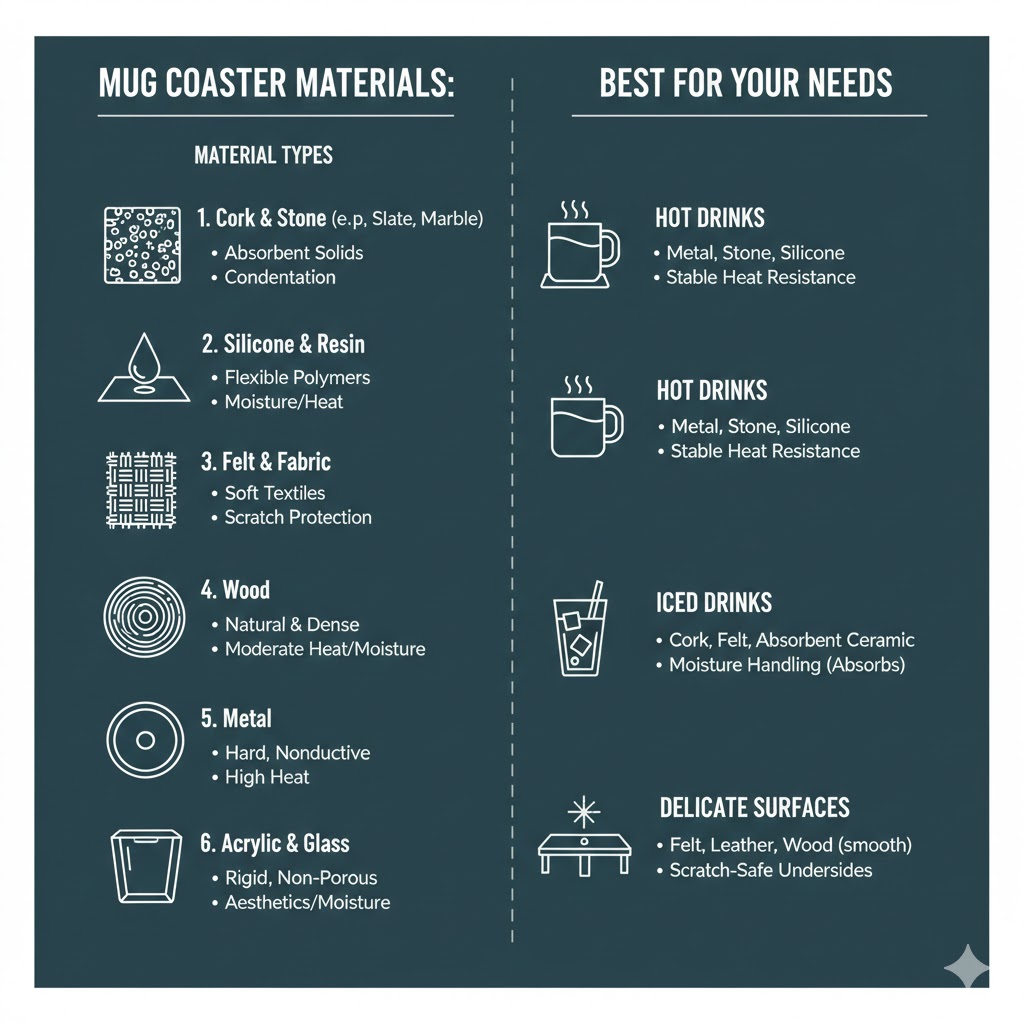
Mug coasters are made from absorbent solids, flexible polymers, textiles, and dense stones, and “best” depends on whether your main pain point is heat, condensation, or scratch risk. The most common choices include cork, silicone, stone (slate or marble), wood, felt/fabric, ceramic, leather, metal, resin, and acrylic. Picking well is about matching the material’s behaviour to your mug habits: very hot mugs need stable heat resistance, iced drinks need moisture handling, and polished surfaces need scratch-safe undersides.
Are wooden mug coasters better than cork or silicone ones?
Wooden coasters are better when you want a matching natural look and a firm base, and they are worse when moisture management is the priority. Wood can stain or warp if it is not sealed well, because it does not absorb evenly and it can hold moisture against the grain. Cork is more forgiving for condensation because it absorbs quickly; silicone is more forgiving for cleaning because it wipes and does not swell.
Are fabric or quilted mug coasters washable?
Fabric or quilted coasters are washable when they are built like small textiles rather than stiff boards with glued layers. Washing is a real requirement because textiles hold both moisture and drink residues, and that is where discolouration and odour start. In practice, the key maintenance point is full drying after washing, since a damp textile left stacked stays wet at the centre.
Are eco-friendly mug coasters available?
Eco-friendly mug coasters are available when the material is renewable, recycled, or both. Common examples include cork, bamboo, and sustainably sourced wood, plus recycled-fibre boards used for printed coasters. Reusability also matters: a durable coaster that lasts years reduces replacement cycles compared to disposable paperboard coasters used once or for a short event run.
Are mug coasters necessary for marble or stone countertops?
Mug coasters are necessary for marble when you want to prevent etching and dull marks from acidic spills, and they are still useful on other stones to prevent heat spots and abrasion. Marble contains calcium carbonate, and stone-care guidance explains that acids can react with it and create etch marks that look dull and cannot be removed by normal cleaning.
For hot mugs, a coaster also prevents a concentrated hot footprint sitting on one small patch of stone, which is where uneven expansion and local stress starts on some surfaces.
What size and thickness should a mug coaster be?
A mug coaster should be large enough to fully cover the mug base with a margin, and thick enough to provide a stable buffer without making the mug feel perched. Sizing is mainly about diameter or width; thickness is mainly about heat buffering and feel. If the mug base overhangs, moisture and heat bypass the coaster and the protection fails.
What size should a mug coaster be for standard mugs?
A standard mug coaster size is typically around 95–96 mm for common round or square coaster formats, which aligns with what commercial coaster printers list as standard sizes.
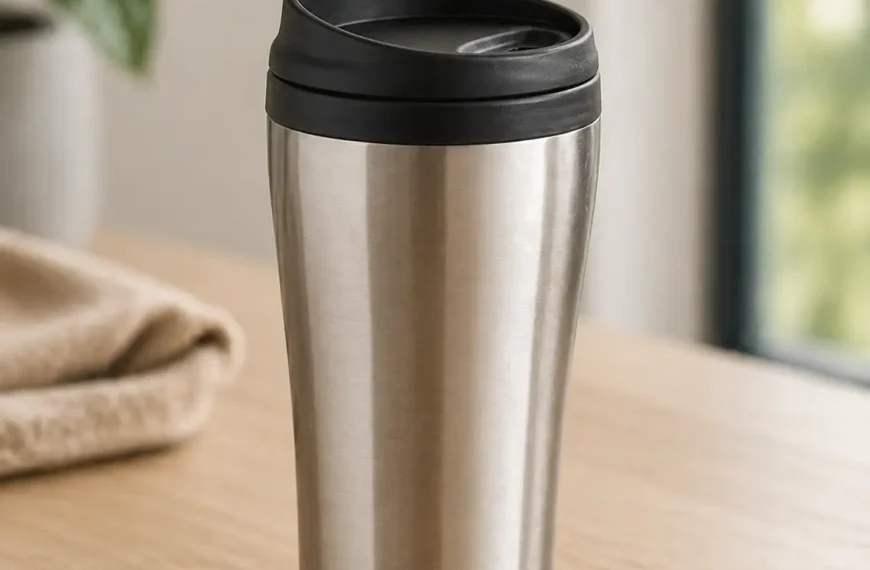
For wider-base drinkware like travel tumblers, the right choice is a wider coaster that still leaves a visible margin around the base so the vessel cannot sit half-on and half-off. In practice, the safest fit rule is “full base coverage plus a margin,” because even small overhangs are enough for a ring to form on wood.
What thickness should a mug coaster have for proper insulation?
A thicker mug coaster insulates better because it provides more low-conductivity material between the mug and the surface. Cork’s insulation behaviour is backed by materials data used in published research: one Journal of Cleaner Production paper lists agglomerated cork insulation board with thermal conductivity around 0.042 W/m·K, which supports cork’s role as a strong thermal buffer compared to denser, more conductive materials.
In consumer coaster products, common thicknesses vary by material, with examples like slate coasters listed at around 3.5 mm nominal thickness, which shows the typical physical range used for stability plus buffering in hard materials. (buildinginnovations.org)
How do you clean and maintain mug coasters properly?
Mug coasters stay effective when you clean them in a way that matches their material, because heat and water exposure affects each category differently. The main maintenance goal is removing drink residue before it sets and ensuring absorbent materials fully dry. A second goal is preserving the underside, since grit trapped under a coaster is a common cause of scratching on glass and polished surfaces.
Are mug coasters dishwasher safe?
Mug coasters are dishwasher safe when the material is stable under high heat and prolonged water exposure, and not dishwasher safe when it swells, cracks, or delaminates. Silicone and many metals handle hot wash cycles well; wood, bamboo, and cork are commonly advised against because dishwashers combine heat with long moisture exposure that causes warping, cracking, or breakdown in natural materials.
If a coaster has glued layers or a felt backing, the risk is also adhesive failure, so hand-washing is usually the safer default for bonded products.
Can mug coasters stain over time?
Mug coasters stain over time when they are porous and repeatedly exposed to tannins and oils from tea and coffee. Cork and porous stone are the most common stain-holders because liquid enters the surface instead of sitting on top. A practical cleaning approach is using mild soap for routine residue and a gentle paste for deeper staining on porous materials, followed by a full air-dry so moisture does not stay trapped.
How long do mug coasters typically last?
Mug coasters last as long as their surfaces and edges remain intact and their underside stays smooth. Silicone tends to last longer because it does not crack from drops and does not absorb liquids into its structure, while wood and leather often develop visible wear and patina from repeated contact. Stone lasts structurally but can chip at edges and can scratch surfaces if the underside is not backed or kept clean.
What design features matter for safety and placement?
Mug coaster design features matter because they control slip risk, scratch risk, and spill containment, not just looks. The safest designs combine a stable top surface, a non-scratch underside, and enough edge control to keep small puddles from spreading. These details become more important on glass tables, polished stone, and outdoor settings where wind and uneven surfaces add risk.
Do silicone mug coasters slip on smooth tables?
Silicone mug coasters resist slipping because silicone is naturally grippy and deforms slightly to increase contact area. This is why many silicone coasters include textured tops or anti-slip bases that “grab” smooth finishes and reduce spill risk during placement. In practice, the only common slip issue is when dust, oil, or cleaning residue creates a film on the table, so wiping both surfaces restores grip.
Can mug coasters scratch glass or polished surfaces?
Mug coasters scratch glass when the underside is rough, unbacked stone, or when grit is trapped underneath and dragged. Felt backing or a smooth anti-scratch bottom prevents abrasion by creating a soft contact layer and trapping less grit against the surface. For stone and wood, a clean underside matters as much as the base material, because a single grain of sand is enough to leave a visible mark on polished glass.
Are mug coasters suitable for outdoor use?
Mug coasters are suitable for outdoor use when they resist wind movement and tolerate weather exposure. Heavier materials like stone are stable on patios, while silicone is stable because it grips and does not absorb rain. For outdoor setups, the simplest rule is weight or grip: choose at least one of those two so the coaster does not slide when you set a mug down.
Can mug coasters be personalised or customised?
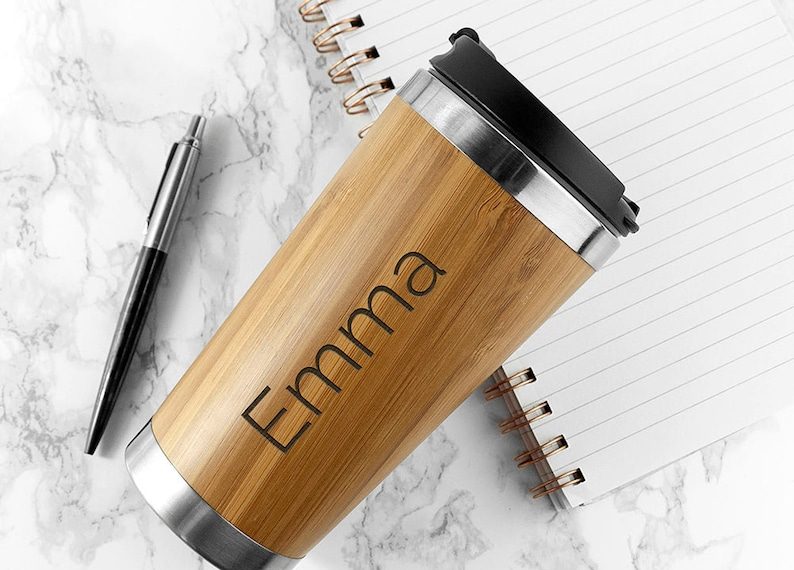
Mug coasters can be personalised through printing, engraving, or material-embedded designs, and the practical limit is the material and finish. Wood, leather, and metal take engraving well; resin takes embedded objects and clear encapsulation; board coasters take full-colour printing. Personalisation also changes maintenance, since printed surfaces can fade under harsh scrubbing and engraved grooves can hold residue if not rinsed.
How many mug coasters should you keep at home for a complete set?
A complete home set usually matches how you host and how many drinks you serve at once. Three common set sizes cover most use:
- 4 coasters for small households and basic daily use
- 6 coasters for a typical shared table setup and casual hosting
- 8 coasters for larger households or frequent hosting where drinks are served in parallel
How do mug coasters complement your favorite mugs?
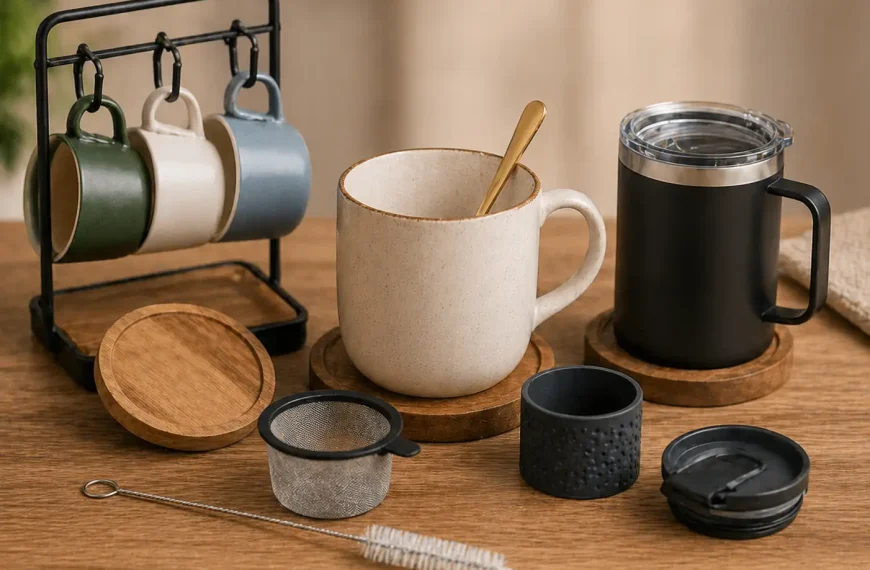
Mug coasters complement mugs by turning drinkware into a safer, cleaner, more consistent “beverageware” setup on real surfaces. The coaster is the protective partner that lets a mug do its job without leaving rings, dulling finishes, or forcing you to treat every table like a sacrifice surface. Material matching also improves the experience: absorbent coasters pair well with iced drinks and cold tumblers, heat-stable coasters pair well with hot ceramic mugs and fresh brews, and scratch-safe undersides pair well with glass and polished stone. When the coaster fits the mug base and the surface type, the whole tableware accessory system works as intended.
How do you remove heat stains and water rings from wooden tables caused by mugs?
Heat stains and water rings can be reduced when you identify what type of mark you have and treat it with a method that matches the finish. The goal is stopping further damage first, then correcting the visible mark without stripping the surface. A coaster choice that matches your mug use is the prevention step that makes the fix less likely to be needed again.
What’s the difference between a white heat ring and a dark water stain, and why does it matter for removal?
A white ring is usually a surface-level change in the finish, while a dark stain is deeper moisture or contamination that penetrated further. This matters because surface marks respond to gentle finish-safe methods, while deeper dark stains often require more intensive repair. Treating a deep stain like a surface haze often wastes time and can spread damage by over-wetting the area.
What are the safest at-home removal methods, and which ones should you avoid to protect the finish?
Safe at-home methods focus on gentle action and minimal abrasion, and unsafe methods are aggressive sanding or harsh chemicals that strip the finish. There are three safer home approaches commonly recommended in home-care guidance:
- Gentle heat with a barrier to drive off trapped moisture in a controlled way
- Finish-safe polishing steps that restore surface clarity without cutting through the coating
- Minimal moisture cleaning to remove residue without soaking the wood
When should you stop DIY and refinish, plus how to prevent repeat staining with the right coaster material?
DIY should stop when the finish is visibly broken, the stain is dark and spread into the grain, or repeated attempts change the sheen unevenly. Refinishing becomes the clean fix when the protective layer is compromised and the mark is not just cosmetic haze. Prevention is straightforward: match the coaster to the damage type you keep getting, using absorbent cork or fabric when condensation rings are the problem, and heat-stable materials like silicone or dense stone when hot bases are the main problem.
The practical way to choose a mug coaster that actually prevents damage
A mug coaster choice works when it matches the heat of your hot drinks, the condensation of your cold drinks, and the surface you place mugs on most. Start with material for the main threat, then size for full base coverage, then underside design for scratch control. When those three match, a coaster stops rings, reduces heat marking, and keeps mugs feeling stable on the table.