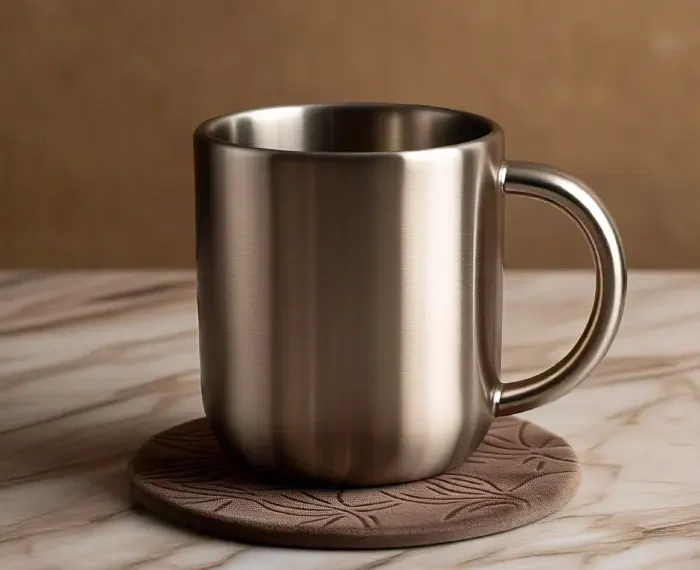

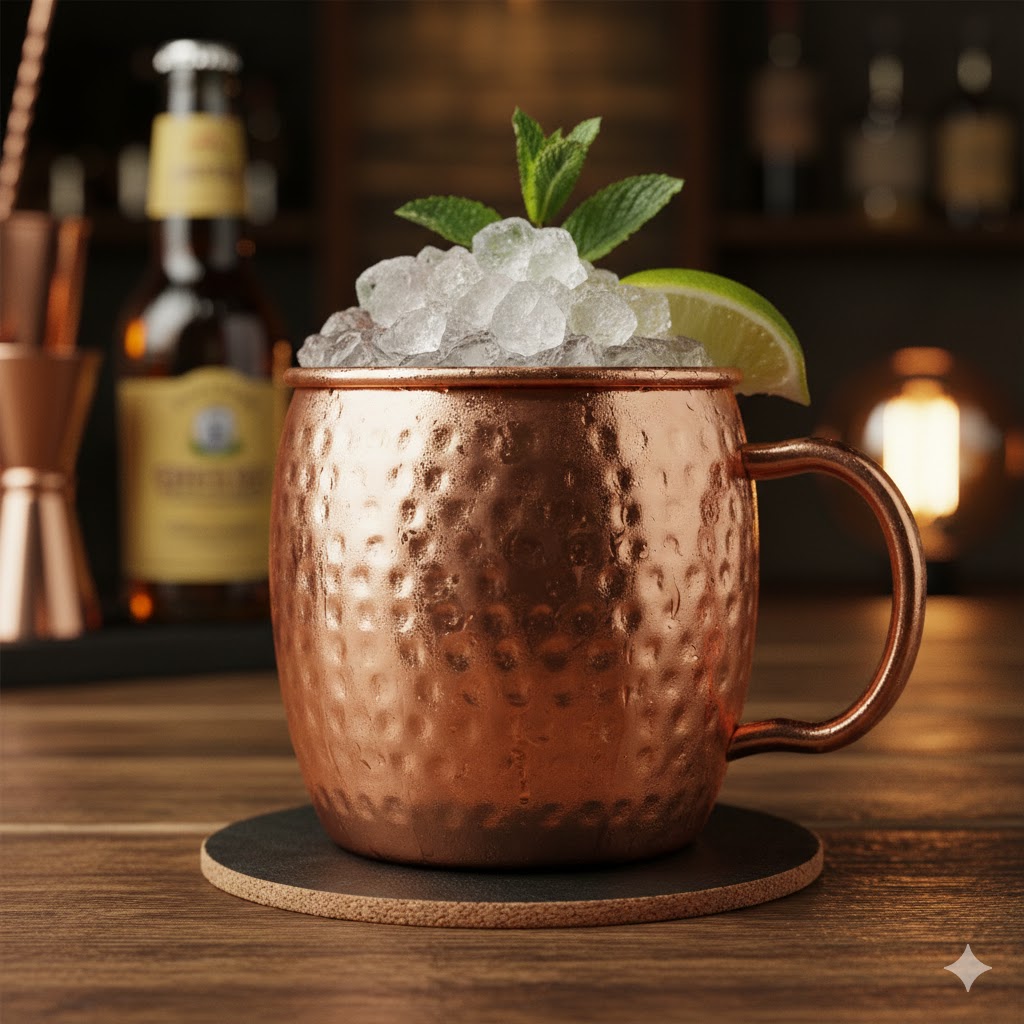
A Moscow Mule mug is a handled cocktail mug associated with serving a Moscow Mule and defined in barware by its metal construction, most often copper, with an engineered need for an internal lining (commonly tin or stainless steel) to keep acidic drinks from contacting bare copper.
The mug’s identity is tied to function as much as appearance: copper’s high thermal conductivity supports the “frosty” surface feel and fast heat transfer between ice, liquid, and the vessel wall, which is one reason the Moscow Mule became linked to this format in the 1940s, with the origin story typically dated to 1941. Food-service rules also matter, because the FDA Model Food Code states that copper and copper alloys may not contact foods with pH below 6 (examples include fruit juice and wine), which is directly relevant to lime-based cocktails unless the interior is lined.
In practice, many Mule mugs are sold around a 16 oz capacity, with common home-bar options spanning about 12–20 oz for ice and a full build. (PMC)
The transition from raw copper utility to a standardized service vessel illustrates how specific hospitality requirements define this entry within our function-based mug types index. To understand the legacy behind the metal, one must look back to the origin and history of the Moscow mule mug
What is the origin and history of the Moscow mule mug?
The Moscow Mule and its copper “mule mug” became linked in the United States in the 1940s through a marketing push that paired vodka, ginger beer, and the distinctive metal cup. The drink’s standard build is commonly described as vodka, lime juice, and ginger beer served over ice in a copper mug.
Why are Moscow Mules traditionally served in copper mugs?
Copper mugs are used because copper transfers heat quickly, so the cup chills fast when packed with ice and cold liquid, and it also feels cold to the touch. Pure copper’s thermal conductivity is listed around 398 W/m·K at about room temperature, which is far higher than stainless steel, so the metal equilibrates with drink temperature quickly.
A Moscow Mule does not have to be served in copper to be a Moscow Mule, but the copper mug is part of the established presentation and is still specified as the classic drinkware in many descriptions. (Wikipedia)
Do copper Moscow mule mugs change the taste or aroma of the drink?
Copper contact can contribute to a metallic note if copper ions dissolve into the drink, and metallic flavour can be detectable at low concentrations depending on the metal and beverage chemistry. A peer-reviewed review on metallic flavour perception reports that metallic sensations can be triggered by dissolved metal ions and their interactions in the mouth, which is why metal contact is treated as a sensory variable in beverage service.
In a Moscow Mule, acidity is a key driver of copper ion release risk, so “taste change” and “safety” are closely connected for unlined copper interiors.
What are Moscow mule mugs made of?
Moscow Mule mugs are commonly sold as solid copper mugs, copper-plated mugs (a thin copper layer over another metal), or copper-coloured mugs that are actually stainless steel. Copper plating is a different construction method than solid copper and is used to reduce cost while keeping the copper look.
Price differences track the underlying materials and build quality, and copper commodity prices are one reason copper barware is often more expensive than basic glassware. U.S. copper futures also show that copper price can move sharply over time, which flows into retail pricing for copper goods. (National Academies)
What is the difference between a Moscow mule mug and a copper tumbler?
The functional difference is the handle: a mule mug has a handle, while a copper tumbler typically does not. A handle reduces direct hand contact with the cold metal body, which helps keep the outside feel comfortable and reduces warming from your hand on a single-wall vessel.
What design features matter most in a Moscow mule mug?
Key design variables are wall construction (single vs double wall), handle attachment method, rim shape, interior lining, and exterior finish. These features affect condensation, grip comfort, durability, cleaning, and whether the mug meets food-contact expectations for acidic drinks.

What’s the difference between a single-wall and double-wall Moscow mule mug?
Single-wall mugs transfer cold quickly to the exterior, so condensation forms more readily and the mug feels “frosty” in the hand. Double-wall mugs add an insulating air gap, which reduces outside condensation and slows exterior temperature change, but also reduces that classic cold-metal feel. In practice, double-wall designs are chosen to reduce sweating and water rings on tables.
Why do some mule mugs have a lacquer coating?
A food-grade exterior lacquer is used to slow tarnishing and keep the copper bright by limiting oxidation that causes patina. Unlacquered copper naturally develops patina over time, which changes appearance but does not automatically indicate a structural problem.
Why does the handle design matter for grip and comfort?
Handle design controls leverage, balance, and stress at the joint, especially when the mug is filled with ice and a full pour. Riveted handles add visible mechanical fasteners, while welded handles give a cleaner look; both can be durable when done well, but poor joints can loosen over time. Stacking and rough handling increase scratch risk and can stress handle joints, so storage habits matter for longevity.
Are copper Moscow mule mugs safe to drink from?
Unlined copper is a poor match for acidic drinks because food-service rules restrict copper contact with foods below pH 6, and a Moscow Mule is strongly acidic. The FDA Food Code section on copper use limitation states copper and copper alloys may not be used in contact with food that has a pH below 6 (with a narrow brewing exception), which covers citrus-based cocktails.
A Journal of Environmental Health study measured a Moscow Mule solution at pH 2.7 and observed copper leaching at 0.048 ± 7×10⁻⁴ ppm per minute at room temperature, reaching 1.3 ppm in a little over 27 minutes under their test conditions.
A clinical case report also documents acute copper sulphate poisoning and underscores that high copper exposure can produce serious symptoms, which is why direct copper contact is treated as a safety issue for acidic beverages. (World Health Organization)
Do you need a lined copper mug for a Moscow Mule?
A lined interior is the standard engineering fix because it separates an acidic drink from reactive copper metal. The FDA Food Code’s pH < 6 copper restriction is the practical reason many copper-look mule mugs use stainless steel linings or other inert barriers for the beverage contact surface.
Experimental work on coated copper surfaces shows that applying a protective lacquer can significantly reduce copper transfer into acidic simulants compared with bare copper, reinforcing the role of a barrier layer.
What size Moscow mule mug should I buy?
Moscow Mule mugs are commonly sold in sizes that match a typical highball-style build with ice, including 12 oz, 16 oz, and 20 oz options. A 16 oz mug corresponds to about 473 mL, which fits a standard pour plus ice without overflowing in many home setups.
If a preferred recipe uses a larger ginger-beer top-up, a 20 oz size provides more headroom for ice and garnish.
How do you clean and maintain a copper Moscow mule mug?
Hand washing is the baseline because harsh detergents and long wash cycles accelerate dulling and tarnish on copper surfaces. Serious Eats explicitly warns that tarnish-prone metals like copper and brass are best kept out of the dishwasher because harsh detergents can damage the finish over time.
For unlacquered copper exteriors, mild soap and water plus periodic polishing is the standard approach, while lacquered copper should be cleaned gently to avoid damaging the coating.
Can you put a copper Moscow mule mug in the dishwasher?
No: copper is a tarnish-prone metal and dishwasher detergents and heat can dull and damage the finish, so hand washing is the safer default for preserving appearance.
No for the microwave: metal containers can cause arcing in a microwave and are generally treated as unsafe for microwave use.
Yes for short pre-chilling in the freezer is a common serving practice used to increase the “frosty mug” effect before pouring.
Hot drinks are a burn risk in copper because the metal conducts heat quickly, so the rim and body can become hot fast.
How do you store Moscow mule mugs to prevent damage or tarnish?
Dry storage slows oxidation and water spotting, and it also reduces the chance of staining at seams or around handle joints. Avoid stacking metal-on-metal without protection because scratches and dents are permanent on soft copper finishes.
If a handle loosens, professional repair is safer than DIY soldering because some solders are restricted for food-contact surfaces when lead content exceeds limits.
How do you choose the best Moscow mule mugs to buy?
There are three checks that sort most options fast: interior contact surface (lined vs unlined), construction (solid copper vs plated vs stainless), and food-contact credibility (clear materials statement and lining type). If the mug is intended for a classic lime-and-ginger-beer Mule, a lined interior aligns with the FDA Food Code pH < 6 copper restriction used by food regulators as a benchmark.
For U.S. buyers, specialty barware retailers often provide clearer material specs than generic listings, which matters for lining verification.
What are common ways to gift and personalize Moscow mule mugs?
Mule mugs are commonly sold as gift sets that bundle mugs with accessories like straws, jiggers, and cleaning brushes. Sets are mainly about consistent style and matching capacity, plus convenience for hosting.
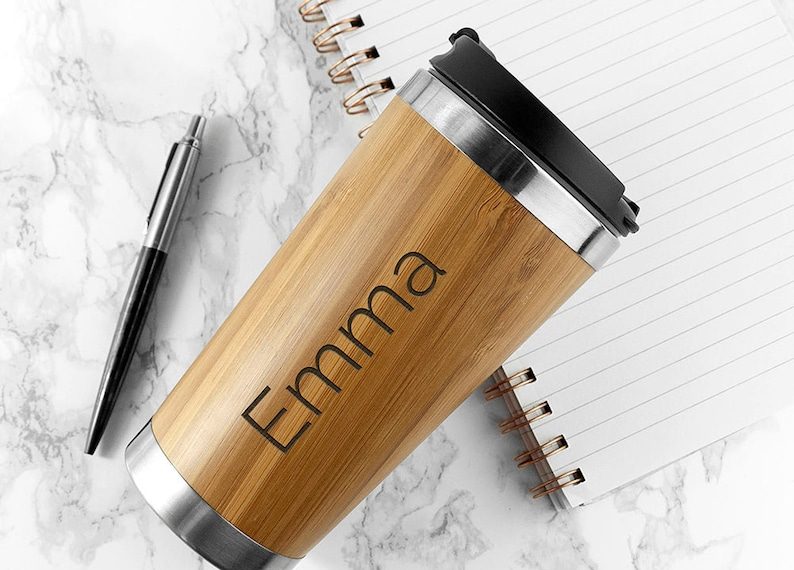
Engraving and logo etching are common personalisation options because copper and stainless surfaces can take crisp text and simple graphics.
When is engraving or logo etching a good option?
Engraving works well for weddings, corporate gifts, and venues that want branded barware because the mark stays visible even as the exterior develops patina. For event use, sets with matching engravings function as both serveware and keepsakes.
How does the Moscow mule mug fit into modern cocktail culture?
The Mule mug is a modern barware symbol that helped re-popularise metal drink vessels in cocktail service, especially through highly recognisable presentation. The drink itself is routinely described as being served in a copper mug, which keeps the mug as a visual shorthand for the cocktail in menus and social media. (Wikipedia)
Mule mugs are also used for other cold, citrus-forward or ginger-based drinks where the same cold-metal presentation is desired.
How do food-service rules and enforcement shape how bars can use copper mugs in the USA?
H3: What does the FDA Food Code actually restrict for copper and acidic drinks?
Food codes commonly cite the pH < 6 restriction for copper and copper alloys in contact with acidic foods such as fruit juice, vinegar, and wine, which is directly relevant to citrus cocktails.
Why did state advisories focus on Moscow Mule mugs, and what did they allow?
The 2017 Iowa advisory is widely reported as a trigger point for public attention, and reporting on it repeatedly highlights the pH < 6 rationale and the allowance for lined mugs (for example, stainless or nickel linings).
What does “compliant” mug design look like for a Mule service program?
A compliant approach in practice is a nonreactive beverage contact surface paired with copper on the exterior for aesthetics, which matches the “copper look, lined inside” design used by many modern mule mugs.
A practical bottom line for buying and using a Mule mug
Pick the mug for what it touches first, then for how it looks. A lined interior aligns with the pH < 6 copper restriction used in food codes, and it reduces the conditions that drive copper ion release in an acidic Mule.
After that, choose wall construction and handle build based on condensation control, grip comfort, and how you plan to store and wash the set. Adhering to these material standards ensures that the vessel remains a safe and effective iteration of the mug used in modern barware.