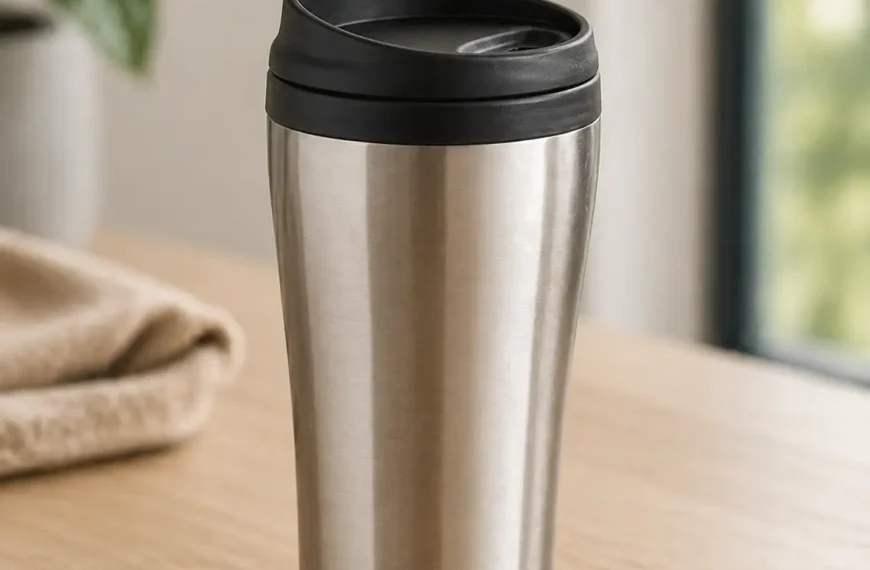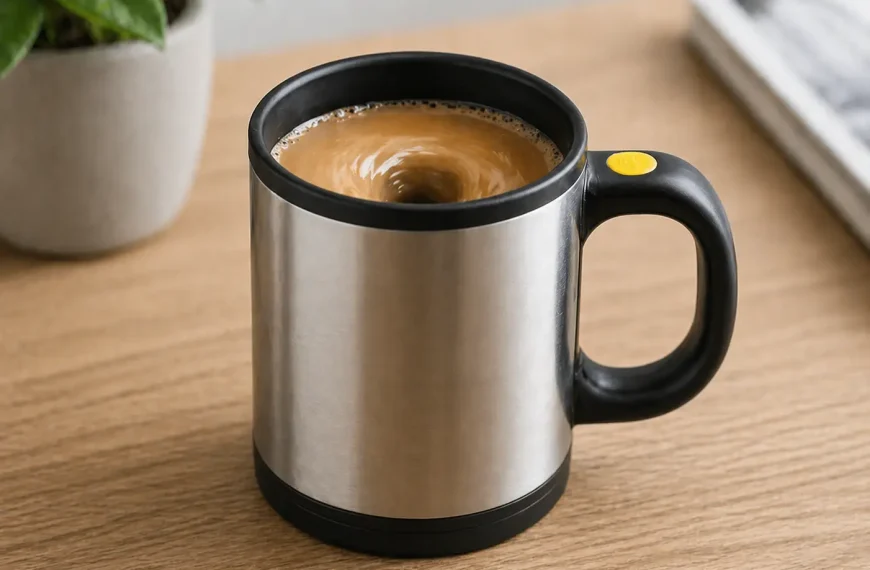

An enamel mug is a steel drinking vessel coated with vitreous enamel, and it is designed to be heated directly over a fire or on a stovetop. A materials review of porcelain enamel coatings reports that firing for steel products commonly runs at 750 to 890°C for 2 to 8 minutes depending on sheet thickness, which is why the glass coating becomes fused to the metal surface rather than behaving like paint.
In the mugs network, it exists to combine direct-heat use with a smooth, non-porous glass contact surface, while avoiding shattering like ceramic. Its lightweight build and portability help explain why it is widely used as a camping mug for outdoor drinking and simple heating tasks. The scope also includes two high-impact questions that decide whether it is the right material choice: whether it is health-safe and lead-free, and how it compares with common alternatives such as ceramic and stainless steel.
This composite construction positions the vessel as a unique hybrid within our catalog of material-based mug types, where the resilience of metal meets the sanitary surface of glass. To understand the performance and safety of the vessel, start by analysing the specific metallic substrate and the vitreous enamel components used in its construction.
What materials are enamel mugs made from?
An enamel mug is built from two bonded materials: a metal core and a vitreous enamel coating. “What are enamel mugs made of?” has a simple answer: steel (sometimes another metal) plus a glass-like enamel layer fused onto it. Vitreous enamel is literally a glass coating, and in industrial use it is fired onto metal so it becomes part of the surface rather than a paint film. (Wikipedia)
What is the substrate in an enamel mug?
The substrate is the metal body under the enamel, and in most enamelware drinkware that core is steel. Steel is used because it handles the firing process and gives the mug impact strength and shape stability after forming. Substrate thickness (gauge) is one of the biggest drivers of “feel” in hand: heavier gauge adds mass and stiffness, and lighter gauge reduces weight but can dent more easily. A classic impact-resistance study on porcelain-enameled utensils tested multiple steel gauges and found that enameled specimens were stronger than the bare stock, and that increasing enamel thickness increased strength within limits, with a larger effect on lighter gauges. (ResearchGate)
What is vitreous enamel and how does it bond to metal?
Vitreous enamel is a glass coating fused to metal by firing, and “porcelain enamel” on a mug is commonly used as a synonym for this glass coating. In industrial enamelling, the glass frit melts, flows, and then hardens into a continuous layer that is chemically and mechanically bonded to the metal surface. Reference descriptions of vitreous enamelling commonly place firing around the mid-hundreds °C range, and encyclopedic summaries describe firing temperatures for vitreous enamel on metal in roughly the 760–900°C band.
What does enamel thickness affect?
Enamel thickness affects appearance, stiffness of the coating, and how damage shows up over time. A thicker coating often gives deeper colour and a more substantial visual finish, but the coating is still glass, so edge impacts can chip it even when the body survives. Experimental work on porcelain-enameled utensils also reports that increasing enamel thickness increases strength within limits, so thickness is not purely “aesthetic”; it changes mechanical behaviour as well.
How are enamel mugs manufactured?
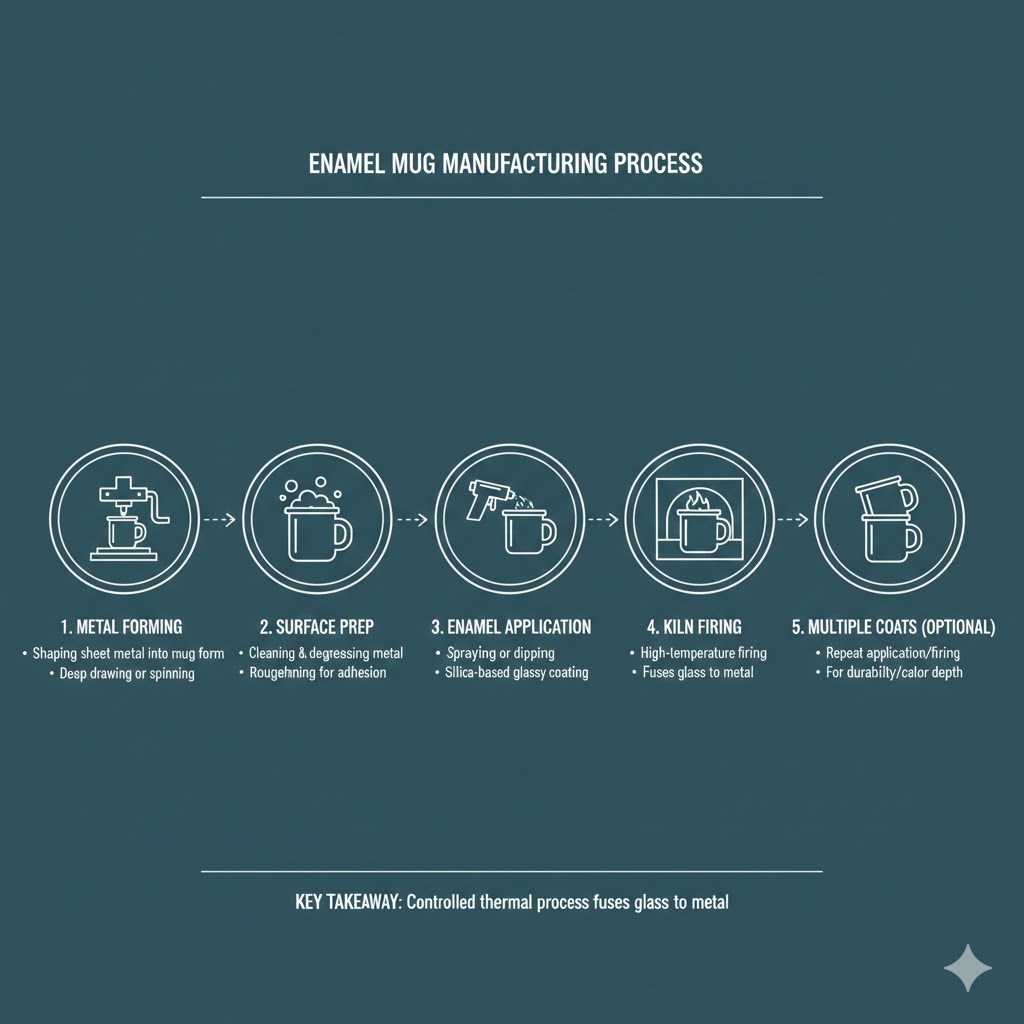
“How are enamel mugs made?” follows a factory workflow: metal forming, surface prep, enamel application, and kiln firing, often in more than one step. A peer-reviewed review of porcelain enamel coatings describes enamel as a silica-based glassy coating applied by high-temperature firing, and the temperature range depends on the substrate and process route. In other words, this is a controlled thermal process that permanently fuses a glass layer to metal, not a simple surface paint job.
What happens during enamel dipping, baking, and firing?
Enamel application is typically done by wet dipping or spraying a slurry, followed by drying and then firing in a furnace or kiln so the glass frit melts and bonds. Industrial descriptions of vitreous enamelling commonly cite firing around 850°C for bonding the glass coating to steel. More firing rounds and more complex multi-coat systems increase energy use and process time, so “manufacturing cost” is strongly tied to how many coats and firing cycles the factory runs.
How do you tell if an enamel mug is real enamelware?
A real enamel mug is metal under glass, so the simplest authenticity checks focus on that composite. There are three practical checks that usually separate enamelware from painted metal mimics:
- Tap and feel: enamelware feels rigid and “glassy” on the surface, while paint films often feel softer.
- Rim and edge detail: many enamel mugs have a distinct rolled rim profile rather than a thin, sharp edge.
- Wear pattern: enamel chips rather than peeling as a film, because it is glass fused to the substrate.
What performance traits matter most in an enamel mug?
The point of enamel mugs is functional: they combine a heat-tolerant metal body with a chemically resistant glass surface. That mix changes heat behaviour, durability under drops, and how taste and staining behave compared with porous materials. The most practical performance questions are heat retention, taste neutrality, portability, and edge design.
Do enamel mugs keep coffee hot or keep drinks cold?
Enamel mugs transfer heat quickly because the core is metal, so the mug body warms fast and cools fast. They do not provide vacuum insulation like a double-wall travel flask, so they are not built for long-duration thermal retention. Their advantage is the opposite: fast heat response for boiling, heating, and quick warming of contents when used over a flame or stove.
Why do some enamel mugs have a metallic taste?
A properly fired enamel surface is glass and should not taste metallic on intact surfaces. A metallic taste usually points to exposed metal where enamel is missing, most often at a chipped rim or a damaged interior spot. That matters because once the steel is exposed, acidic drinks can interact with the metal surface and you will also see rust risk if moisture sits on the exposed substrate.
How do weight and portability affect outdoor use?
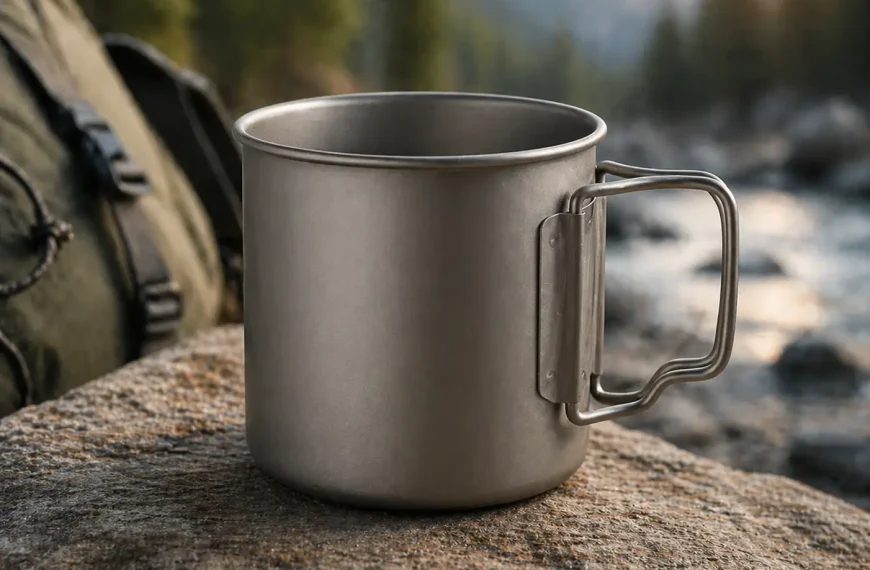
Enamel mugs are popular outdoors because you get a strong cup at relatively low weight compared with ceramic, and you can heat it directly. They are also easy to pack because the metal body tolerates knocks that would crack or shatter brittle drinkware. Portability improves further when the mug is part of a simple kit: mug, small lid, and a way to clip or nest it in a cook set.
Why do enamel mugs have a rolled rim?
A rolled rim is a comfort and edge-protection feature: it gives a smoother drinking edge and a more robust lip than a thin cut metal edge. Enamelware sellers that use the term “rolled rim” describe the rim as curved specifically to make drinking more comfortable. In practice, the rim zone is also where edge impacts happen most, so a stronger rim design is one of the few places manufacturers can add durability without changing the whole mug.
What size enamel mug is best for coffee?
A “standard” enamel mug often sits in the 8–16 oz range, and the right size depends on what you actually pour. There are three common sizes and use cases:
- 8 oz (about 237 mL): espresso + hot water, or a smaller black coffee.
- 12 oz (about 355 mL): typical brewed coffee serving.
- 16 oz (about 473 mL): large coffee, soup, or multi-purpose camp cup.
Can you heat an enamel mug over a fire or stove?
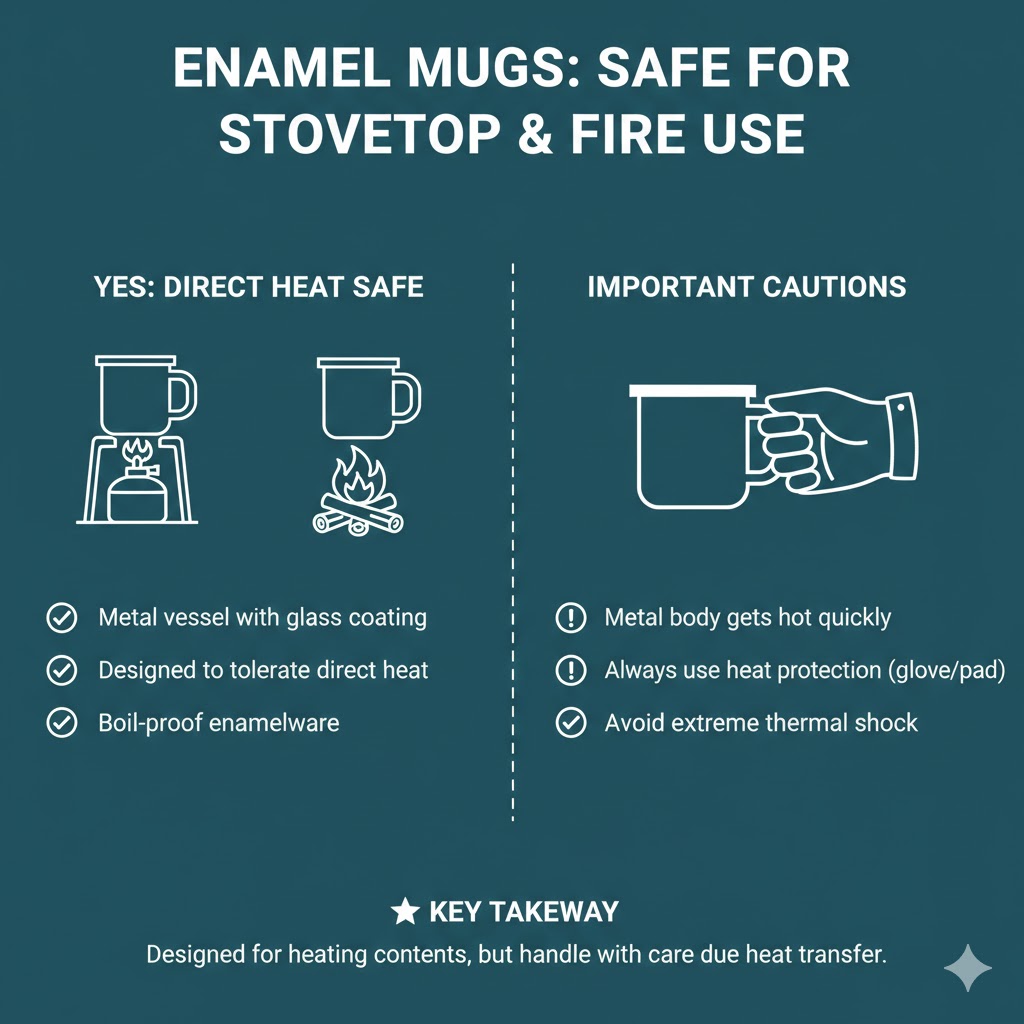
Yes, an enamel mug can be used on a stove or over a fire, because it is a metal vessel with a glass coating designed to tolerate direct heat. This is exactly what “boil proof” enamelware is built for: heat the contents, not just hold them. Manufacturer care guides for enamelware commonly treat it as suitable for direct heating, while still warning about safe handling because the metal body gets hot quickly.
Can you boil water in an enamel mug or cook in it?
Yes, you can boil water in an enamel mug and you can cook simple items in it, as long as you handle it like any small metal pot. The safety issue is not the enamel surface; it is burns from a hot handle and the fact that small volumes boil fast. Use a cloth, glove, or pot-grip and treat the mug as a hot cooking vessel once it is on heat.
Can enamel mugs go on a grill, a campfire, or an open flame?
Yes, enamel mugs can be used over an open flame, grill, or campfire, but soot and flame contact will dirty the exterior fast. The practical trade-off is cleaning: open flame gives you heat anywhere, but you will scrub off carbon and deal with smoke residue. If you heat the mug empty, some enamelware guidance warns that you can damage the coating, so heat with liquid inside.
What does “boil proof” mean for an enamel mug?
“Boil proof” is a product claim that the mug is intended for direct heating so it can take boiling-water use without immediate coating failure. In quality control, that normally maps to endurance under repeated heating cycles and visual checks for defects like crazing or cracking of the enamel surface. It is still not a “no limits” claim: damage at chips and rims remains the long-term weak point in real use.
Are enamel mugs safe to drink from?
Yes, enamel mugs are designed as drinkware, and the enamel surface is a non-porous glass coating rather than a porous glaze you can soak through. The safety question becomes measurable when you look at migration testing: the EU Joint Research Centre reported migration testing that compared ceramic and enamelled metal bakeware using two conditions, including 4% acetic acid at 22°C for 22 hours, and a second condition using synthetic apple juice at 95°C for 2 hours, with metals assessed by ICP-MS (including Pb and Cd among others). Those test conditions are the reason intact enamel coatings are treated as a barrier layer in food-contact use: if the coating is intact, exposure pathways are mainly through measurable migration, not absorption into the material. (JRC Publications Repository)
Are enamel mugs healthy, non-toxic, and lead-free?
“Non-toxic” and “lead-free” are claims that only have meaning when they are tied to a migration standard and a pass result, because pigments and some legacy formulations can involve metals. EU rules for lead and cadmium migration limits are defined for ceramics by article category, including limits like 4.0 mg/L lead and 0.3 mg/L cadmium for fillable articles in Category 2, and these values are embedded in the consolidated text of Directive 84/500/EEC as amended. For enamelled drinkware, brands often apply similar testing logic by convention, but the clean, defensible approach is simple: require a current test report and do not rely on the marketing phrase alone. (EUR-Lex)
Are enamel mugs safe for hot drinks?
Yes, enamel mugs are safe for hot drinks when the enamel is intact, but they are not forgiving on lips and hands. Metal conducts heat quickly, so the rim and body can become very hot and burn skin even when the drink looks “normal.” For hot drinks, the practical safety step is to let the mug cool for a short moment and use the handle, not the body.
Are vintage enamel mugs safe to use?
Vintage enamel mugs can be collectible, but safety depends on the condition of the enamel layer and what is known about coatings and decorations from that production era. If the interior is chipped, crazed, or worn through to metal, it is no longer an intact glass barrier and it is not a good candidate for acidic drinks. Modern guidance on heavy-metal exposure from food-contact materials focuses on migration as the risk route, so the responsible choice is to treat unverified vintage pieces as display items unless you have a recent, credible migration test result. (PMC)
Are enamel mugs breakable?
Enamel mugs do not “break” like ceramic or glass, but they can fail by chipping the enamel. The body is metal, so drops are more likely to dent than shatter, while the glass coating can chip where impact is concentrated. That means “how long do enamel mugs last?” is mostly a question of chip management and rust prevention rather than catastrophic breakage.
Can enamel mugs break from thermal shock?
Thermal shock is damage from sudden, large temperature change, and it can crack brittle layers. Enamel is glass, so rapid temperature swings can stress the coating even if the metal survives. The practical rule is to avoid going straight from cold to extreme heat or from boiling-hot to icy water.
Why do enamel mugs chip so easily and why at the rim?
Chipping happens because enamel is glass and the rim is the edge that takes impacts first. A rim strike concentrates force into a small area, and that is where brittle coatings fail. This is also why rim design matters: rolled or reinforced rims exist because manufacturers know the lip is the high-impact zone.
Is it safe to use an enamel mug if it’s chipped?
A chipped enamel mug is not the same risk everywhere: an exterior chip is mainly a durability and rust issue, while an interior chip creates a direct contact point between drink and metal and can create a sharp edge. If the chip is on the drinking rim or on the interior surface, treat it as a replacement trigger for beverage use. If it is only on the exterior, keep it dry and consider repurposing it rather than using it for acidic drinks.
Will a chipped enamel mug rust and how do you prevent it?
Yes, a chipped enamel mug can rust because the substrate is steel, and steel oxidises when it is exposed to moisture and oxygen. Enamel itself does not rust, so rust is a sign the barrier is breached. The prevention routine is mechanical and simple: dry the mug fully after washing and do not store it wet, and retire it from drink use if the interior is damaged.
How do you clean and maintain an enamel mug?
Cleaning enamel is straightforward because the surface is a hard, non-porous glass coating. The main maintenance goal is to avoid scratching the surface with harsh abrasives and to keep damaged areas dry so the steel substrate does not rust. Enamelware care instructions commonly recommend non-abrasive tools and warn against misuse like microwaving.
How do you remove coffee and tea stains from an enamel mug?
To remove coffee and tea stains, start with hot water soak and dish soap, then step up only if needed. Staining can build up in micro-scratches over time, so gentle cleaning early is easier than aggressive cleaning later. A common enamelware care approach is to soak stubborn stains overnight using a vinegar-water mix such as 1 part white vinegar to 3 parts water.
Can you use Bar Keepers Friend or bleach on enamel mugs?
Yes, Bar Keepers Friend can be used on enamel surfaces when you choose a non-scratch approach and rinse promptly; the brand specifically recommends its soft cleanser as nonabrasive on enamel for enameled cast iron.
Bleach use is more strict: if you use it, it must be diluted and followed by a thorough rinse, and at least one enamelware use-and-care guide explicitly permits soaking items in chlorine bleach for stubborn issues. Never mix bleach with other cleaners.
Are enamel mugs truly dishwasher safe or is hand wash recommended?
Dishwasher safety depends on the specific product claim, but many enamelware guides still recommend hand washing to protect finish over time. Strong dishwasher detergents and high heat can dull shine and accelerate surface wear, especially if the mug already has small chips. If the manufacturer says “hand wash only,” treat that as the durability-preserving instruction, not a suggestion.
Can enamel mugs go in the microwave, oven, or freezer?
No, enamel mugs should not go in the microwave, because they are metal-bodied drinkware and metal is a known microwave hazard. Mainstream kitchen safety guidance is blunt on this: mugs that contain metal should not be microwaved because metal reflects microwave energy and can spark.
Freezer and oven use are different: freezing is possible for cooling, but avoid sudden temperature shocks; oven use is only appropriate if the mug is rated for it and you avoid heating it empty.
How do you fix a chipped enamel mug?
You can patch a chipped enamel mug, but “fixed” rarely means “restored to original food-contact safety.” Most repair products are surface sealers, not true kiln-fired enamel restorations. The safe rule is to treat repairs as cosmetic or exterior-only unless the product explicitly states food-contact suitability with supporting test documentation.
What does a DIY enamel repair involve?
A basic DIY repair is a cleaning and sealing workflow: clean the damaged spot, remove loose material, dry it completely, then apply a suitable repair compound and let it cure fully. If the repair is on the outside, it can slow rust and improve appearance. If the damage is on the interior or rim, a patch is still a weak point under heat, washing, and acidic drinks, so it should not be treated as a permanent food-contact fix.
When should a chipped enamel mug be retired?
Retire the mug from drinking use when the chip is on the rim or interior, when rust is active inside, or when the chip creates a sharp edge. At that point, the mug is better repurposed than “repaired,” because the steel is exposed in the exact area that contacts your drink. Common repurposes are plant pots, utensil holders, or pencil cups where liquid contact is not the point.
Can you personalize or print on an enamel mug?
Yes, enamel mugs are widely used for logo mugs and branded drinkware because the surface presents well and the form is simple. Personalisation usually happens by printing, decals, or transfer methods applied to the enamel surface, and the durability of the result depends on whether it is factory-fired or a lower-temperature add-on. For any mug intended for hot drinks, the safe choice is to keep custom coatings away from the interior drinking surface unless the supplier provides food-contact documentation.
How do you decorate, paint, or make custom enamel mugs?
Factory decoration is typically the more durable route because it is integrated into controlled production steps. DIY decoration is possible, but it is usually an exterior-only craft activity, not a substitute for fired industrial decoration. Keep the design on the outer wall and treat the rim and interior as functional food-contact zones.
What paint should you use on an enamel mug?
If you paint an enamel mug, use products intended for glass or enamel surfaces and keep them off food-contact zones. The key requirement is adhesion and curing compatible with a hard, non-porous surface, and the key safety requirement is to avoid unverified coatings where your lips touch. If you cannot verify food-contact safety for a coating system, confine it to the exterior only.
Are enamel mugs better than ceramic or stainless steel mugs?
Enamel mugs win on direct-heat use and outdoor toughness, while ceramic wins on microwave compatibility and stainless steel travel mugs win on insulation. There are four practical pros and cons that decide the comparison:
- Direct heat: enamel mugs can go on a stove or flame; ceramic mugs usually cannot be used the same way.
- Thermal comfort: enamel gets hot fast because of the metal core; ceramic is often more comfortable to hold for hot drinks.
- Insulation: stainless steel vacuum mugs outperform both on heat retention.
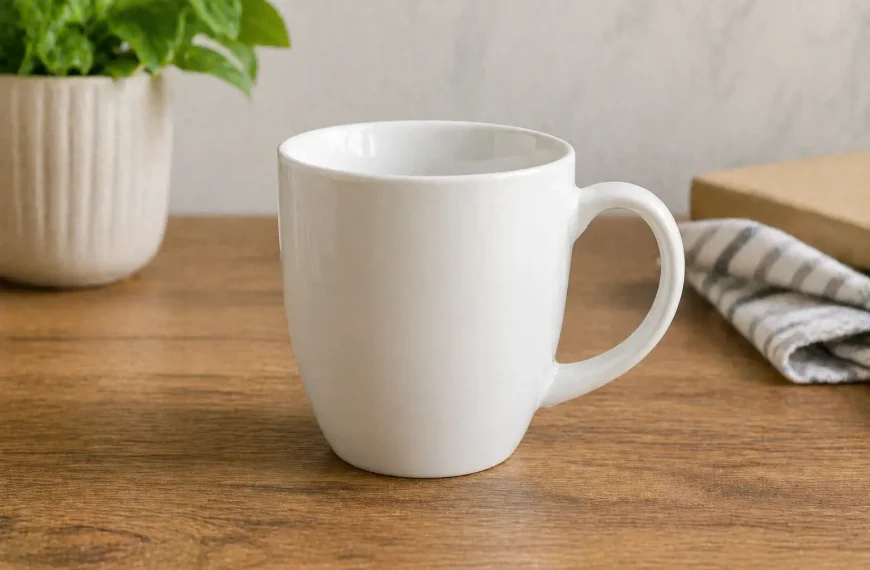
- Damage mode: enamel chips; ceramic cracks or shatters.
How long do enamel mugs last?
A high-quality enamel mug can last for years, and its life is mainly limited by chipping and how quickly exposed steel is allowed to rust. If the enamel stays intact on the interior, it remains functional even when the exterior shows wear. Once the interior enamel is breached, durability becomes a rust-management problem rather than a cleaning problem.
Why are enamel mugs good for camping and backpacking?
Enamel mugs fit camping because they combine three traits that matter outdoors: direct-heat use, durability under knocks, and low fuss cleaning. Their metal core makes them usable over a stove or flame, while the glass coating gives a hard, non-porous contact surface for drinks and simple meals. The trade-off is chip management: protect the rim, avoid rough stacking, and retire a mug from drink use if interior damage appears.
How do enamel mugs compare with stainless steel vacuum travel mugs for heat retention and safety?
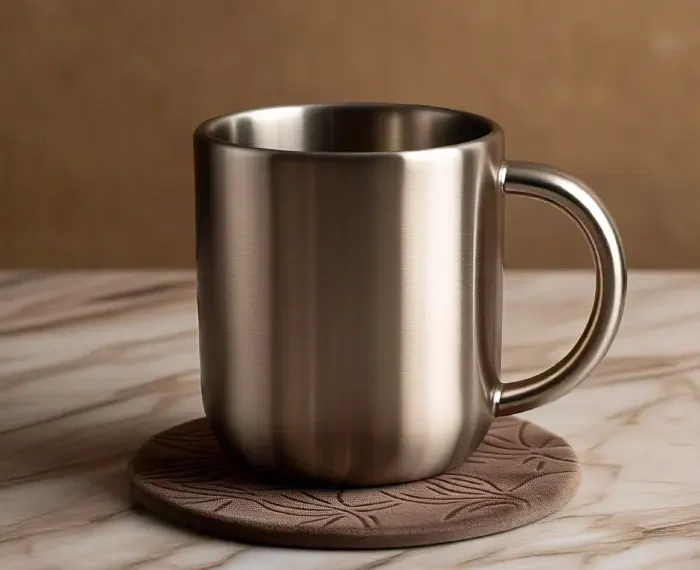
Vacuum travel mugs are built to slow heat transfer for hours, while enamel mugs are built to tolerate direct heat on a flame or stovetop. The difference is structural: vacuum models use a sealed double wall that targets heat retention, and enamel mugs use a single metal wall with a glass coating that targets heat compatibility and a smooth food-contact surface. Standardised insulated-container testing methods use controlled conditions like filling with ≥95°C water and leaving the container for 6 hours at (20 ± 2)°C before measuring the remaining temperature, which reflects the “hours-long retention” design goal of vacuum products.
What do vacuum insulation claims mean in real use (double-wall vacuum vs single-wall enamel)?
Vacuum insulation claims refer to the gap between two stainless steel walls being evacuated, which cuts down heat transfer pathways through that wall. Thermos explains the mechanism as a double-wall vacuum that eliminates conduction and convection between the walls, with reflective surfaces reducing radiative heat transfer.
Real-world performance varies a lot across models, which is why third-party testing matters: the Hong Kong Consumer Council reported that in its testing, 8 models still kept water below 11°C after 6 hours, while 3 plastic models rose to 20.5°C to 22.0°C, close to the ambient test environment.
By contrast, a single-wall enamel mug does not have a vacuum barrier, so it does not target long retention; it heats and cools quickly because the core is metal.
Which mug types are safest for reheating, including microwave rules and metal parts?
Microwave reheating is safest with truly microwave-safe drinkware that contains no metal, because metal edges and corners can concentrate electric fields and trigger arcing. MIT’s engineering explanation describes how microwaves can create concentrated electric fields at corners or edges of a metallic object, ionising air and causing sparking.
Metal-containing mugs are not only a sparking risk; they can also overheat and burn: a 2024 clinical paper on microwaved drinkware reports a case where a mug was labelled microwave-safe even though its handle contained 5% metal, contributing to overheating and contact burns.
For reheating, the clean rule is simple: use microwave-safe ceramic or glass; keep enamel mugs and stainless steel travel mugs out of the microwave, and reheat the liquid in a microwave-safe container instead.
What durability failures matter most on the go (chips, dents, seal wear, and interior contact surfaces)?
Enamel mugs usually fail by chipping at the rim or interior, because the enamel is a glass coating over steel; once chipped, the exposed steel can oxidise. Falcon Enamelware’s care guidance states that when enamelware chips and reveals the steel beneath, the steel naturally oxidises.
Vacuum travel mugs usually fail by seal and lid problems rather than body damage: insulated-container test protocols explicitly check stopper leakage, seal leakage, impact resistance, and handle loading, because a small seal failure ruins insulation and makes spills more likely.
So the on-the-go durability check differs by type: for enamel, inspect the rim and interior for chips; for vacuum mugs, inspect the lid gasket and lock mechanism for leaks and wear, because that single point can break the whole “keeps hot or cold” promise.
The practical checklist that decides whether an enamel mug fits your use
An enamel mug makes sense when you need direct-heat capability and a tough, simple cup that does not shatter. It stops making sense when you need microwave reheating, long thermal retention, or a mug that can tolerate interior damage without becoming a rust and safety issue. The deciding checks are simple: intact interior enamel, a safe rim, and a care routine that prevents rust at any exposed steel. When those conditions are met, enamelware stays a functional piece of drinkware rather than a fragile display item. By prioritizing surface integrity and heat-safe construction, you can maintain these vessels to the same durability standards required of all high-utility mugs.